
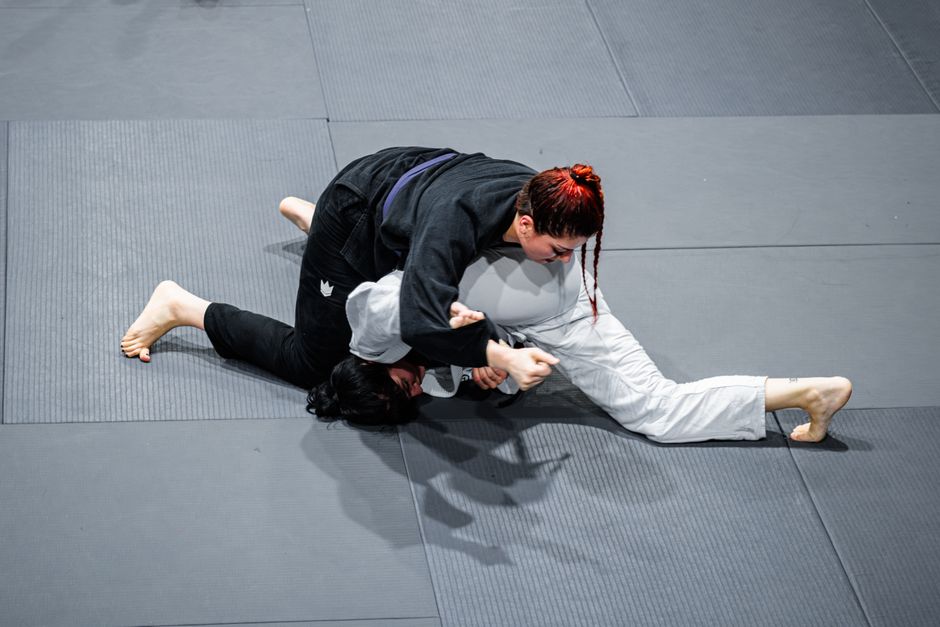
Starting Brazilian Jiu-Jitsu can feel overwhelming, but understanding basic jiu-jitsu terms makes your first class way less intimidating. You don't need to memorize everything, but knowing the fundamentals helps you follow along, stay safe, and actually enjoy learning.
Think of this guide as your cheat sheet. We're breaking down the positions, movements, and safety terms that show up in every beginner class.
The Most Important Safety Term: Tapping
Before anything else, learn this one.
Tapping is when you signal that you want to stop. You tap your partner's body, your own body, or verbally say "tap" to tell them you're submitting. This is non-negotiable. When someone taps, you release immediately, every single time.
Tapping isn't failure. It's how you stay healthy and train for years. Your ego leaves at the door in jiu-jitsu, and everyone from white belts to black belts taps constantly.
The Core Positions in Basic Jiu-Jitsu Terms
Jiu-jitsu revolves around position and control. Here are the ones you'll see in your first week:
Guard - You're on your back with your legs wrapped around your opponent's torso or legs. This is a defensive position, but it's not weak. From the guard, you can submit someone or sweep them (flip them over). The guard is your friend when you're smaller or just starting out.
Mount - You're sitting on your opponent's chest or torso, facing them. Your legs are on either side of their body. This is a dominant position because you have gravity and control on your side. If you're on top in mount, you're in a strong spot.
Side Control - You're perpendicular to your opponent, pressing your body weight across their chest and torso. They're on their back, and you're crushing them sideways. Side control is one of the most controlling positions in jiu-jitsu.
Back Control - You're behind your opponent, usually with your legs wrapped around their hips. Your arms can control their neck or head. Back control is considered the most dominant position because your opponent can't see what you're doing.
Passing the Guard - This means getting from your opponent's guard (where they have control with their legs) into a more dominant position like side control or mount. Passing is a core skill you'll drill constantly.
What You'll Actually Do: Rolling and Drilling
When your instructor says "roll," they mean rolling - live training with a partner where you're both trying to improve your technique.
Rolling isn't about hurting someone. It's controlled sparring where you practice positions and submissions at a pace that feels safe. As a beginner, you'll probably roll at maybe 40-50% intensity. You're learning, not proving anything.
Drilling is practicing a specific technique over and over with a partner. You might drill an armbar 20 times in a row until it becomes muscle memory. Drilling is how you build fundamentals, and Gonzales JJ emphasizes drilling because it's the fastest way to build real confidence.
Start your BJJ journey off (Free Class)
Get Started Today →
Basic Submissions You Need to Know
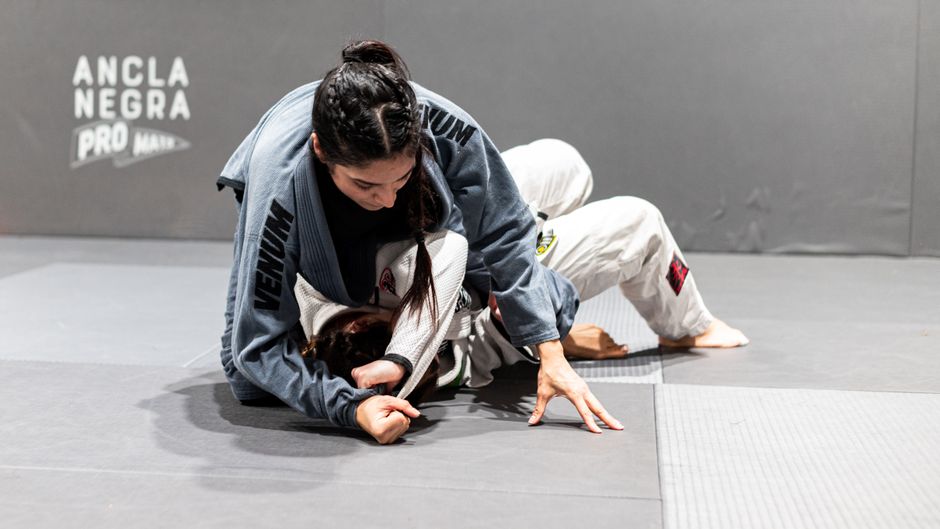
A submission is a technique that forces your opponent to tap because continuing would cause injury. Here are the beginner ones:
Armbar (Juji Gatame) - You control your opponent's arm and hyperextend their elbow. It's one of the first submissions you'll learn because it's effective and relatively safe when done correctly.
Chokes - There are many, but beginners start with simple ones like the Rear Naked Choke (applied from back control) and the Arm-Triangle Choke (using your arm and body to restrict blood flow to the neck). Chokes are tight, but they're fast because your opponent submits quickly when they feel pressure on the neck.
Americana - This targets your opponent's shoulder joint. You control both their wrist and elbow and apply pressure. It's a shoulder lock that teaches you joint control early on.
Equipment and Training Formats
Your instructor will mention these all the time.
Gi - The traditional uniform. It's a heavy cotton jacket, pants, and a belt. Training in a gi teaches you gripping and control because there's so much fabric to grab.
No-Gi - Training without the gi. You wear athletic shorts and a rash guard or t-shirt. No-gi is faster, more slippery, and a completely different game because grips are harder to establish.
Academy or Dojo - Just another word for your training gym or facility. No difference; people use these interchangeably.
Other Terms That Come Up Constantly
Sweep - Reversing position. You're in someone's guard, and you use their legs or momentum to flip them over so you end up on top.
Escape - Getting out of a bad position. You're in side control and you escape back to guard. Escapes are huge because half of jiu-jitsu is defense.
Positional Awareness - Knowing where your body is and where your opponent's body is. Beginners lack this, but it comes with reps.
Frame - Using your arms or legs to create distance and prevent someone from advancing position. You're literally making a frame with your limbs to block them.
Base - Your foundation. If you have a good base, you're stable and hard to sweep. A bad base means you're about to get flipped.
Pressure - Using your weight strategically. A lot of jiu-jitsu is about pressure, not speed. Bigger people teach this naturally.
Where to Start Learning These Terms for Real
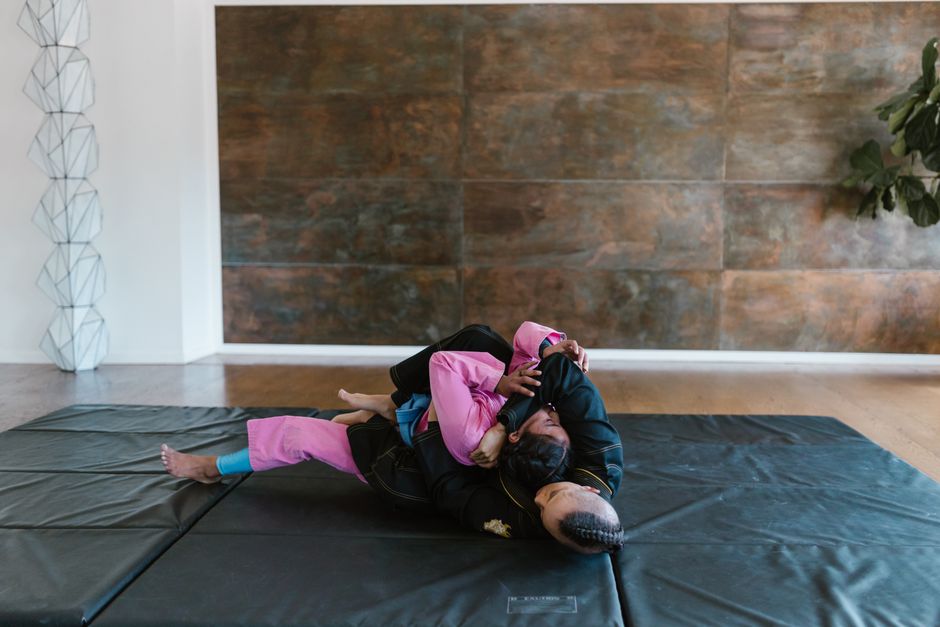
Honestly, the best way to understand these terms is to see them in action. Reading about the guard is one thing; lying on your back while someone's trying to pass it is another.
If you're in the Rio Rancho or Albuquerque area and ready to actually start training, Gonzales JJ teaches all these fundamentals in a structured way that makes sense. The instructors break down each position and submission slowly so you're not just hearing words, you're understanding the mechanics.
And if you're not ready to step on the mat yet, that's okay. Keep building your vocabulary. Watch some YouTube videos of beginners rolling so the terms stick. The goal is to walk into your first class feeling prepared, not panicked.
Common Questions About Basic Jiu-Jitsu Terms
Do I need to know all these terms before my first class?
No. Your instructor will teach you as you go. But knowing 10-15 core terms (guard, mount, tap, rolling, submissions) makes everything click faster. You'll feel less lost during demonstrations.
What's the difference between a gi and no-gi rolling?
Gi rolling is slower and grip-heavy because the uniform gives you lots of handles to grab. No-gi is faster and more athletic because there's nothing to hold onto. Most beginners start in the gi because it's more forgiving, but both are valuable.
Is tapping the same as giving up?
Absolutely not. Tapping is the correct move. Stubbornness gets you injured. Even black belts tap. You're tapping because you're smart enough to recognize when a technique is locked in.
What's the hardest jiu-jitsu term to learn as a beginner?
Probably positional awareness and base. These aren't single techniques, they're feelings. Your body learns them over months and years. Don't stress about "getting it" right away. Everyone struggles with this at first.
Start your BJJ journey off (Free Class)
Get Started Today →