
So you're wondering if your kiddo is ready for jiu-jitsu? The short answer: most kids begin between ages 4 and 6, and many academies take children from about age 4.
Every child develops at their own pace, so there's no one-size-fits-all answer. What matters most is finding a program designed for your child's age and developmental stage. Let's walk through what you need to know before signing your kid up.
The Earliest Ages Kids Can Start Jiu-Jitsu
Children as young as 4 can join jiu-jitsu programs built for their age. At this age, classes focus on movement, coordination, and having fun on the mat rather than formal techniques.
Think of it like preschool jiu-jitsu. Instructors use games, rolling, and basic body awareness exercises to get little ones comfortable with the environment. Your 4-year-old won't be learning armbars, but they'll be building foundational skills like balance, listening to instructions, and following routines.
The Sweet Spot: Ages 4 to 6
Most families start their kids in jiu-jitsu between ages 4 and 6. This is when programs really start to take off because kids have better attention spans and can follow basic instructions.
Around ages 5 and 6, children begin to actually retain and apply techniques. Their bodies are stronger, their coordination improves, and they understand cause and effect better. A kid this age can learn a takedown and remember it next week.
If you're looking for an academy that tailors classes to different age groups and teaches proper fundamentals, Gonzales JJ in Rio Rancho has a Toddler's Jiu-Jitsu Program for ages 4 to 5 and a Children's Jiu-Jitsu Program for ages 6 to 13.
Ages 6 to 7: Peak Learning Time
Around ages 6 and 7, most kids hit their stride in jiu-jitsu. They've developed the cognitive skills to understand positioning, escape routes, and strategic thinking. This is when real progress and technique mastery kick in.
Kids this age can attend longer classes (usually 30-45 minutes), grasp more complex movements, and start to understand the "why" behind a technique. They're also more likely to stick with it because they see themselves getting better.
What About Younger Than 4?

You can introduce your toddler to movement and basic martial arts concepts before age 4, but formal jiu-jitsu instruction isn't really geared toward kids that young. Many academies recommend waiting until about age 4 so your child can take part in group settings.
If your little one is under 4 and you want to introduce martial arts, some gyms offer parent-child classes. But structured jiu-jitsu training really works best once kids can follow basic commands and understand spatial awareness.
Signs Your Kid Is Ready for Jiu-Jitsu
Age is just a number. Here's what actually matters:
- They can listen and follow simple instructions: If your kid can understand "line up" or "sit down," they're ready for class structure.
- They're comfortable around other kids: Jiu-jitsu involves partnering, so your child should be okay working with peers.
- They can separate from you for 30+ minutes: Most kids' classes start without parents in the room.
- They're interested: Enthusiasm matters way more than age. A 4-year-old who's excited will progress faster than a 6-year-old who's bored.
- They won't panic if they fall: Jiu-jitsu involves controlled rolling and falling. Your kid should be confident on their feet and not afraid of the mat.
Not every kid meets all these markers at the same age, and that's completely normal. Some 5-year-olds are ready. Others need to wait until 6 or 7. There's no rush.
Related: Kids Jiu-Jitsu for Beginners in New Mexico: A Complete Guide
Related: Women's Jiu Jitsu Gi: Complete Buyer's Guide
What to Look for in a Kids' Jiu-Jitsu Program
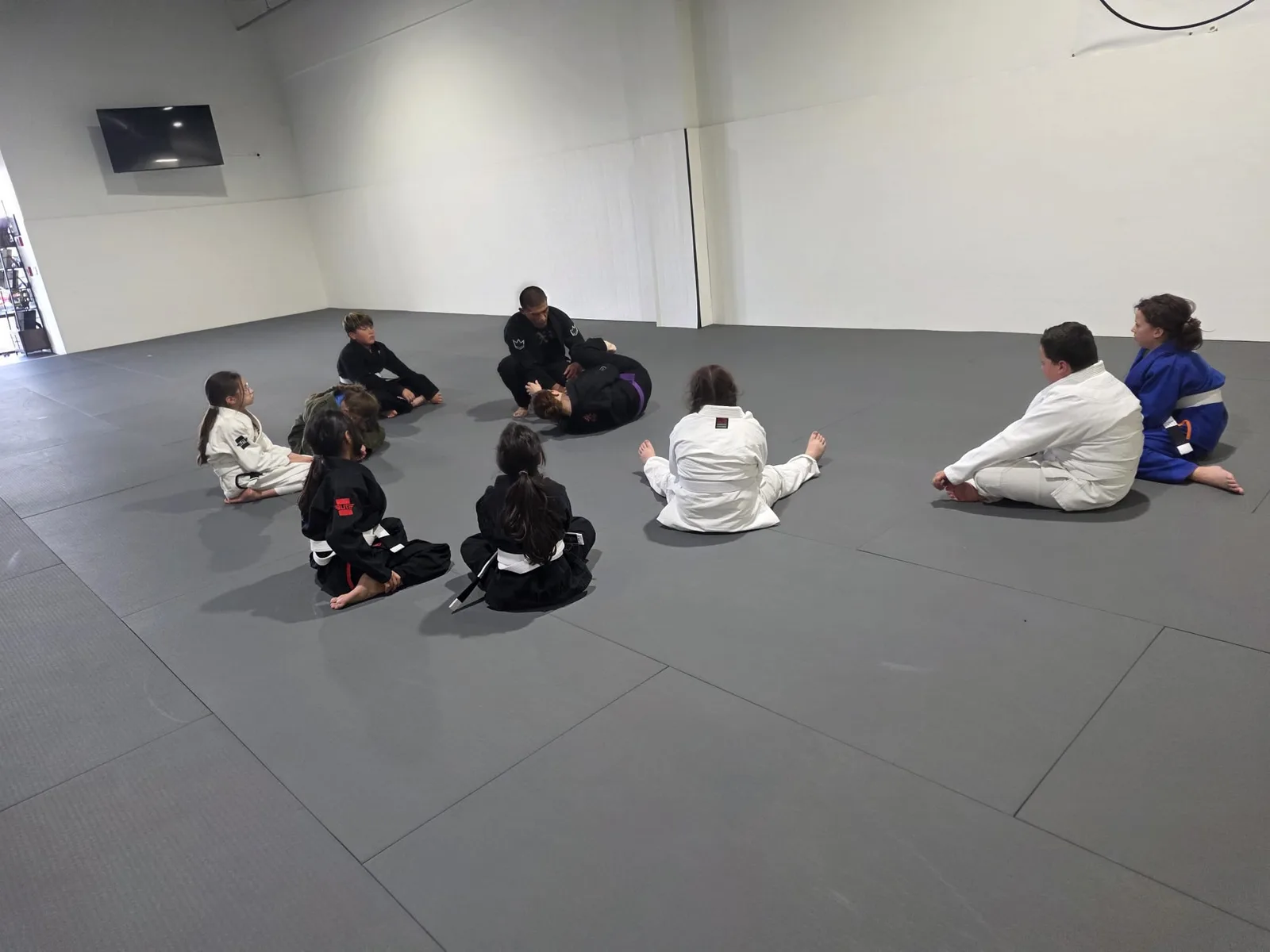
When you're choosing where to start your child, age-appropriate programming is non-negotiable. The academy should offer separate classes for different age groups, not throw all kids into one mat.
A good program for young kids focuses on:
- Technique over competition (at least for the younger ages)
- Positive reinforcement and confidence building
- Small class sizes so instructors can give individual attention
- A safe environment with proper matting and equipment
- Clear communication with parents about progress
When you visit an academy, watch a kids' class. Do the instructors seem patient? Are the kids having fun? Are the movements age-appropriate? These observations matter more than pricing or location alone.
If you're in the Rio Rancho area and want to see how a program balances technical instruction with family values, Gonzales JJ welcomes families to observe classes and ask questions about their curriculum.
Start your BJJ journey off (Free Class)
Get Started Today →Developmental Milestones and Jiu-Jitsu Readiness

Here's the real talk: your child's readiness depends on their individual development, not just their birthday.
A 4-year-old with solid balance and good listening skills will thrive faster than a 5-year-old who gets distracted easily. That doesn't make either kid "better" or "worse" - they're just on different timelines.
Jiu-jitsu supports that development along the way. The mat teaches discipline, coordination, and focus in ways that benefit kids both on and off the mat.
Getting Started: First Steps
Once you decide your kid is ready, here's how to start:
- Research local academies: Find gyms that offer kids' programs in your area. Look for family-friendly environments and instructors who seem genuinely interested in teaching young students.
- Watch a class: Most academies let you observe before signing up. This gives your kid a preview and helps you gauge if it's a good fit.
- Talk to the instructor: Ask about age-specific programming, curriculum, and what they recommend for your child's age and experience level.
- Start with trial sessions: Many gyms offer a free or low-cost intro class. Let your kid try it before committing.
- Be patient: First classes are always awkward. Your kid might be shy or confused. That's totally normal. Give it a few weeks before deciding if it's right for them.
Common Questions Parents Ask
What if my kid is small or shy for their age?
Size and personality don't determine success in jiu-jitsu. Shy kids often thrive because jiu-jitsu gives them a safe space to build confidence. Small kids learn that technique beats strength, which is incredibly empowering. The key is finding an instructor who understands that all kids develop differently and celebrates each child's progress, not just the most outgoing ones.
Is jiu-jitsu safe for young kids?
A good kids' program is built around safety. Kids' classes don't involve intense sparring or dangerous moves. Instead, they focus on controlled movements, proper falling technique, and age-appropriate grappling. Bumps can happen in any physical activity, so look for a program that follows kid-friendly guidelines and instructors who put safety over ego.
How long before my kid learns actual techniques?
Kids as young as 4 or 5 can learn basic positions and movements, but real technique retention usually starts around ages 6 and 7. Even at younger ages, your child is building motor skills, balance, and the foundations for jiu-jitsu thinking. Don't expect your 4-year-old to execute a perfect armbar, but do expect them to understand positions and have fun learning.
Should I train with my kid, or watch from the sidelines?
That depends on the program and your child's comfort. Some academies offer parent-child classes, while others prefer parents to watch from the side. Watching lets your kid have independence and focus on the instructor. Training together can be fun too, especially when your child is older. Ask the academy what they recommend for your child's age.
Start your BJJ journey off (Free Class)
Get Started Today →