

Here's the honest breakdown: karate and jiu jitsu are completely different martial arts with opposite approaches to combat. If you're trying to figure out which one fits your goals, you need to understand what each one actually does.
Karate is a striking-based martial art focused on punches, kicks, and blocks. Jiu jitsu is a grappling-based martial art that uses holds, pins, joint locks, and submissions to control your opponent. That's the core difference. Everything else flows from that one fact.
Let's break down the real-world differences so you can decide which one makes sense for you.
Related: Taekwondo vs Jiu Jitsu: Key Differences Explained
Related: Judo vs Jiu-Jitsu: Key Differences Explained
Karate is Built for Distance Fighting
In karate, you're training to strike from a distance. Your power comes from your legs, hips, and arms—throwing kicks and punches while staying several feet away from your opponent.
The goal is offensive: land clean, powerful strikes while defending against incoming attacks with blocks and evasion. You're learning footwork, speed, and precision to keep distance and deliver impact.
Karate works really well when you have space to move. It's great for:
- Training reflexes and speed
- Building explosive leg and core power
- Developing discipline and focus
- Creating distance between you and a threat
If your goal is to develop kicking technique or striking power, karate is a solid choice. But here's where it gets tricky in real-world situations.
Jiu Jitsu Dominates in Close Range and on the Ground
Jiu jitsu flips the script completely. Instead of keeping distance, you're closing the gap and working in tight quarters. The entire art is built around what happens when someone gets close to you.
You learn how to take someone down, control their position, and use leverage to neutralize them without relying on raw strength. Joint locks, chokes, and pins are your tools. The idea is to use technique and positioning to make someone physically unable to hurt you.
Jiu jitsu works in situations where:
- An attacker grabs you or gets close
- You're on your back and need to escape
- You need to control someone without striking
- Space is limited (like in a hallway or against a wall)
One huge advantage of jiu jitsu is that it teaches you how to neutralize threats through control rather than violence. You can hold someone in place or make them tap out before anyone gets seriously hurt. That's a real tactical advantage in self-defense situations.
Self-Defense: Why Jiu Jitsu Has the Edge
Here's what research and real-world experience show: jiu jitsu is more practical for street self-defense.
Why? Because most real-world confrontations end up close. Someone grabs you. You end up against a wall. You fall to the ground. In those moments, striking skills become almost useless. You can't throw a powerful kick when someone has you in a clinch.
Jiu jitsu teaches you how to handle those situations. You learn clinching, takedowns, and ground control. These skills are easier to execute under stress than precision striking, especially if you haven't trained for years. Your body's natural panic response works with jiu jitsu, not against it.
Another advantage: jiu jitsu gives you an off-ramp. If things escalate, you can control the person without causing permanent injury. With striking arts, de-escalation is harder once someone is hurt.
That's why a lot of first responders and people serious about self-defense train jiu jitsu. It works in the situations you're actually likely to face.
Training Philosophy: Striking vs. Grappling Mindset
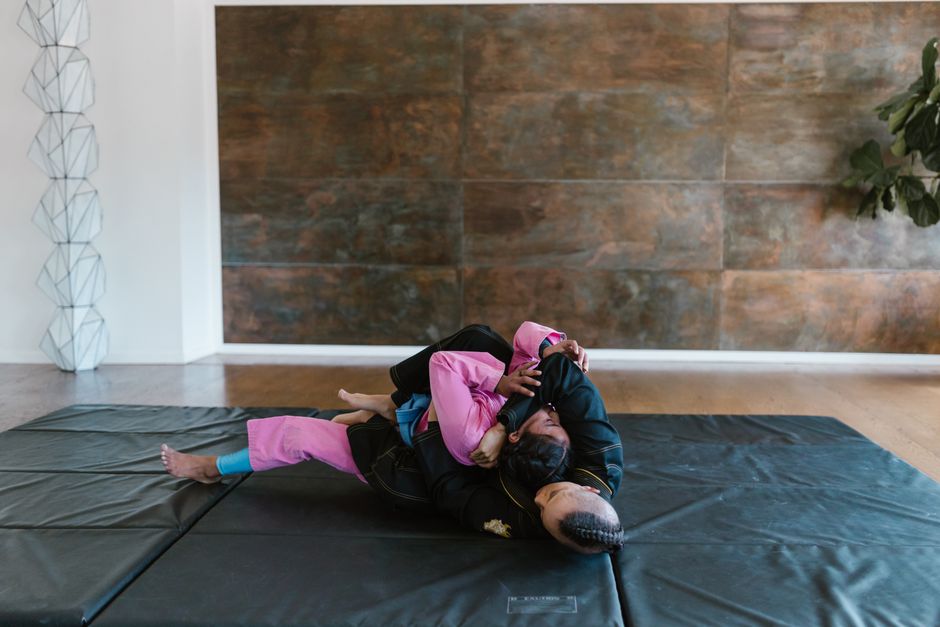
The mental side matters too. Karate teaches you to be offensive and decisive. You're trained to see an opening and take it with power and speed. It builds confidence through explosive movement.
Jiu jitsu teaches you to stay calm under pressure. You're learning to solve problems while someone is actively trying to submit you. The mindset is patience, positioning, and leverage. You learn that you don't need to panic or be the strongest person in the room to handle yourself.
Both build confidence, but in different ways. Karate builds the confidence of knowing you can strike hard and fast. Jiu jitsu builds the confidence of knowing you can handle pressure and control the situation through technique.
Physical Demands: What Your Body Actually Does
Karate training focuses on cardio, leg strength, core power, and explosive movement. You're spending a lot of time on footwork, drilling kicks and punches, and doing pad work. It's intense and cardiovascular.
Jiu jitsu is different. You're building functional strength, flexibility, and cardiovascular endurance through sparring and drilling. The movements are more methodical. You're learning to move your body in ways you've never moved before.
Both are amazing workouts. But if you hate running and prefer problem-solving, jiu jitsu might feel more natural. If you love explosive power and high-speed drills, karate might be your fit.
The Real Answer: It Depends on Your Goals
Neither martial art is "better." They're just different.
Choose karate if you want:
- To develop striking skills and kicking technique
- A faster-paced, more explosive training style
- A structured belt ranking system
- Training that emphasizes respect and traditional discipline
Choose jiu jitsu if you want:
- Practical self-defense skills for real-world scenarios
- To understand leverage and positioning
- A training environment where beginners can compete against advanced students safely
- To build problem-solving skills while under pressure
If self-defense is your main goal, jiu jitsu has a clear advantage. But if you're training for the love of martial arts, confidence building, and physical fitness, both are excellent choices.
If you're in the Rio Rancho or Albuquerque area and want to explore jiu jitsu specifically, Gonzales JJ offers technique-focused training for everyone from complete beginners to competitive athletes. They build programs around personal growth and self-defense, not ego or aggression.
Start your BJJ journey off (Free Class)
Get Started Today →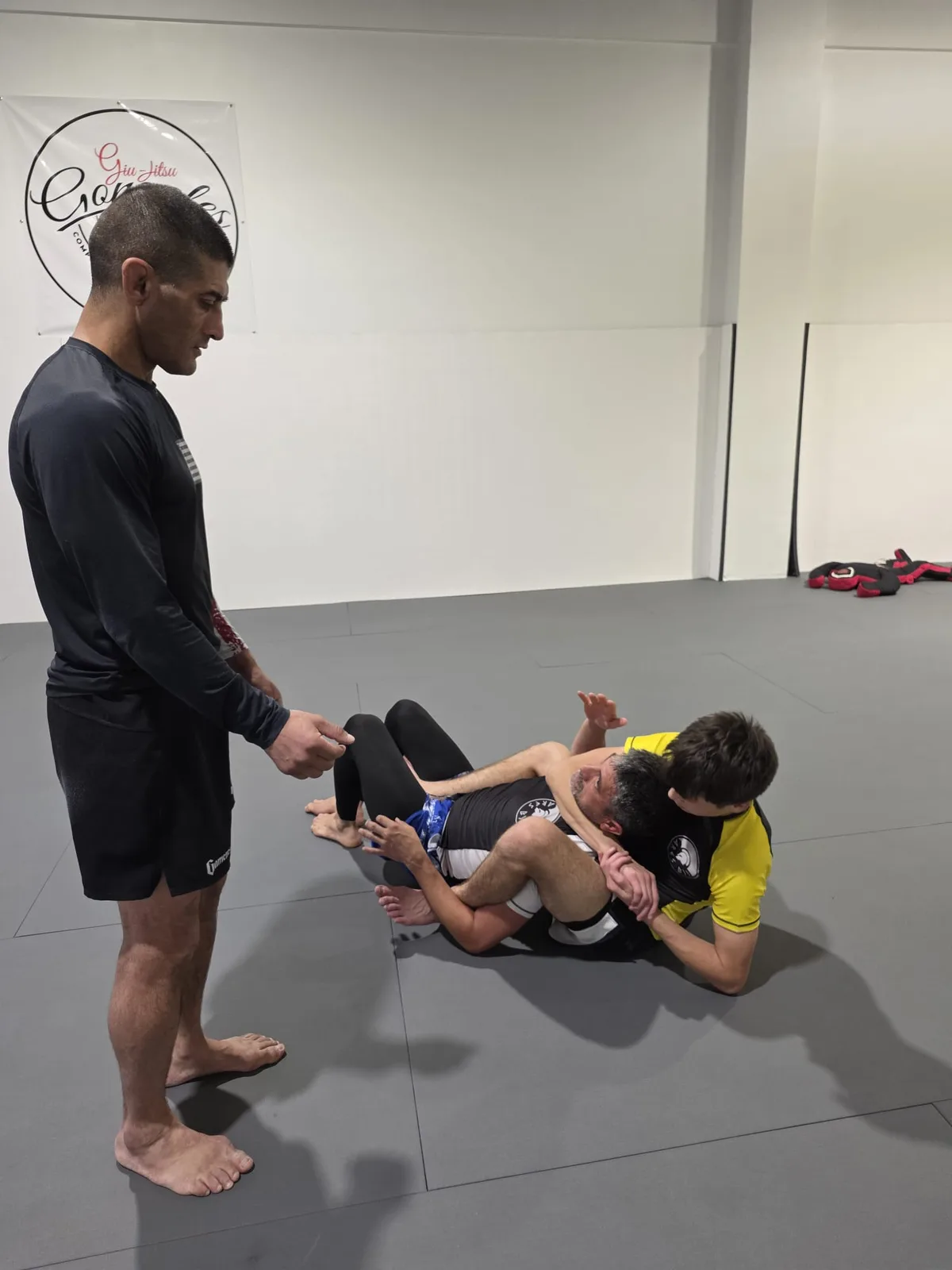
Which One Should You Actually Start?

Here's my honest take: if you're undecided, start with jiu jitsu. Here's why:
Jiu jitsu has a lower injury rate than striking arts. You learn at your own pace. You can drill techniques at 50% intensity with a partner and still get better. There's less pressure to be "tough" or push through pain.
Karate is awesome, but you need decent flexibility and leg strength to start. If you're coming in completely new to martial arts, jiu jitsu is more forgiving while you're building your foundation.
Plus, jiu jitsu scales better. A beginner can roll (spar) with an advanced student, tap out, and learn without getting hurt. You can't really do that in karate.
The best research on martial arts effectiveness comes from the National Center for Biotechnology Information, which has published studies on grappling vs. striking martial arts. The data consistently shows grappling arts have practical advantages in self-defense scenarios where distance is limited.
Whatever you choose, the most important thing is to pick a gym with good instruction and a supportive community. Training partners matter way more than which martial art you pick. You grow faster when everyone around you is invested in getting better together.
Is karate good for self-defense?
Karate is good for self-defense, but it's designed for situations where you have distance and space to move. If someone grabs you or you fall to the ground, karate skills become harder to apply. Jiu jitsu handles close-range and ground scenarios more practically.
Can you use jiu jitsu if you're not strong?
Yes. Jiu jitsu is actually built on the principle that technique and leverage beat raw strength. A smaller, weaker person can submit a larger, stronger person if they understand positioning and timing. That's the whole point of the art.
Which martial art is safer to learn?
Jiu jitsu has a lower acute injury rate because you can tap out and stop whenever something hurts. Striking arts have higher rates of head trauma and concussions, especially early on. Both are safe if you train smart and listen to your body.
How long does it take to be good at each?
Karate: Most people reach a decent level of competence in 6-12 months of consistent training. Jiu jitsu: You need about 6 months to understand basic positioning, and 1-2 years to be genuinely dangerous. But you can start using jiu jitsu for self-defense much sooner than that.
Start your BJJ journey off (Free Class)
Get Started Today →