

Here's the straight answer: taekwondo and jiu jitsu are completely different martial arts that teach opposite fighting strategies. Taekwondo is a striking art built around fast, powerful kicks delivered from a distance. Jiu jitsu (specifically Brazilian Jiu-Jitsu or BJJ) is a grappling art focused on close-range control, submissions, and ground fighting. If you're trying to pick between them, understanding these core differences matters.
The Primary Fighting Range: Distance vs. Close Combat
This is the biggest difference between the two. Taekwondo keeps you at arm's length (or further). You're training to land kicks and strikes while maintaining distance from your opponent. It's about control of space and explosive power from a few feet away.
Jiu jitsu does the opposite. You're learning to eliminate distance, get close to your opponent, and control them on the ground. Once the fight goes to the mat, distance disappears completely. You're working with leverage, positioning, and body control in tight quarters.
Related: Judo vs Jiu-Jitsu: Key Differences Explained
Related: How to Pass the Guard in Jiu Jitsu: Essential Techniques
Related: BJJ Jiu Jitsu: A Beginner's Guide to Getting Started
Related: Judo vs Brazilian Jiu-Jitsu: Key Differences Explained
Think of it this way: a taekwondo fighter wants to keep you at kicking range. A jiu jitsu fighter wants to get close enough to control you without you being able to land meaningful strikes.
Striking vs. Grappling: How You Actually Fight
Taekwondo emphasizes kicking and some hand strikes. But taekwondo kicks are the star. High-speed, precise kicks aimed at the head, torso, and legs. You'll spend thousands of hours perfecting your kick technique, balance, and speed. Hand techniques exist but are limited compared to other striking arts.
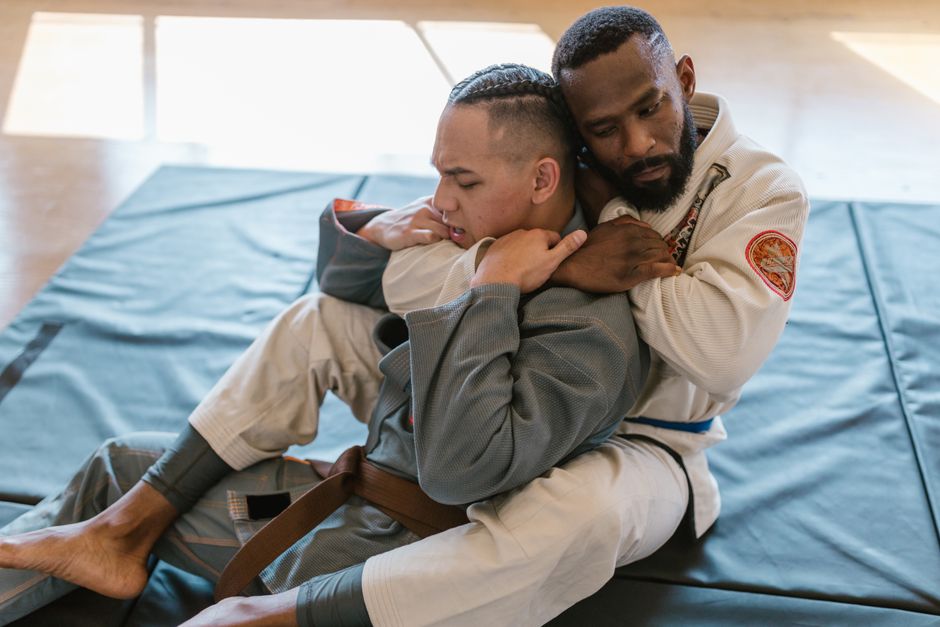
Jiu jitsu has zero kicks. Zero hand strikes. Instead, you're learning submissions (joint locks and chokes), positional transitions, and escape techniques. Your hands are used for gripping, controlling, and setting up submissions. The whole goal is to improve your position on the ground until your opponent has no good options left.
This means a taekwondo fighter's entire toolkit is useless once the fight goes to the ground. A jiu jitsu fighter's entire toolkit is useless if they can't close the distance and get the fight to the mat.
Training Methods: Drills vs. Live Rolling
Taekwondo training relies heavily on repetition drills, forms (called "poomsae"), and technique practice with partners holding pads or shields. You'll do kicks thousands of times to build muscle memory, balance, and speed. Weapons training (like staffs) might be included depending on your school. It's structured, choreographed, and very technique-focused.
Jiu jitsu uses something called "rolling" or "sparring" where you and a partner practice real grappling exchanges at controlled intensity. You learn a technique, drill it a few times, then immediately apply it against a resisting partner. This live practice translates directly to real situations because you're solving real problems against real resistance.
The training styles reflect the arts themselves. Taekwondo's drilling approach builds precision and power. Jiu jitsu's rolling approach builds adaptability and problem-solving under pressure.
Real-World Application and Self-Defense

Here's what matters if you care about practical self-defense: jiu jitsu skills transfer directly to real fighting scenarios. When most untrained people panic, they fall or get taken down. Jiu jitsu teaches you what to do when you're on your back or pinned against something. That's real.
Taekwondo includes board-breaking, forms, and tricking that look impressive but don't always transfer to an actual fight. High kicks are flashy, but if someone closes the distance and takes you down, your kicks are useless. That said, taekwondo's distance management and leg power can be devastating if you can keep your opponent at range.
The honest take: if self-defense and real-world effectiveness matter to you, jiu jitsu gives you skills that work when someone is trying to hurt you. Taekwondo requires your opponent to stay at the right distance for your kicks to be effective.
Fitness and Physical Development
Both arts build incredible fitness, but differently.
Taekwondo develops explosive leg power, speed, and cardiovascular endurance. Your legs become weapons. You'll have incredible flexibility, quick reflexes, and the ability to generate power from the ground up. It's athletic and dynamic.
Jiu jitsu develops functional strength, leverage mastery, and the kind of fitness that works when you're tired and stressed. You're not relying on raw power. You're using pressure, positioning, and technique even when your muscles are exhausted. It builds grip strength, core stability, and real-world strength that transfers to daily life.
If you want explosive power and athletic dominance, taekwondo excels. If you want practical strength that works even when you're gassed, jiu jitsu is the choice.
The Combat Versatility Question
Taekwondo gives you striking precision at distance. But if someone closes that distance, you lose your advantage. Jiu jitsu gives you complete grappling mastery, but it assumes you can either close the distance or that the fight is already on the ground.
Neither art alone covers all fighting ranges. That's why many competitive fighters train multiple disciplines. But if you can only pick one, you need to think about what scenario worries you most: someone coming at you from a distance, or someone grabbing and trying to control you up close?
For most people in real life, the close-range scenario is more likely. That's why programs focused on grappling and ground control like what you'll find at Gonzales JJ tend to give you more practical, everyday protection.
Start your BJJ journey off (Free Class)
Get Started Today →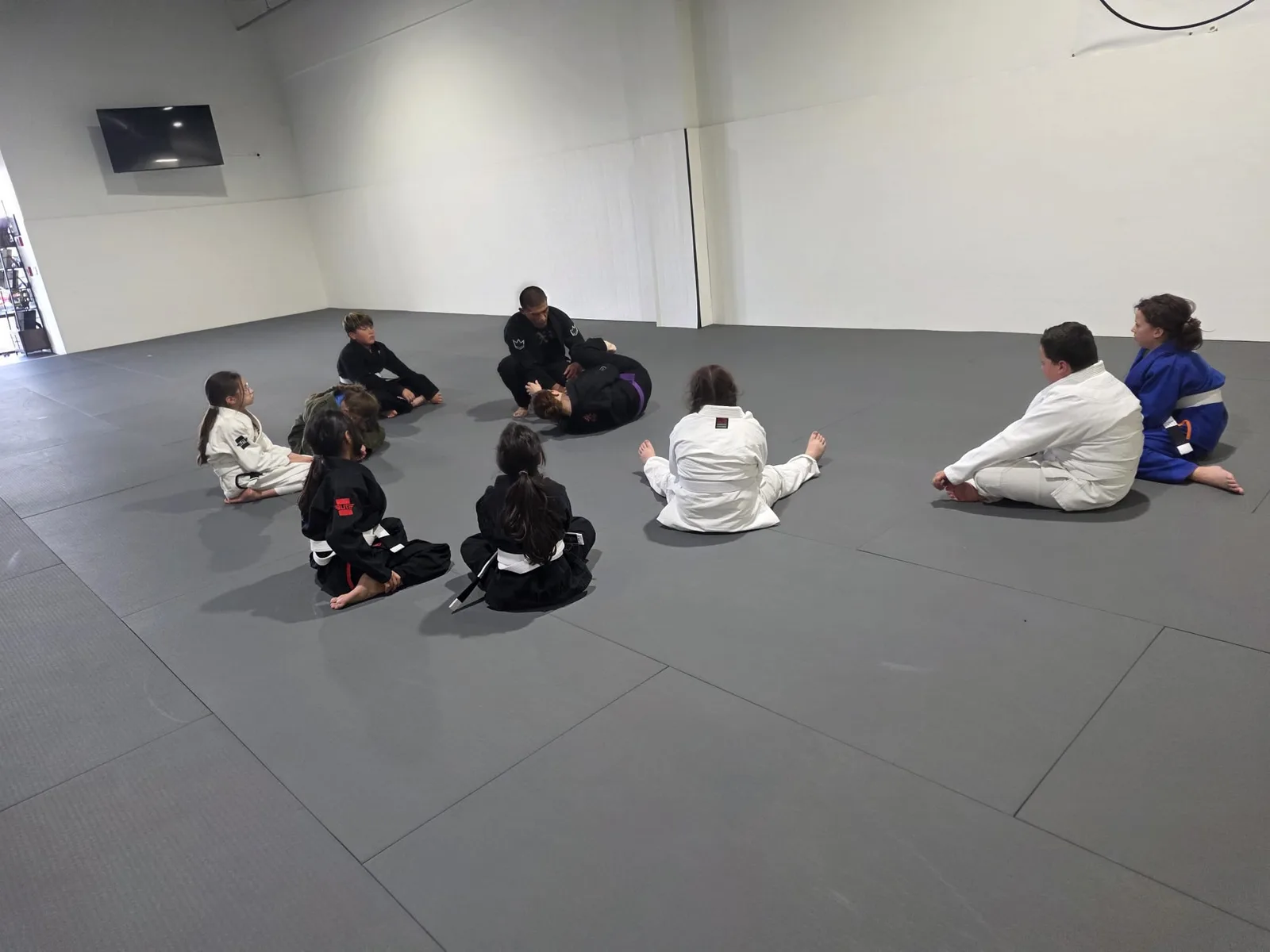
Which One Should You Actually Train?
Pick taekwondo if you want to build explosive power, love the beauty of kicks, and like structured, choreographed training. It's an Olympic sport with a rich tradition, and it teaches incredible discipline and technique precision.
Pick jiu jitsu if you want practical self-defense, real problem-solving against resistance, and a martial art that works at every body weight and age. It's also competitive, but the training method (live rolling) means you're constantly testing your skills against real resistance.
Honestly? The best martial art is the one you'll actually train consistently. Both take years to get good at. Both build confidence and discipline. The difference between taekwondo and jiu jitsu is really about whether you want to strike from distance or grapple up close. Your choice depends on your goals, your body type, and what style resonates with you.
Getting Started: Trying One or Both
Most good gyms let you try a class for free or cheap. Do that. Taekwondo feels different from jiu jitsu. The pace is different. The community is different. The injury risk profile is different (taekwondo has more joint impact; jiu jitsu has more joint stress from locks and holds).
If you're in the Rio Rancho or Albuquerque area and want to explore jiu jitsu specifically, Gonzales JJ is a family-friendly gym that specializes in technique-focused training where everyone from beginners to competitive athletes trains together. It's a good place to see if grappling and ground control click for you.
Is taekwondo good for self-defense?
Taekwondo builds solid fundamentals and can be effective if you can maintain distance. But most real physical altercations end up close or on the ground, where taekwondo's kicks lose their advantage. It's good for building confidence and discipline, but it's incomplete for pure self-defense without additional grappling training.
Can you use jiu jitsu in a real fight?
Yes. Jiu jitsu is taught to first responders and military personnel specifically because it works in real situations. When someone grabs you, takes you down, or closes distance, jiu jitsu gives you tools. The live rolling training method means you're constantly practicing against resistance, so the skills transfer directly.
Which martial art is easier to learn?
Taekwondo basics are easier to pick up quickly because kicks are intuitive once you understand the motion. Jiu jitsu has a steep learning curve for the first few months because positions and submissions seem complex at first. But after 6-12 months, most people find jiu jitsu easier to progress in because live rolling makes the learning concrete and immediately applicable.
Can you combine taekwondo and jiu jitsu training?
Absolutely. Many serious athletes train both. Some taekwondo schools add jiu jitsu classes. Some jiu jitsu gyms include basic striking. Training both gives you tools at every range, but it requires significant time commitment. Most people stick with one art and get deep expertise rather than trying to master both as beginners.
Start your BJJ journey off (Free Class)
Get Started Today →