

If you're training jiu jitsu, you've probably noticed the ears on some grapplers—they're swollen, folded, and permanent. That's cauliflower ear, and the right jiu jitsu ear guard goes a long way toward preventing it.
A quality ear guard is hands-down the most effective way to keep your ears safe during training and competition. The good news? Picking the right one is straightforward, and wearing it consistently from day one makes all the difference.
Let's break down everything you need to know about protecting your ears on the mat.
What Is Cauliflower Ear and Why Does It Happen in Jiu Jitsu?
Cauliflower ear develops when the soft tissue of your ear gets repeatedly hit, compressed, or scraped against the mat during grappling. Every time you get taken down on that side, or your partner's arm puts pressure on your ear, tiny blood vessels break.
Related: Jiu Jitsu Half Guard: Complete Beginner Guide
Related: Women's Jiu Jitsu Gi: Complete Buyer's Guide
Here's what happens next: blood pools between the cartilage and skin. If you don't drain it quickly, that blood hardens into scar tissue. Your ear gets thick, lumpy, and permanent.
The brutal part? Once cauliflower ear forms, there's no real way to reverse it. Surgery can help, but it's expensive and leaves scars. Prevention is infinitely easier than treatment.
That's where a jiu jitsu ear guard comes in. It absorbs impact, reduces compression, and gives your ears the buffer they need to stay healthy through years of training.
How a Jiu Jitsu Ear Guard Works
A good ear guard is simple: padded protection that wraps around your ear and fastens securely to your head.
The padding absorbs direct hits and reduces the force that reaches your ear tissue. Most quality designs feature adjustable straps and secure fastening systems so the guard stays in place during intense rolling—no shifting, no sliding, no frustration.
The best ones feel almost invisible once you adjust to wearing them. You forget it's there, which is exactly what you want. You're focused on technique and position, not fidgeting with your gear.
When you're looking at options, prioritize comfort and fit. A guard that's loose or uncomfortable gets taken off between rounds, which defeats the whole purpose. Look for padded designs with adjustable straps that hold snugly without cutting off circulation.
When Should You Start Wearing a Jiu Jitsu Ear Guard?
The honest answer? From day one.
Even if you're training recreationally, your ears are still getting compressed and hit. Beginners sometimes think they don't need protection because they're "not rolling hard," but that's not how cauliflower ear works. It's not about intensity—it's about frequency and repetition.
Train twice a week for two years without protection, and you might develop it. Train five times a week with protection, and your ears are far better protected.
The earlier you develop the habit of wearing your guard, the more natural it becomes. It's like wearing a seatbelt in a car—you don't think about it, and it keeps you safe.
If you've already trained without protection and your ears feel a little swollen or puffy, that's a sign to start protecting them now. Catch it early, and consistent guard use helps protect against permanent damage.
What to Look for in a Quality Ear Guard
When you're choosing a jiu jitsu ear guard, here are the features that actually matter:
- Padding quality: Thicker, denser padding absorbs more impact. It shouldn't feel rock-hard or uncomfortably stiff, but it should have substance.
- Adjustable fit: Your head isn't the same size as someone else's. A guard with adjustable straps ensures a secure, comfortable fit every time.
- Secure fastening: Look for velcro straps or chin cups that keep the guard locked in place during grappling. You shouldn't be able to twist it around mid-roll.
- Breathability: You're sweating. Your ear is sweating. The material needs to allow air circulation so you're not sitting in a hot, wet pocket.
- Durability: Good ear guards are made from materials that hold up to repeated washing, sweat, and friction. They should last years, not months.
Established brands with a long track record are solid choices because they've already worked out the design problems. When you're starting out, buying from a proven brand saves you the trial-and-error of cheaper knockoffs that fall apart or slip during rolls.
How to Wear Your Ear Guard Properly
Putting on your ear guard correctly is half the battle. Here's the process:
Step 1: Position the padding over your ear. The padded part should cup your entire ear, with the padding on the outer surface facing outward.
Start your BJJ journey off (Free Class)
Get Started Today →Step 2: Secure the chin strap. Pull the strap under your chin and fasten it snugly. It should be tight enough that you can't wiggle the guard, but not so tight you're cutting off circulation to your face.
Step 3: Check the fit. Move your head around. Roll your neck. Make sure the guard feels stable and doesn't pinch anywhere. If it feels wrong, adjust the straps and try again.
Step 4: Wear it consistently. Don't take it off between rounds unless you absolutely have to. The goal is protection during every single rep of grappling.
If you find yourself removing it regularly because it's uncomfortable, the fit is probably wrong. Go back and adjust those straps. A properly fitted guard shouldn't feel like a nuisance—it should feel like just part of your gi and rashguard.
Ear Guard Care and Maintenance
Your ear guard gets as sweaty as your gi. Treat it with respect and it'll last years.
After each training session, rinse it with cold water and let it air dry completely before storing. Some guards can go in the washing machine on a gentle cycle, but always check the manufacturer's instructions first.
Don't leave it wet in your gym bag. Moisture breeds bacteria and mold, which defeats the purpose of protecting your ear health.
Check the straps regularly. Over time, velcro wears out and loses grip. When that happens, you can replace velcro strips, or it might be time to invest in a new guard.
Other Ways to Protect Your Ears During Training

Your ear guard does the heavy lifting, but a few training habits help too.
Tap early. If someone's putting pressure on your ear and it hurts, tap. Don't be a hero. Your health is more important than proving a point in a training round.
Communicate with training partners. Let them know you're wearing a guard and why. Most partners will naturally adjust their grip slightly once they know you're protecting your ears.
Position your ear away from pressure. As you develop technique, you'll learn defensive positions that minimize ear compression. Turning your head slightly or adjusting your neck position can make a huge difference.
Drain any fluid early. If you do notice your ear getting swollen or puffy after training, see a doctor right away. Early treatment gives you the best chance of avoiding permanent damage. Don't wait and hope it goes away.
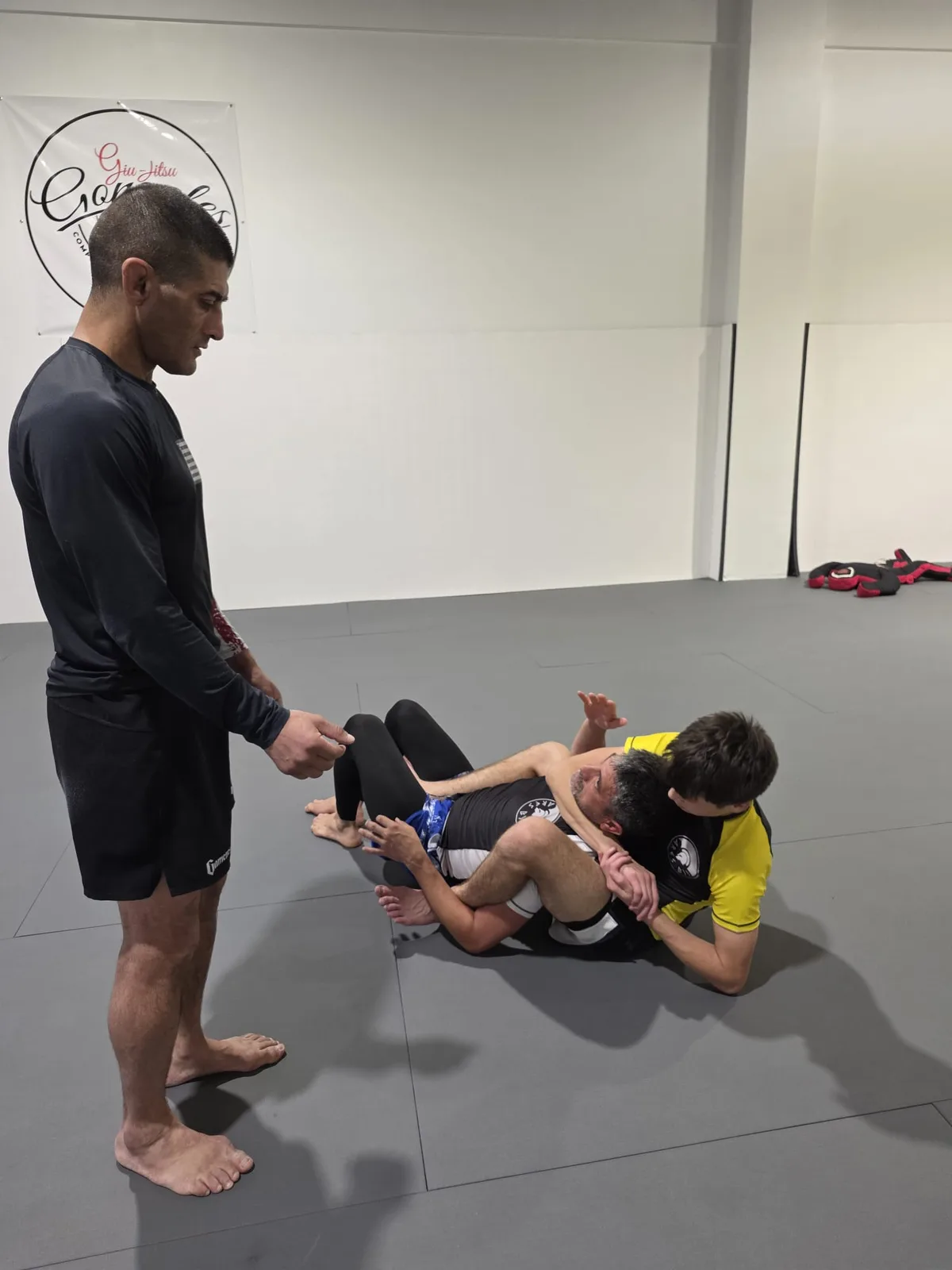
Training at Gonzales JJ means learning technique that protects your body, not just your opponent. Our instructors teach positioning that helps protect your ears—and the rest of your body—while you're building skills.
Ear Guard Comfort: Making It Work for You
The most common reason people stop wearing ear guards is discomfort. They pinch, they slip, or they feel weird. Here's how to fix that.
First, make sure you've got the right size. Guards come in small, medium, and large. A guard that's too big will shift during rolls. One that's too small will pinch the sides of your head. Check the sizing chart before you buy.
Second, give yourself a break-in period. Your first few training sessions in a new guard will feel a little strange. Your ear isn't used to the padding, and your head isn't used to the strap. By day five or six, it'll feel normal.
Third, experiment with strap tension. You want it snug, not crushing. You should be able to fit one finger under the chin strap. If you can fit two, it's too loose. If you can fit zero, it's too tight.
The goal is a guard that becomes invisible during training. You put it on, you roll, and you forget it's there. That's how you know you've got the right fit.
Common Ear Guard Questions
Can you wear a jiu jitsu ear guard during competition?
It depends on the tournament. Some organizations allow soft ear guards and others do not allow any headgear in competition. Check the ruleset of your event before you compete.
Does wearing an ear guard give you an unfair advantage?
No. An ear guard doesn't improve your technique, strength, or strategy. It just protects you.
What if your ear guard gets really uncomfortable during a roll?
Tap. Stop the roll. Adjust the guard and start again. Your long-term ear health is more important than finishing one round with a shifting guard. A good partner will understand.
How long does an ear guard last before you need to replace it?
With proper care, a quality ear guard lasts 2-3 years of regular training. The velcro might wear out before the padding does. When that happens, you can replace the velcro strips, or just buy a new guard. The cost is worth the protection you get.
Start your BJJ journey off (Free Class)
Get Started Today →