
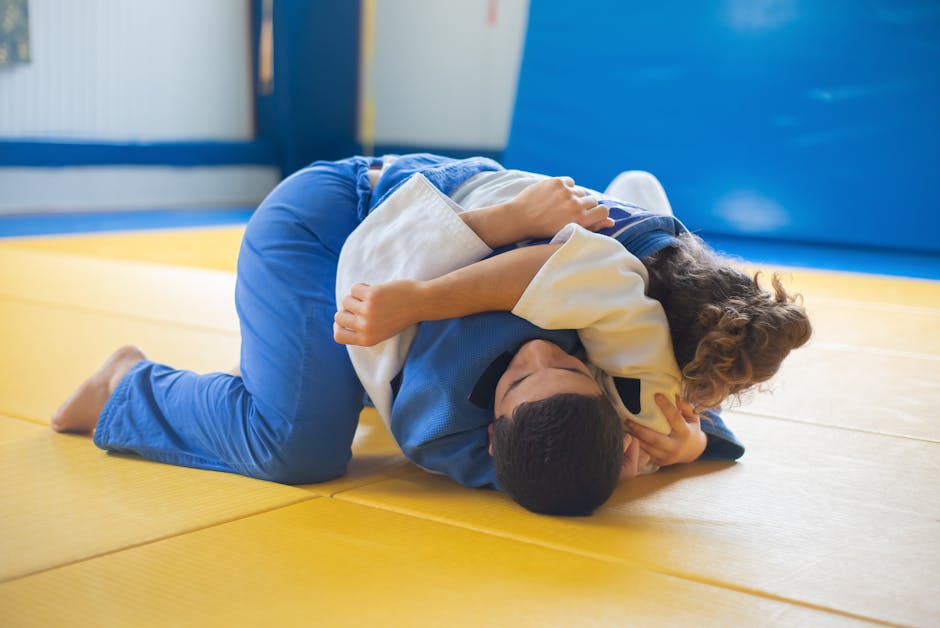
If you're new to Brazilian Jiu-Jitsu, the names of jiu jitsu moves can feel like learning a completely different language. One instructor says "hip bump sweep" and another mentions "scissor sweep," and you're sitting there wondering what the difference is. Don't worry—this guide breaks down the most important technique names you'll hear on the mat, organized by type so you can actually remember them.
Why Learning Jiu Jitsu Move Names Matters
Understanding the names of jiu jitsu moves isn't just about sounding smart in class. When your instructor calls out a technique, you need to know exactly what they're talking about. Plus, learning terminology helps you research techniques on your own, watch instructional videos, and communicate with training partners about what you're practicing.
The good news? Most fundamental moves have been around for decades, so the names are consistent across gyms. Once you learn the basics, you'll recognize them everywhere.
The Main Categories of Jiu Jitsu Moves
Before we dive into specific names, let's understand how jiu jitsu techniques break down. Every move falls into one of these buckets:
Related: Brazilian Jiu Jitsu Basic Moves: A Beginner's Guide
Related: Jiu-Jitsu Positions: A Beginner's Guide to Core Techniques
- Sweeps – reversing position when you're on your back
- Submissions – joint locks and chokes that force your opponent to tap
- Guard passes – techniques to get past your opponent's legs
- Position control – ways to stay dominant once you're on top
If you're just starting, Gonzales JJ focuses on teaching technique-first instruction that breaks down exactly how each move works—names included—so you build real understanding, not just muscle memory.
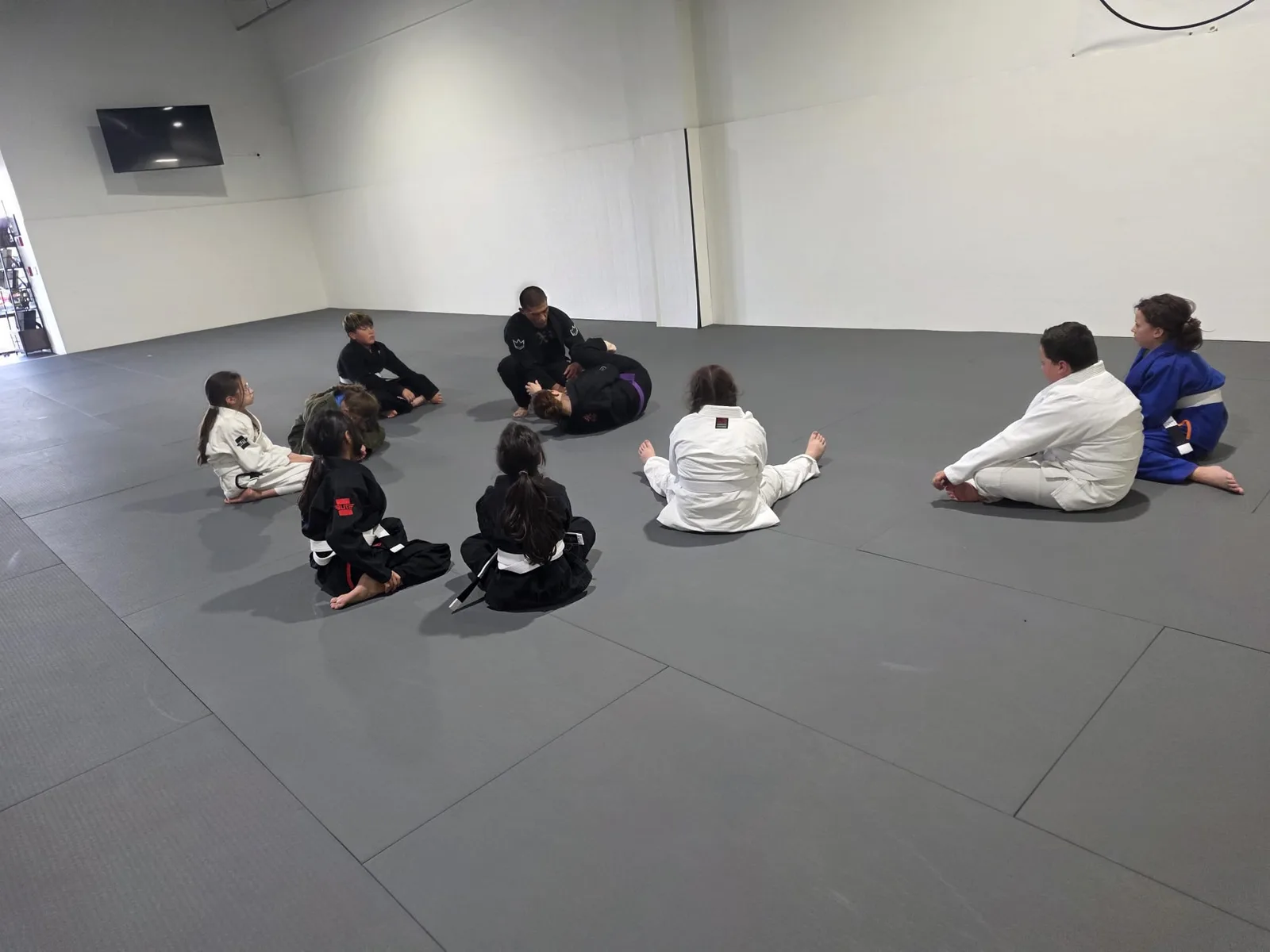
Common Names of Jiu Jitsu Sweeps
Sweeps are some of the first moves you'll learn because they let you get off your back and into a stronger position. Here are the essential ones:
Hip Bump Sweep
One of the absolute fundamentals. You trap your opponent's arm and leg, then use your hips to flip them over you. You'll see this move on day one of training.
Scissor Sweep
Your legs do the work here. You use your top leg to hook your opponent's arm while your bottom leg does the cutting motion—like scissors closing. Super effective and works against almost everyone.
Flower Sweep
A variation of the scissor sweep with grip options that make it flexible depending on how your opponent is positioned. It opens up naturally when the scissor sweep isn't quite landing.
Double Ankle Sweep
Exactly what it sounds like—you grab both of your opponent's ankles and sweep them. Effective from the bottom position and teaches you how to use your legs as weapons.
Lumberjack Sweep
An intermediate move where you control your opponent's arm and leg placement to create space for a reversal. Takes more timing than the basics but is incredibly solid once you understand it.
Essential Names of Jiu Jitsu Submissions
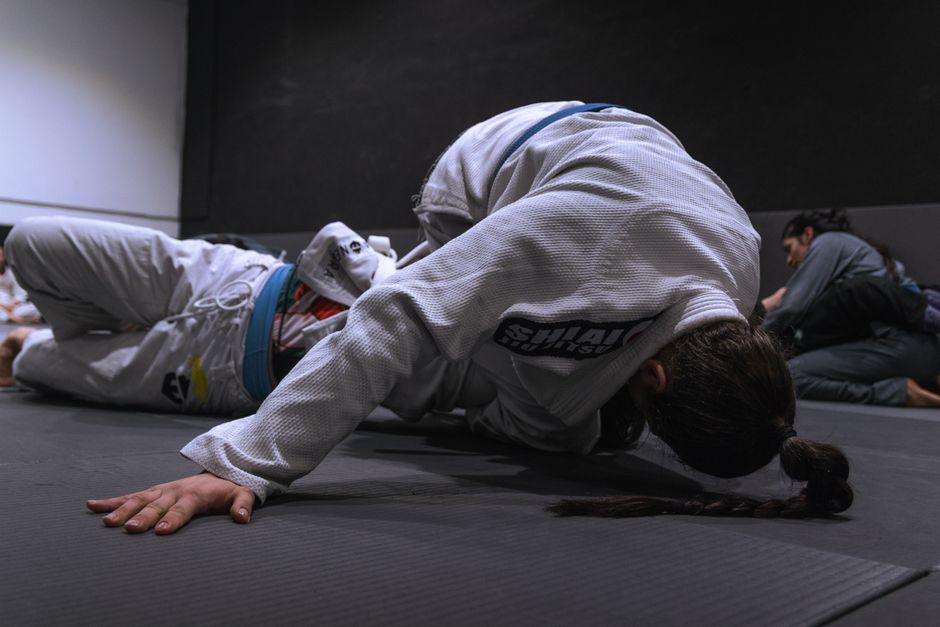
Submissions end the match. Your opponent taps, and the roll is over. Learning the names means you'll recognize when someone is setting up a finish.
Cross Choke
A choking technique where you grip your opponent's collar with both hands crossed. Works from mount position and is one of the first submissions most people learn.
Crescent Choke
A specialized choking technique that feels different from the cross choke but achieves the same result—cutting off blood flow to the brain. Requires good positioning but is devastating once you get it right.
Heel Hook
A lower-body submission targeting the heel and ankle. This one requires careful application and usually isn't taught to absolute beginners, but understanding its name is important as you progress.
Armbar
Hyperextending your opponent's elbow joint. It's one of the first submissions most people learn and appears from dozens of different positions.
Rear Naked Choke
The king of submissions. You're behind your opponent with both arms around their neck. It's simple, effective, and appears in nearly every match at every level.
Guard Passes and Position Names You Need to Know
Passing the guard—getting past your opponent's legs—is critical. Here are the names of jiu jitsu moves that help you do it and control the top position:
Start your BJJ journey off (Free Class)
Get Started Today →Leg Drag Guard Pass
You drag your opponent's leg across their body to open up their guard, then pass to the side. It's called "leg drag" because that's literally what you do.
Mount Position
You're on top of your opponent, straddling their chest with both knees on the mat. This is one of the most dominant positions in jiu jitsu.
Side Control
You're perpendicular to your opponent, controlling their torso with your body weight. It's a finishing position that sets up submissions.
Back Control / Back Take
You're behind your opponent with your legs hooked under theirs and your arms around their torso. Controlling the back is extremely dominant and leads to the rear naked choke.
The Truck Position
An advanced control position where you're at an angle to your opponent's hips, controlling one leg and their far-side arm. It's a modern position that creates opportunities for leg lock attacks and sweeps.
Crab Ride
A pressure-heavy control position where you're above your opponent's hips, creating intense pressure. It's uncomfortable and effective.
Advanced Names of Jiu Jitsu Moves You'll Encounter Later
Once you've trained for a while, you'll hear these names pop up. Don't stress about them now—just know they exist so you're not confused when someone mentions them.
Omoplata Sweep
A shoulder lock that can transition into a sweep. It's an upper-body lock from bottom position that's effective but requires positioning.
Tarikoplata
A variation of the omoplata that changes the angle slightly. It's a shoulder lock that opens up when your opponent defends the traditional omoplata.
Bolo Backstep
A combination technique mixing a backstep with a twisting leg sweep. It's creative and works when traditional sweeps are defended.
Waiter Sweep / Muscle Sweep
You control your opponent's arm like you're a waiter holding a tray, then use that grip to facilitate a sweep. It's a fun-sounding move that actually works.
Balloon Sweep (Helicopter Armbar)
An advanced spinning sweep that looks like you're ballooning or helicoptering around your opponent. Requires timing and flexibility.
Why Jiu Jitsu Works: The Leverage Principle
Here's something important to understand about jiu jitsu moves in general: the entire art is built on leverage, pressure, and control, not muscular strength. That's why a 130-pound person can submit a 200-pound person. The technique names you're learning represent efficient ways to use geometry and body mechanics to control someone larger than you.
Because technique matters more than size, families in Rio Rancho and beyond choose jiu jitsu for their kids. It is built so that a smaller person can train with, and learn to control, a bigger one.
How to Learn These Move Names Faster
Reading a list helps, but actually training accelerates your learning. Here's what works:
- Ask your instructor – Every time you learn a new move, ask its name and write it down
- Watch instructional videos – YouTube is full of technique breakdowns that teach move names in context
- Roll regularly – You'll recognize moves in live training faster than anywhere else
- Use a training journal – Write down new techniques after class while they're fresh
Most gyms structure classes so you're learning a few new moves each week, layering your knowledge gradually. If you're in the Rio Rancho area, finding a gym that focuses on this progression—rather than overwhelming beginners—makes a huge difference.
Common Questions About Jiu Jitsu Move Names
Do jiu jitsu move names come from Portuguese?
Many do, especially the traditional ones from Brazil. But plenty of moves have English names too (armbar, leg drag). Some have more than one: the armbar is also known by its judo name, juji gatame. The mix comes from jiu jitsu's history and the fact that it's now practiced worldwide.
Why do the same moves have different names sometimes?
Different regions and gyms sometimes develop their own terminology. The scissor sweep is also called a "leg sweep" by some instructors. This is normal and part of jiu jitsu culture. Once you train long enough, you'll understand context clues and figure out what people mean even if they're using slightly different names.
Do I need to memorize all these move names before I start training?
No way. Just come to class and learn them as you go. Most people remember names faster once they feel the actual technique on their body. Training experience teaches you more than reading ever could.
What's the difference between a submission and a lock?
In jiu jitsu, "submission" is the broader term—it includes chokes (cutting off blood) and locks (hyperextending joints). "Lock" is more specific. A "rear naked choke" is a submission but not a lock. An "armbar" is a submission that works through a joint lock. You'll hear both terms used, and they often overlap.
Start your BJJ journey off (Free Class)
Get Started Today →