

If you're searching for women's jiu-jitsu near me, you're probably wondering if there's actually a place where you'll feel welcome as a beginner, or where you won't be the only woman on the mat. Good news: women's BJJ programs have exploded in the last few years, and the community is genuinely supportive.
The short answer is yes, finding women's jiu-jitsu classes near you is totally doable. Most reputable gyms now offer women-focused classes or at least welcome women into their main sessions. The key is knowing what to look for and understanding why a women-centered approach actually makes a huge difference in your training journey.
Related: Japanese Jiu-Jitsu Near Me: Find Local Classes & Get Started
Related: Brazilian Jiu-Jitsu Classes Near Rio Rancho: Find Your Fit
Why Women-Specific Jiu-Jitsu Classes Matter
You might be wondering: isn't jiu-jitsu just jiu-jitsu? Why does it matter if a class is women-focused?
Here's the thing: women's classes teach the same techniques and intensity as co-ed sessions, but the instruction is adapted for how women's bodies move. Instructors who specialize in women's training understand leverage differently. They know the angles that work best for you, how to scale techniques for different body types, and how to build a community where everyone feels confident getting tapped without ego getting in the way.
Beyond the technical side, women-specific programs create a space where you can focus on learning without worrying about being the only woman in the room. That matters more than you'd think. Gonzales JJ and other community-focused gyms have seen firsthand how this changes women's confidence on and off the mat.

How to Search for Women's Jiu-Jitsu Classes Near You
Start with the basics. Google "women's jiu-jitsu near me" or "women's BJJ classes [your city]" to see what pops up. Most established gyms will have their schedules and class types listed right on their website.
Next, check Google Maps and Yelp. Filter by "martial arts" or "fitness," and read the reviews. Look specifically for comments about the women's program, beginner friendliness, and instructor quality. People tend to be honest about whether they felt welcomed.
Here's a pro tip: don't just rely on the website. Call the gym directly. Ask about women-specific class times, beginner trials, and the instructor's experience teaching women. A good gym will happily answer your questions and might even let you watch a class before you commit.
What to Look for in a Women's Jiu-Jitsu Program
Not all women's BJJ programs are created equal. Here's what actually matters:
Related: Best Kids Jiu-Jitsu Near Me 2026: Top 5 Programs Ranked
- Beginner-oriented instruction: Look for gyms that explicitly welcome people with zero experience. If they say "no experience necessary," they usually mean it.
- Consistent class schedule: Women's classes should be regular and predictable. If a gym only offers women's sessions once a month, that's a red flag.
- Qualified female instructors (or instructors experienced with women's training): This is huge. An instructor who understands how to teach women's jiu-jitsu makes all the difference.
- Community feel: Stop by and watch a class if possible. Do women talk to each other? Do they seem happy? A good program has real camaraderie.
- Affordable trial period: Most gyms offer a free or low-cost trial class. Never skip this step. You need to actually experience the environment before signing up.
Understanding Different Class Levels and Formats
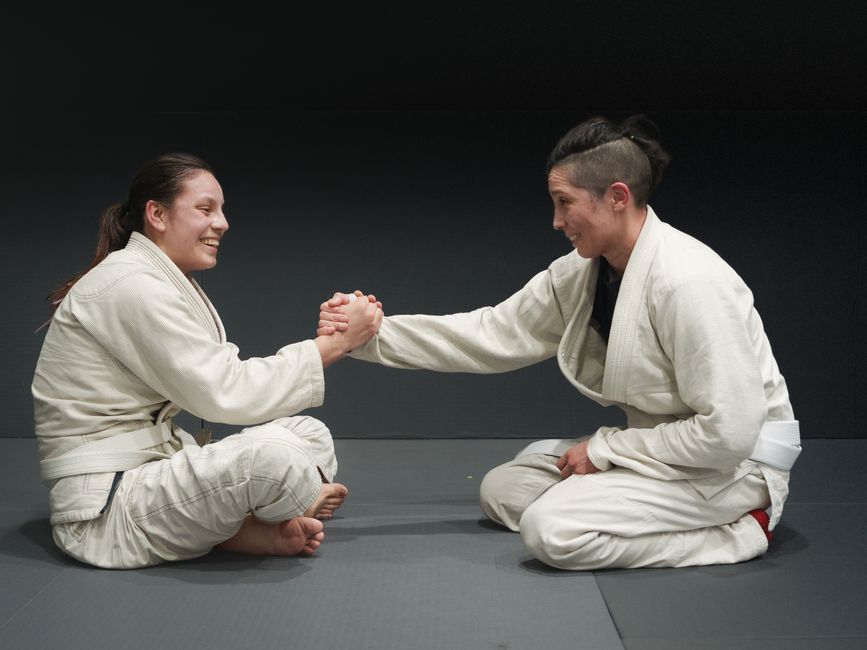
When you're looking at women's jiu-jitsu near me, you'll notice programs are structured differently. Here's what you might encounter:
All-levels women's classes: These combine white belts and higher ranks in one session. A good instructor will give modifications for beginners while keeping advanced students challenged. These are great for building community across skill levels.
Women's beginner-only sessions: Perfect if you're completely new. Everyone's starting from scratch, so there's zero pressure to keep up.
Women-focused curriculum within co-ed classes: Some gyms teach women-specific techniques during co-ed sessions. This bridges the gap if you prefer mixed training but want instruction adapted for women.
Trial classes and fundamentals courses: Many gyms offer intro programs specifically designed to get women comfortable with basics before jumping into regular classes.
Ask your gym which format they use. Gonzales JJ structures classes to meet women where they are, whether that's day-one beginner or several months in.
Start your BJJ journey off (Free Class)
Get Started Today →What Actually Happens in Your First Class
You show up nervous. That's completely normal. Most gyms will have you sign a waiver and chat with an instructor about your goals.
Then you'll warm up. This is usually joint rotations, some light cardio, maybe some stretching. Your body might feel stiff if you've never done this before. That's fine.
Next comes instruction. The instructor will demonstrate a technique slowly, usually starting from a fundamental position like sitting or on your knees. You'll pair up with a partner (usually someone close to your skill level) and practice it together.
Finally, you'll have "rolling," which is sparring at whatever intensity you want. You can ask your partner to go light, and they should respect that 100%. This is where jiu-jitsu gets fun because you actually get to use what you just learned.
Bring water. Wear comfortable clothes (or a gi, the traditional uniform). Shower before class. That's it. You're not expected to know anything else.
Questions to Ask Before Signing Up
Before you commit to a membership, here are the questions that actually matter:
- "Do you have a trial class I can attend for free or low cost?"
- "What's the instructor's background with women's training?"
- "What's the average class size for women's sessions?"
- "Are there beginner-specific classes, or do all levels train together?"
- "How much does membership cost, and are there cancellation options?"
- "Do you have flexible scheduling if I can't commit to a set number of classes per week?"
- "What's the vibe like? Do most people stay for multiple years?"
A gym that answers these questions clearly and patiently is worth your time. A gym that gets defensive or vague? Keep looking.
The Mental Game: Why Women's Jiu-Jitsu Changes You
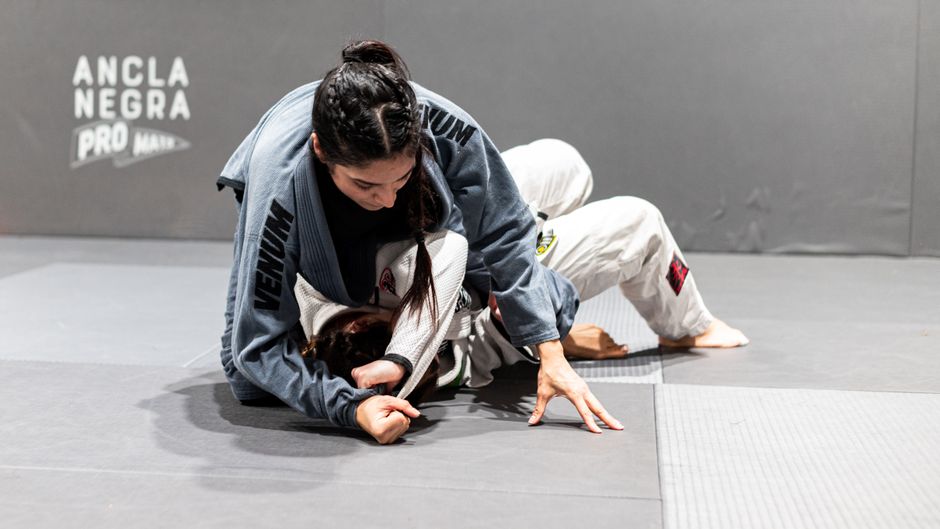
Here's something that might surprise you: jiu-jitsu isn't really about fighting. It's about problem-solving under pressure. Every roll teaches you how to stay calm when things feel hard, how to adjust when your first plan fails, and how to keep trying when someone stronger is on top of you.
For women especially, this is powerful. You learn that your body can do things you didn't think were possible. You build real confidence because it comes from something tangible, not from someone telling you you're capable.
According to research in Sports Medicine, martial arts training correlates with improved mental health outcomes, including reduced anxiety and increased self-efficacy in women. That's not just feel-good talk. That's measurable.
Women who train jiu-jitsu report better stress management, clearer thinking, and more confidence in their daily lives. The mat teaches you something that translates everywhere.
Getting Started: Your Action Plan
Here's exactly what to do this week:
- Search locally: Google "women's jiu-jitsu near me" or "women's BJJ [your city]" and make a list of 2-3 gyms.
- Check websites and social media: Look at their class schedule, read reviews, and get a feel for their community.
- Call or email: Ask about trial classes and women-specific programming. Take note of how they respond.
- Attend a trial: Show up to a beginner or all-levels women's class. Wear whatever feels comfortable. Bring water.
- Talk to people after class: Ask current students what they like about the program. Real feedback from real members is gold.
- Make a decision: If it felt good, sign up for a month and commit to showing up twice a week. Consistency matters more than perfection.
If you're in or near Rio Rancho, New Mexico, Gonzales JJ offers women-focused jiu-jitsu classes built by and for women who want to grow both on and off the mat. Whether you're a complete beginner or coming back after a break, that's the kind of community that actually changes how you show up in the world.
FAQs: Women's Jiu-Jitsu Questions Answered
Do I need to be fit to start women's jiu-jitsu?
Nope. Jiu-jitsu builds your fitness as you train. You don't need a baseline level of strength or flexibility to start. Beginners come in at all fitness levels, and instructors scale everything accordingly. Your first week will feel challenging, but that's normal. After a month, you'll notice your conditioning improving fast.
Will I get hurt doing women's jiu-jitsu?
Injuries happen, but they're rare in well-run programs. You control the intensity of your rolls, so you can ask partners to go light while you learn. Tap early and tap often (tapping is how you signal you're done). A good gym culture respects taps immediately with zero ego. Take it seriously, but not fearfully.
What do I wear to women's jiu-jitsu class?
For your first class, wear anything comfortable you can move in. Shorts and a t-shirt work fine. Once you're sure you like it, invest in a gi (the traditional uniform), which usually costs $60-$150. Some gyms require a gi after a few weeks; others let you train in athletic wear longer. Ask your gym about their policy.
How long until I get my first belt promotion in women's jiu-jitsu?
You'll start as a white belt. Promotion timelines vary, but most people earn their blue belt after 6-12 months of regular training (showing up 2-3 times per week). Belt rank reflects technical knowledge and consistency, not just time spent. Your instructor will let you know when you're ready.
Start your BJJ journey off (Free Class)
Get Started Today →