
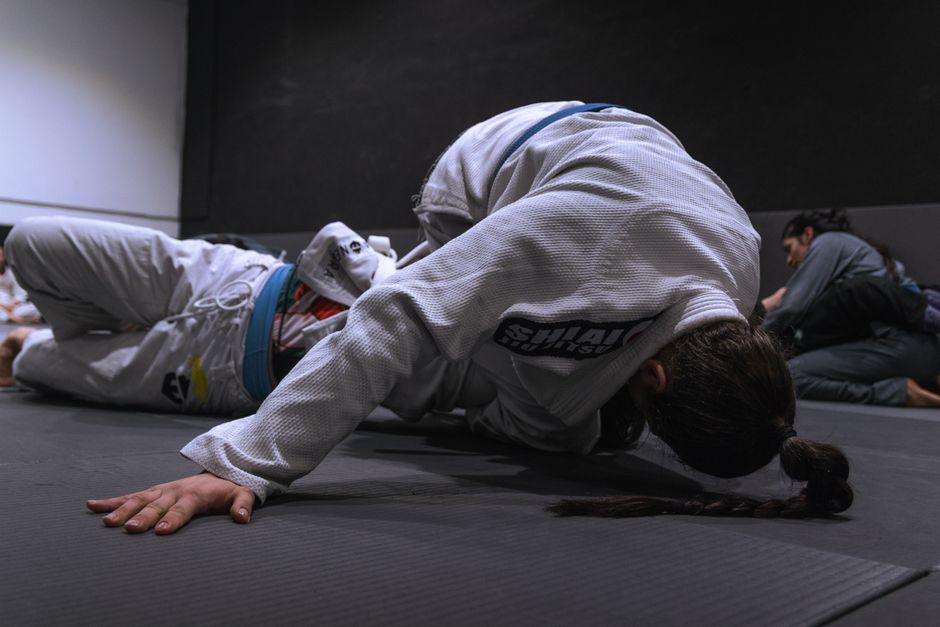
Yoga and jiu-jitsu go together better than you might think. If you train BJJ, adding yoga to your routine can transform your movement quality, speed up recovery, and help you avoid injuries that slow down your progress on the mat.
The best part? You don't need to become a yoga expert. A few focused sessions each week can give you measurable gains in flexibility, balance, and mental clarity—all skills that directly translate to better grappling.
Why Yoga Matters for Jiu-Jitsu Athletes
When you roll, your body moves in directions and ways it doesn't always experience in daily life. Your hips need to rotate deeply. Your shoulders need mobility and stability at weird angles. Your spine handles compression and twisting constantly.
Yoga addresses these specific demands. It builds functional strength in the exact ranges of motion you need for jiu-jitsu. It also teaches you to breathe under pressure and stay calm when things get tight—mental skills that matter just as much as physical ones.
Back pain is super common in BJJ. Training stacks stress on your lower back and shoulders. Yoga helps decompress your spine, strengthen your core in all directions, and restore balance to muscles that get tight from repetitive grappling patterns.
The Best Yoga Styles for BJJ Practitioners
You don't need to do every yoga style. For jiu-jitsu, a few approaches work better than others.
Vinyasa yoga is the most popular choice for grapplers. It flows from pose to pose in a way that builds strength and endurance while keeping your heart rate up. The continuous movement feels closer to rolling than static stretching does.
Ashtanga yoga follows a fixed sequence. This structure is great if you like consistency and want to track your progress week to week. It's demanding, so it also builds real conditioning.
Restorative yoga isn't flashy, but it's essential for recovery. These slower classes with longer holds help your nervous system relax and your muscles repair. Do these on your lighter training days or the day after a hard session.
If you're new to yoga, many studios offer beginner classes that won't overwhelm you.
Key Poses Every Jiu-Jitsu Athlete Should Practice
These poses target the tight spots and weak links that cause problems in BJJ.
- Pigeon pose - Opens your hips deeply, where most grapplers get restricted
- Lizard pose - Stretches your hip flexors, which get cranked during leg lock attacks
- Cow face pose - Improves shoulder mobility in multiple directions
- Bridge pose - Strengthens your glutes and lower back to protect your spine
- Child's pose - Decompresses your lower back and calms your mind
- Downward dog - Full-body strength and shoulder stability
- Warrior poses - Build leg strength and balance, both critical for footlock defense
You don't have to hold these poses for long. Even 30 seconds per side, done consistently, creates real change over a few weeks.
Breathwork and Mental Toughness
Pranayama (breathwork) is the part of yoga most jiu-jitsu athletes overlook—and it's one of the biggest payoffs.
In BJJ, when someone is heavy on you or catching your submissions, your instinct is to panic and hold your breath. That makes everything worse. Yoga teaches you to breathe steadily even when your body wants to tense up.
Simple practices like counting your exhales longer than your inhales calm your nervous system and improve your ability to stay relaxed under pressure. That's not just good yoga. That's competitive jiu-jitsu.
How to Build a Yoga Routine Around Your BJJ Training
Consistency beats intensity. Three 20-minute sessions per week will give you better results than one long session.
On heavy training days: Skip yoga or do a short restorative class. Your body is already working hard, and adding more stress isn't smart.
On light training days or rest days: Do a longer vinyasa or ashtanga flow. This is when you can push your flexibility and strength without interfering with your jiu-jitsu progress.
Right after rolling: A 10-minute cool-down with gentle stretches and breathing work speeds up recovery and helps you decompress mentally.
Before bed: Restorative poses for 15 minutes improve sleep quality, and better sleep is when your body actually rebuilds.
If you want a place to put that mobility to work, Gonzales JJ offers technique-focused jiu-jitsu classes for all levels in Rio Rancho.
Start your BJJ journey off (Free Class)
Get Started Today →Related: Gracie Jiu-Jitsu: Self-Defense & Technique Guide
Related: Gracie Jiu-Jitsu: A Beginner's Guide to Getting Started
Common Mistakes Grapplers Make with Yoga
Going too hard too fast is the biggest one. Yoga is not a competition. If you throw yourself into intense classes before your body is ready, you'll get injured and quit. Start with beginner classes and let your flexibility improve gradually.
Skipping breathwork is another. Many people see yoga as just stretching. The breathing and mental focus parts are where the real magic happens for jiu-jitsu athletes.
Ignoring your specific tight spots is also common. You're not doing yoga just to do yoga. Focus on the poses and sequences that directly help your jiu-jitsu—hip openers, shoulder mobility, and spine decompression.
Tracking Progress and Staying Motivated

In jiu-jitsu, progress is visible. You hit new techniques. You move up in belt rank. Yoga feels slower, but the gains are real.
Notice small changes: your guard feels less cramped, your shoulders roll easier, you recover faster after rolling, you sleep better, you feel less anxious before competition. These all count.
Set a goal—maybe holding pigeon pose for two full minutes on both sides, or doing a full vinyasa flow without stopping. Write it down. Check it in two weeks. You'll be surprised how much yoga combined with consistent jiu-jitsu training actually improves your body and mind.
Yoga as Part of Your Broader Jiu-Jitsu Journey
Yoga isn't a replacement for jiu-jitsu training. It's a tool that makes your jiu-jitsu better. Better mobility means you can execute techniques more cleanly. Better breathwork means you stay calm under pressure. Better recovery means you show up to the mat ready to work instead of beat up and tight.
If you're serious about jiu-jitsu—whether you're training for competition, self-defense, or pure love of the sport—yoga should be part of your plan. The consistency, discipline, and mind-body connection you develop on the yoga mat directly support everything you're building on the jiu-jitsu mat.
Many serious grapplers find that yoga becomes as important to their training as rolling itself. Give it time, stay consistent, and you'll feel the difference.
Frequently Asked Questions
How often should I do yoga if I'm training jiu-jitsu?
Three sessions per week is a solid baseline. You can start with two if you're new to yoga, and scale up to four or five once your body adapts. The key is consistency—three reliable weekly sessions beat sporadic, intense efforts.
Can I do yoga on the same day as jiu-jitsu training?
Yes, but timing matters. Do yoga either several hours after rolling or as a light recovery session. Avoid hard vinyasa flows on the same day as intense jiu-jitsu training—your body needs rest to repair.
What if I'm not flexible yet? Can I still benefit from yoga?
Absolutely. You don't need to be flexible to start yoga. In fact, tight grapplers often see the fastest improvements because they have the most room to gain. Start with beginner classes and meet your body where it is.
Will yoga prevent jiu-jitsu injuries?
Yoga can lower your injury risk by improving mobility, building balanced strength, and teaching you body awareness. It's not a guarantee, but many grapplers find it helps them stay healthier and recover faster.
Start your BJJ journey off (Free Class)
Get Started Today →