

Short answer: Yes, jiu jitsu is genuinely one of the most effective self-defense martial arts in the world. But there's a catch—and it matters.
Most people think self-defense means throwing punches or kicks. That's not what jiu jitsu teaches you. Instead, it gives you the tools to escape danger, control a threat, and neutralize someone without relying on strength or size. That's why it works for almost everybody.
Related: Is Jiu Jitsu Good for Self Defense? Rio Rancho Guide
Related: Is Brazilian Jiu Jitsu Good for Self Defense? The Real Answer
Let's break down why jiu jitsu actually delivers on the self-defense promise, and why the difference between sport training and real-world defense matters more than you'd think.
Why Jiu Jitsu Is Effective for Self-Defense
Jiu jitsu is built on a simple principle: leverage and technique beat size and strength.
In a real self-defense situation, most fights end up on the ground. That's when jiu jitsu shines. You learn how to escape when someone has you pinned, how to sweep them off balance, and how to control them without needing to be the bigger or stronger person.
Here's what makes it different from other martial arts:
- It works against larger attackers. A 140-pound person trained in jiu jitsu can neutralize a 220-pound untrained person because leverage does the work, not muscle.
- Ground fighting is practical. Most street confrontations go to the ground quickly. Jiu jitsu teaches you how to handle that environment.
- You learn control, not just offense. The goal is to escape or neutralize a threat, not to hurt someone badly. That's self-defense, not fighting.
- It's adaptable to your body. Whether you're 16 or 60, small or large, jiu jitsu techniques can be molded to how you move and what your body can do.
The historical proof is there too. When jiu jitsu practitioners first competed in mixed martial arts events, they dominated trained strikers from other martial arts. That wasn't luck. It was because grappling and ground control work in real situations.
The Critical Difference: Sport vs. Self-Defense Training
Here's where most people get confused, and where Gonzales JJ and other serious gyms make a distinction: modern sport jiu jitsu and self-defense jiu jitsu are not the same thing.

Sport jiu jitsu focuses on points, competition rules, and scoring in a controlled environment. You wear a gi, there's a referee, and certain moves are illegal. It's great training, but it's optimized for winning matches, not escaping real danger.
Self-defense jiu jitsu prioritizes practical techniques that work in chaotic, unpredictable situations. You learn escapes from bad positions. You learn how to deal with someone who's not following rules. You learn to create space and get away, not to stay and fight.
Sports coach John Danaher has noted that combat sports training and self-defense training are fundamentally different. One trains you to compete; the other trains you to survive. Both use jiu jitsu, but the focus is different.
So when you're looking for self-defense training, ask yourself: Is the gym teaching sport jiu jitsu primarily, or are they emphasizing practical self-defense applications?
What You Actually Learn That Helps in Real Situations
If you train jiu jitsu with self-defense in mind, here's what you gain:
- Escape techniques. How to get out from underneath someone who's on top of you. This is the most common self-defense scenario.
- Sweeps and reversals. Ways to flip the power dynamic so you're no longer in a vulnerable position.
- Control without injury. How to hold someone in place so you can escape or call for help, without causing permanent damage.
- Positional awareness. Understanding where your body and theirs should be to stay safe.
- Breathing under pressure. Learning to stay calm and think clearly when someone is physically on top of you or restraining you.
- Confidence and threat recognition. Training changes how you carry yourself and how quickly you can assess danger.
That mental piece is huge. A lot of self-defense is about prevention and de-escalation. Knowing you have skills changes your posture, your tone, and how you move through the world. Attackers target people who look uncertain or afraid. Training removes that signal.
Start your BJJ journey off (Free Class)
Get Started Today →Who Benefits Most from Jiu Jitsu Self-Defense
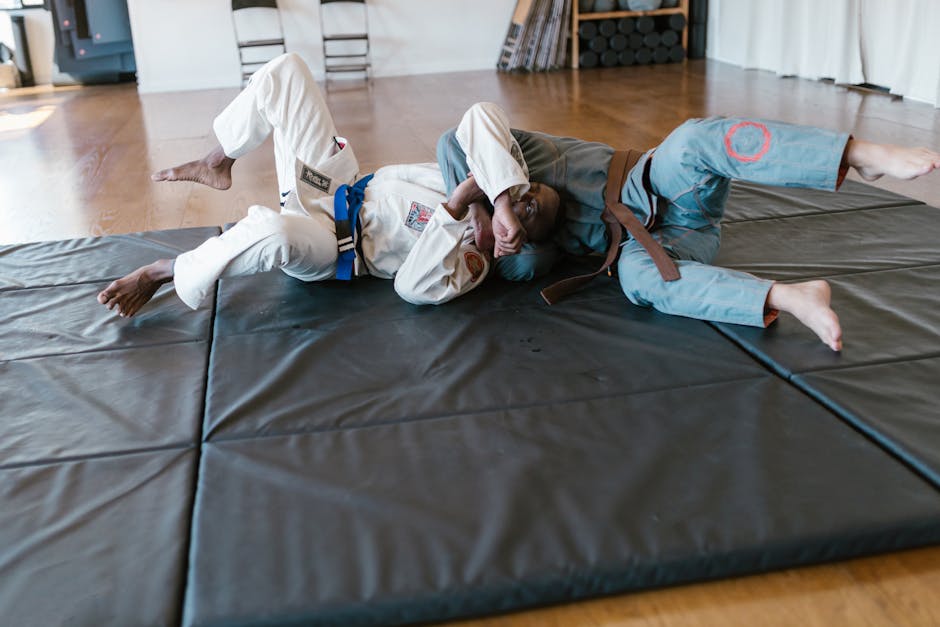
Jiu jitsu self-defense training is valuable for a wide range of people, and that's one reason it's so popular:
- People who are smaller or physically weaker. You don't need size or strength to apply a solid technique. This makes it perfect for women, teenagers, and smaller adults.
- First responders and security professionals. Control and restraint without excessive force is part of the job. Jiu jitsu teaches that.
- Families concerned about bullying. Teaching kids jiu jitsu builds confidence and gives them real tools if they're ever cornered or attacked.
- Anyone in a physically demanding job. Construction workers, healthcare workers, and others who might face physical confrontation benefit from practical grappling skills.
- People who just want to feel safer. Training is as much about mindset as it is about technique. You'll feel more capable.
What Self-Defense Jiu Jitsu Won't Do
Be honest about the limits. Jiu jitsu is excellent when fighting has already started or when someone is on top of you. It's less useful if someone pulls a weapon or if there are multiple attackers.
That's why real self-defense is about awareness, avoidance, and escape first. Jiu jitsu is your backup plan when those fail.
Also, you have to actually train consistently to develop real skills. One weekend seminar won't cut it. You're building muscle memory and practical experience, and that takes time. Most people need at least 3-6 months of regular training to have techniques feel natural under stress.
Getting Started with Self-Defense Jiu Jitsu
If you want to learn jiu jitsu specifically for self-defense, look for a gym that emphasizes practical applications alongside traditional training. Not all jiu jitsu instruction is the same.
Find a place where the instructors understand the difference between sport and self-defense, where they're willing to explain why you're learning each technique, and where there's a supportive community. A good gym will scale training to your experience level and never pressure you to do things that don't feel right.
Start with fundamentals. Escapes, sweeps, basic control positions, and how to breathe and stay calm under pressure. Master those before you worry about fancy moves. The foundational stuff is what actually saves you in a real situation.
If you're in the Rio Rancho or Albuquerque area, check out Gonzales JJ—they focus on technique-first training and include self-defense fundamentals for everyone from kids worried about bullies to adults who want practical skills. No ego, just solid instruction.
The Real Value of Jiu Jitsu Self-Defense
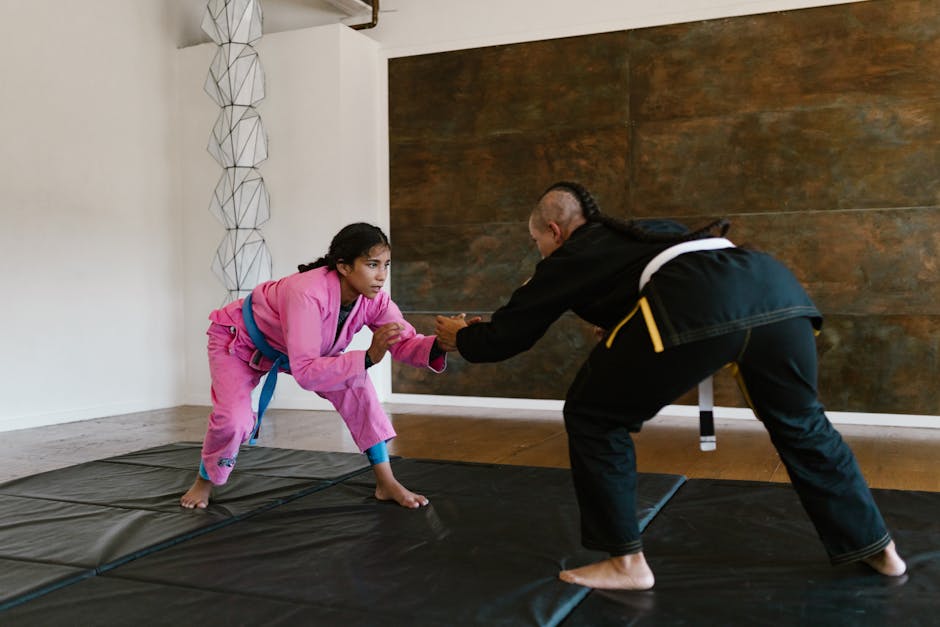
At the end of the day, jiu jitsu is good for self-defense because it solves the most common self-defense problem: what do you do when someone is physically controlling you?
It's one of the few martial arts that gives you real answers to that question. And because it's based on leverage instead of size, it's accessible to people of all ages, genders, and body types.
The best self-defense is the one you actually practice and believe in. If jiu jitsu clicks for you, train it consistently. Your confidence, your body awareness, and your actual technical skills will all improve. That's worth more than any self-defense guarantee.
Can you learn self-defense jiu jitsu if you're older or out of shape?
Absolutely. Jiu jitsu scales to your body and fitness level. You'll start where you are and progress from there. Many people in their 40s, 50s, and beyond train jiu jitsu successfully. The technique-first approach actually makes it safer and more accessible for people who aren't already athletic.
How long before jiu jitsu self-defense skills actually work?
You'll start feeling more capable and confident within 2-4 weeks. Real muscle memory and reflexes develop over 3-6 months of consistent training. At that point, you'll have genuine tools you can rely on. Keep training and you'll keep improving.
Is sport jiu jitsu useless for self-defense?
Not useless, but it's not optimized for self-defense. Sport jiu jitsu builds excellent grappling skills, positional control, and problem-solving under pressure. Those skills are valuable in any physical situation. The difference is that self-defense training emphasizes escapes and practical scenarios, while sport training emphasizes techniques that score points in matches.
What about women and jiu jitsu self-defense?
Jiu jitsu is one of the best self-defense options for women because it doesn't rely on size or strength. A woman trained in jiu jitsu can control and escape from larger attackers using leverage and technique. Many gyms have women-focused classes, and communities of female practitioners are strong and supportive.
Start your BJJ journey off (Free Class)
Get Started Today →