
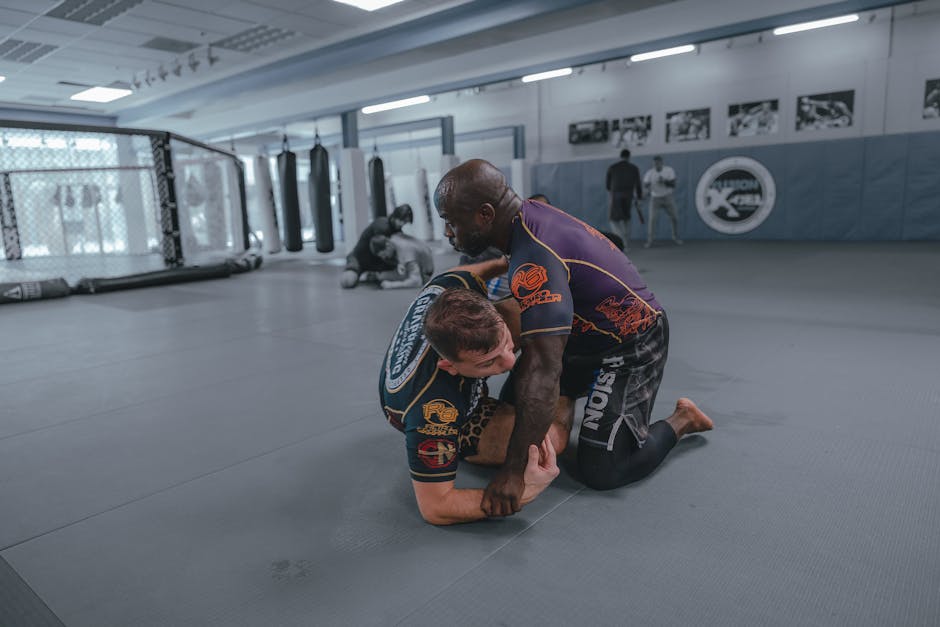
The single leg takedown is one of the most effective and fundamental techniques you can learn in jiu jitsu. Whether you're training in the gi, working no-gi, or just want a solid takedown that works at every level, the single leg is your friend.
In this guide, we'll break down the mechanics, show you multiple ways to finish, and give you drills you can use to nail this technique every time you step on the mat.
Related: Jiu Jitsu Scissor Sweep: Step-by-Step Guide for Beginners
Related: Jiu Jitsu Strength and Conditioning: A Complete Guide
Related: Jiu Jitsu for Self Defense: A Practical Guide
What Is a Single Leg Takedown in Jiu Jitsu?
A single leg takedown is exactly what it sounds like: you grab one of your opponent's legs and use control, leverage, and positioning to bring them to the ground. The beauty of this move is that it works because of solid mechanics, not just strength.
The core principle is simple: one arm in, one arm out. This means one arm controls the leg while your other arm manages your opponent's upper body or balance. Once you master this principle, the rest becomes footwork and timing.
How to Set Up a Single Leg Takedown
Before you can finish the takedown, you need to create the opening. The setup depends on where you and your opponent are positioned.
From Closed Guard: If you're on your back in closed guard, pull both sleeves and control both arms. Step one foot on the mat next to your opponent's hip. Pull the extended arm (the one you want to attack) while using your leg to create space. This sets up your shot.
From Open Positioning: If you're standing or in open guard, move into your opponent's space with a forward step. Get your head to the side of their body. This is where timing and distance matter most. You want to close the gap without telegraphing your move.
The key at both positions is controlling your opponent's posture or balance before you commit to grabbing the leg. If they see the leg grab coming with no setup, you'll get sprawled on.
The Grab and Control Phase
Once you've set the stage, it's time to grab. Wrap both arms around the leg you're targeting. One arm goes around the back of the leg (calf area), and the other wraps around the front (above the knee or on the thigh).
Keep your head tight to their body. This prevents them from using their hips to escape or sprawl. Your chest should be pressed against their thigh or hip.
Pull the leg toward your chest and stay heavy. Don't be upright or loose. The tighter and lower you are, the harder it is for them to defend. This is where that "one arm in, one arm out" principle helps: even though both arms are on the leg now, think about keeping one arm controlling their upper body or blocking their hands.
Three Main Finish Variations

Once you have control of the leg, you need to complete the takedown. There are multiple ways to do this. Here are the three main finishes:
1. Tree Top Finish
From your controlled position, drive your hip into them and rotate your body. Your back knee drops to the mat, and you're essentially sitting through. This puts their leg on your hip or thigh, and gravity and your weight take them down. It's simple, effective, and works when they're defending by staying upright.
2. Hike the Football Finish
This one feels like you're hiking a football. You pull the leg up toward your chest and backward slightly, then drive forward and down. Your hips come forward, and you're moving their leg out from under them. It works great when they're trying to step around you or when they're leaning back.
3. Arm Wedge Finish
You create a wedge with one arm between your body and their leg. Then you extend through your legs and rotate, using the wedge to separate their leg from their base. This finish is slick when you need to adjust your angle quickly.
Multiple Leg Finishing Options
Beyond these three main finishes, there are other effective ways to complete the takedown depending on how your opponent is defending. Some people go for a straight leg drag. Others finish by lifting the leg and rotating. The core concept stays the same: control the leg, control their posture, and use leverage to bring them down.
The more finishes you practice, the more options you have when something isn't working. If the tree top isn't landing, switch to the hike. If the hike is getting defended, go to the wedge or a different variation altogether.
The "Run the Pipe" Finish
There's a specific situation where this finish shines: when your opponent has their opposite leg forward. Instead of fighting against their stance, you run the pipe. This means you're moving around their leg in a way that uses their own position against them.
It's a great example of how jiu jitsu works best when you adapt to what your opponent is doing instead of forcing one technique.
Single Leg Takedown Works Everywhere

One reason the single leg takedown is so fundamental is that it works in the gi, in no-gi, and across different rule sets. You don't need fancy equipment or specific conditions. The mechanics are universal.
This is why Gonzales JJ emphasizes technical fundamentals: techniques that work in multiple contexts are techniques that will serve you for life on the mat.
Start your BJJ journey off (Free Class)
Get Started Today →
Drills to Perfect Your Single Leg Takedown
Knowing the technique and being able to hit it consistently are two different things. Here are some drills to build your single leg:
Drill 1: Setup Reps
Without actually taking your partner down, just practice the setup and grab 10-15 times in a row. Focus on your footwork, your head position, and where your arms go. Get the grab comfortable before you worry about the finish.
Drill 2: Finish from the Knees
Start in a controlled position on your knees with a partner in front of you. Practice each finish variation 5-10 times. This removes some variables so you can focus purely on the mechanics of finishing.
Drill 3: Live Reps at Half Speed
Once you've got the mechanics down, practice the whole technique at 50% intensity with a partner who is giving light resistance. This bridges the gap between drilling and rolling.
Drill 4: Rolling with Intention
In a real roll, pick specific moments to attempt the single leg instead of doing it randomly. This helps you understand timing and when the opening actually exists.
Common Mistakes to Avoid
Even with good mechanics, small errors can shut down your single leg. Watch out for these:
Being too upright when you grab. You need to be low and heavy, not standing tall.
Letting go with your upper body control. Once you've grabbed the leg, don't lose track of their hands or posture.
Finishing too slowly. Once you commit, complete the takedown. Hesitation gives them time to escape.
Grabbing too far from their body. Stay close. Distance is your enemy.
Forgetting to use your hips. Your legs and hips drive the takedown, not just your arms.
Why Fundamentals Matter
The single leg takedown has been working for decades because it's built on solid mechanics. You don't need to be the strongest or the fastest person on the mat to land this technique. You need good timing, proper positioning, and repetition.
This is what separates jiu jitsu from other fighting arts: technique beats athleticism when technique is done right. If you want to build a jiu jitsu game that actually works, start with fundamentals like the single leg and master them completely.
If you're serious about getting your takedowns sharp and learning techniques in an environment where fundamentals are the foundation, check out what Gonzales JJ offers. Training with people who understand the importance of solid mechanics will speed up your progress.
How to Know You're Doing It Right
When your single leg is working, you'll feel it. Your opponent won't be able to sprawl. They won't be able to pull their leg free. The takedown happens because of control, not because you're muscling them down.
You'll also notice that tired opponents and fresh opponents both get taken down the same way. That's how you know the technique is solid.
Can I use a single leg takedown in competition?
Yes. The single leg takedown is allowed in all jiu jitsu rule sets. It's a fundamental technique, not a heel hook or a neck crank. You'll see it used at white belt all the way up to the highest levels of competition.
What if my opponent keeps sprawling on my single leg?
Sprawling means they're staying upright and pushing their hips back. Fix this by improving your setup so they don't see the grab coming, or by controlling their posture harder before you grab. You can also chain to a different technique like a foot sweep or a guard pull if the single leg keeps getting shut down.
Is the single leg takedown good for self-defense?
The single leg works for self-defense because it's effective and reliable. However, self-defense situations are unpredictable. Training in jiu jitsu teaches you how to stay calm and use technique, which is more important than any single move. Talk to an instructor about self-defense context and how different techniques apply.
How long does it take to get good at the single leg takedown?
You can hit a basic single leg takedown after a few months of consistent training. Getting truly sharp with multiple finishes and variations takes longer. The good news is that the single leg is something you'll use and refine for your entire jiu jitsu journey, so there's always room to improve.
Start your BJJ journey off (Free Class)
Get Started Today →