
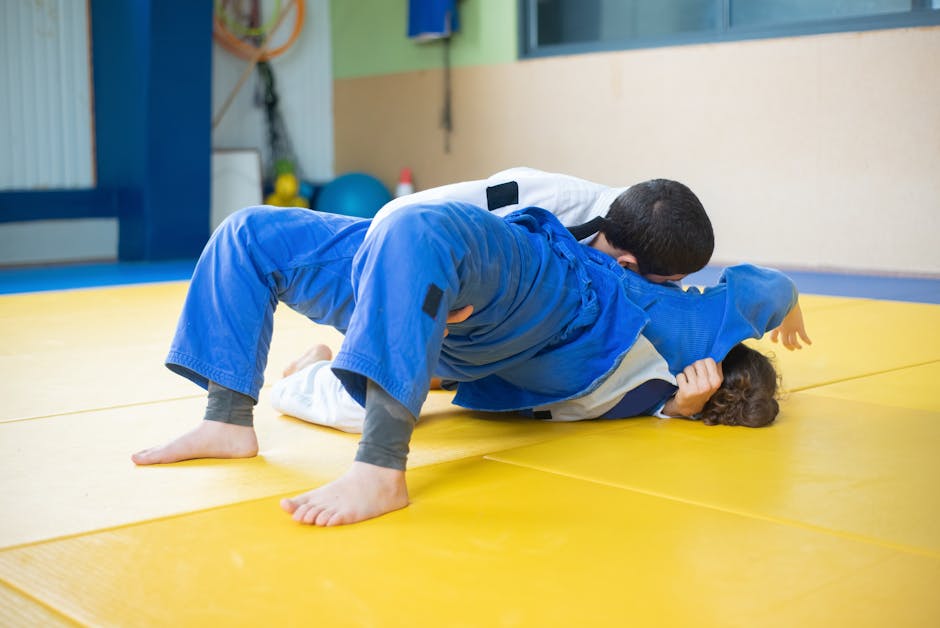
The jiu jitsu scissor sweep is one of those techniques that feels like magic when you first nail it. Your opponent is pressing down on you from inside your closed guard, and suddenly their weight is flying over your legs and you're on top. That's the scissor sweep, and it's a game-changer for beginners.
This technique belongs in that elite 20% of moves that account for 80% of your success in BJJ. It's high-percentage, repeatable, and works because it follows core jiu jitsu principles rather than relying on strength or speed. If you're starting your BJJ journey, the scissor sweep should be one of your first guard techniques.
Related: Basic Jiu Jitsu Moves: Essential Techniques for Beginners
Related: Brazilian Jiu Jitsu Basic Moves: A Beginner's Guide
Related: Best Jiu Jitsu Instructional Videos: A Beginner's Guide
What Makes the Scissor Sweep So Effective?
The reason the scissor sweep works is simple: you're using your legs (the strongest part of your body) against your opponent's upper body (where they have less leverage). When executed properly, your opponent can't stop it without understanding the counter.
At Gonzales JJ, we teach the scissor sweep early in our fundamental curriculum because it builds confidence. Beginners see immediate results, which motivates them to keep training and refining their technique.
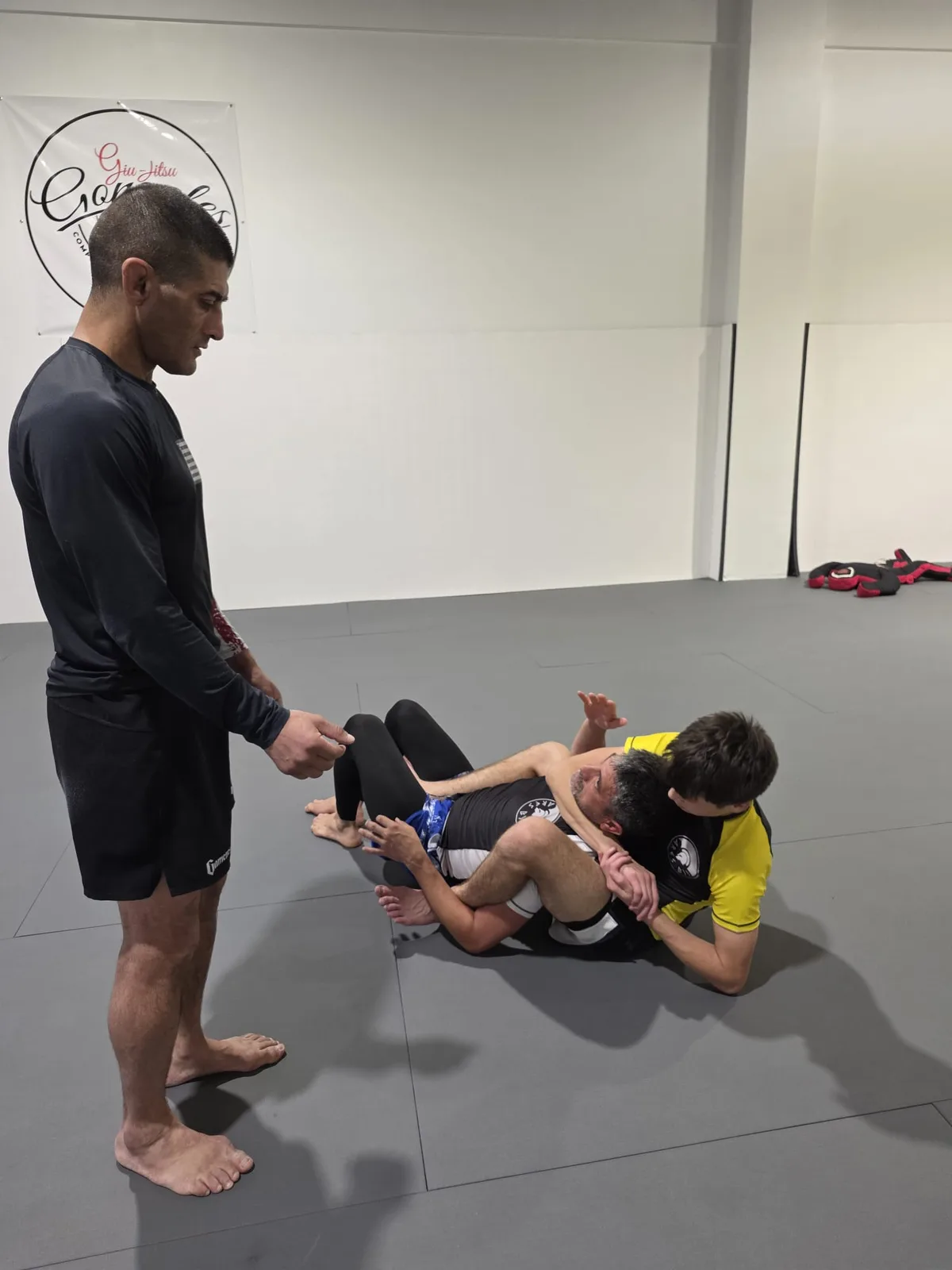
The technique also teaches you about weight distribution, timing, and the importance of grips. Those principles carry over to every other technique you'll learn.
Step-by-Step: How to Execute the Scissor Sweep
Step 1: Establish Your Closed Guard
You're on your back with your legs wrapped around your opponent's torso, feet locked together. Your opponent is pressing down on you from a top position. This is your starting point.
Step 2: Grip Their Sleeve
Grab your opponent's sleeve (usually their right sleeve) with your right hand. Your grip should be firm but not tense. This grip is crucial because it prevents them from posting their arm to stop the sweep.
Your left hand can either grip their collar or their other sleeve, depending on what feels natural. Both work. The key is controlling their upper body so they can't base out.
Step 3: Hip Escape and Angle
Shift your hips slightly toward the side you're sweeping. If you're using your right leg to execute the sweep, your hips rotate toward the right. This creates the angle you need.
Don't move too far. You're making a small adjustment, not a big escape. Think of it as setting up geometry rather than creating distance.
Step 4: Straighten Your Right Knee
This is where the technique happens. In one smooth motion, extend your right leg straight while keeping your left leg bent and locked. Your right leg should move from bent to fully extended, pushing their bottom side away from you.
The extension needs to be powerful but controlled. Think of it like a piston. You're driving through their weight.
Step 5: Scissor Your Legs
At the same time you're extending your right leg, bring your left leg up and across. This creates a scissoring motion. Your legs are now closing together in an X-shape.
The timing here matters. Both legs move together. If your right leg extends and your left leg just sits there, the sweep won't work. It's a synchronized movement.
Step 6: Roll to Top Position
As your legs scissor and your opponent's weight goes up and over your legs, you roll with them. You're now on top in a dominant position. Typically you'll land in side control or knee on belly.
Keep pressure on them. Don't just think you've finished the technique—complete the transition to top control before they recover.
Common Mistakes Beginners Make
One huge mistake is moving too early. Beginners often try to scissor their legs before they establish a solid grip. The grip creates the control. The sweep is what happens after.
Another common error is not extending your right knee fully. The extension is what loads the spring. If you only partially straighten your leg, you won't generate enough force.
Third mistake: losing your grip during the sweep. Your hands need to stay tight on their sleeve throughout the entire motion. The moment you release, they can post and stop the sweep.
Finally, some people try to do the scissor sweep from positions where it won't work. You need a closed guard. If your feet are unhooked or your opponent has broken your guard, this technique isn't your answer.
How Often Should You Practice This?

For beginners, aim to practice the scissor sweep 2-4 times per week during your training sessions. This could be during technique drills, positional rolling, or full rolls.
Related: Brazilian Jiu Jitsu No Gi: Complete Training Guide
Related: Youth Jiu Jitsu Gi: Complete Guide for Young Athletes
Related: Is Jiu Jitsu a Martial Art? Rio Rancho's Guide to BJJ
Consistency matters more than intensity. Five minutes of focused scissor sweep practice three times a week beats one intense session followed by two weeks of nothing. Your muscle memory needs repetition to develop.
Start slow. Drill the technique without your opponent resisting. Then add light resistance. Finally, practice it during rolling when your opponent is actively trying to stop you.
Why This Technique Matters for Your Growth
The scissor sweep teaches you something fundamental about jiu jitsu: leverage beats strength. You're using basic mechanics and proper positioning to move someone much stronger than you.
That lesson applies everywhere in BJJ and life. You learn that preparation, timing, and technique matter more than athleticism. When you hit your first scissor sweep successfully against someone who's been training longer than you, something clicks. You realize that anyone can do this.
That's why Gonzales JJ emphasizes fundamental techniques in our curriculum. We're not just teaching moves. We're building your understanding of how jiu jitsu actually works. The confidence you gain from mastering the scissor sweep carries over to everything else you learn.
Start your BJJ journey off (Free Class)
Get Started Today →Taking Your Scissor Sweep to the Next Level
Once you're comfortable with the basic scissor sweep, there are variations and details to explore. Some grapplers prefer gripping the collar instead of the sleeve. Others add a neck tie grip to increase control.
You can also practice the scissor sweep from half guard or from different angles. But before you go exploring variations, get the fundamental version smooth and reliable. Master the basics first.
As you develop proficiency, your opponent will start trying to defend the scissor sweep. They'll start posting their arm. They'll try to step their leg over. When that happens, you'll learn counters and transitions. But that's intermediate stuff.
If you're serious about building a strong foundation in jiu jitsu, consistent technique work like this is essential. That's what separates people who train casually from people who truly develop as grapplers. If you're ready to dive deeper into fundamentals and personalized instruction, Gonzales JJ offers technique-focused training designed to build confidence and competence both on and off the mat.
Frequently Asked Questions
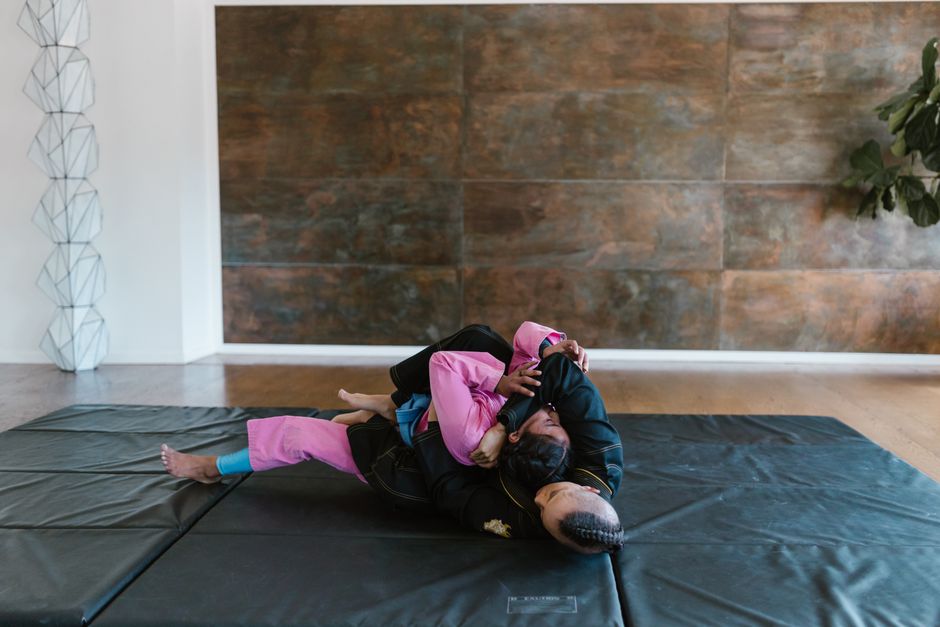
Can I do the scissor sweep if my opponent is much stronger than me?
Yes. That's the whole point of the technique. The scissor sweep works because it doesn't rely on strength. It relies on leverage and timing. Strength can actually work against you here because tense muscles move slower. Stay relaxed, execute the technique with proper mechanics, and a stronger opponent's size becomes irrelevant.
What if my opponent is defending the scissor sweep?
If they're posting their arm to stop the sweep, you've moved to the intermediate phase. They're trying to base out and block your legs. Common responses include changing the angle of your attack, breaking their base with your upper body grip, or transitioning to a different guard technique. This is where drilling multiple guard techniques helps—if the scissor sweep isn't working, you have options.
Is the scissor sweep useful in competition?
Absolutely. The scissor sweep is effective in beginner, intermediate, and advanced competition. It appears in matches at every level. The reason is simple: it works when executed with proper technique. Gonzales JJ emphasizes competition-ready fundamentals because techniques that work in rolling work in competition too.
How long does it take to get good at the scissor sweep?
With consistent practice 2-4 times per week, you should feel competent with the scissor sweep within 4-6 weeks. That means you can set it up, execute it with decent timing, and land in top position. Mastery—where you can hit it reliably even against resistance and adapt to defenses—takes longer. Maybe 3-6 months of focused practice. The timeline depends on your training frequency and how much attention you give the technique.
Start your BJJ journey off (Free Class)
Get Started Today →