
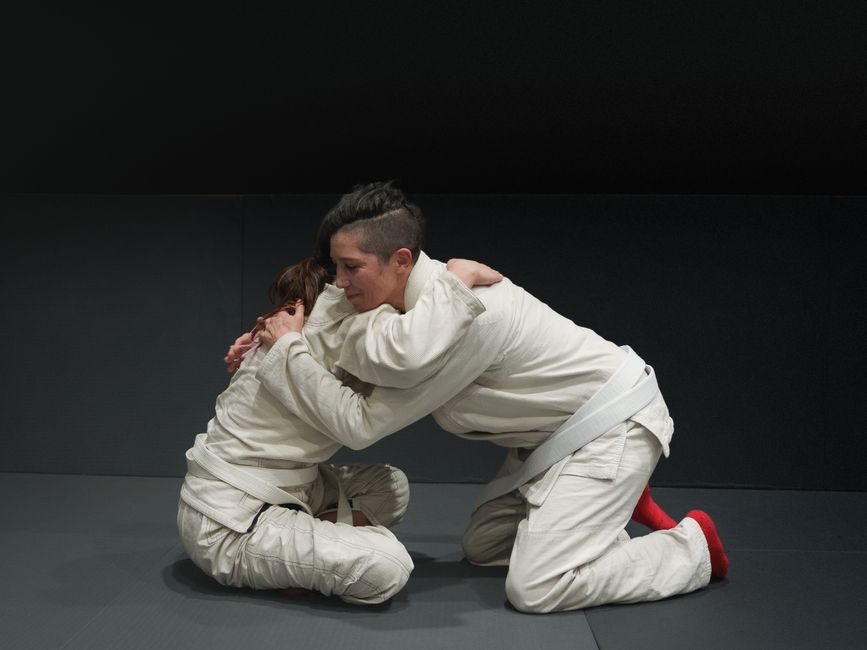
Strength training for Brazilian Jiu-Jitsu isn't just about lifting heavy stuff. It's about building the right kind of power, endurance, and injury resilience so you can execute techniques harder, escape stronger, and stay on the mat longer without gassing out.
If you're training BJJ seriously, you need a strength program that complements—not competes with—your mat time. Here's what actually works.
How Much Strength Training Should You Do?
The sweet spot is 2 strength training sessions per week paired with 4-6 BJJ classes weekly. This gives your body enough stimulus to get stronger without crushing your recovery or taking time away from technique work.
More isn't better. A lot of grapplers think they need to hit the gym every day, but that's how you burn out fast. Quality over quantity wins every single time.
Each strength session should take 45-60 minutes, including a solid warm-up. You're not trying to become a powerlifter. You're trying to become a better jiu-jitsu player who happens to be strong.
The Six Core Exercise Categories for BJJ
Your strength training should focus on six movement patterns that directly transfer to the mat. If an exercise doesn't fit one of these categories, it's probably wasting your time.
- Hinge movements (deadlifts, good mornings, trap bar deadlifts)
- Squat variations (back squats, box squats, goblet squats)
- Pull movements (pull-ups, rows, lat pulldowns)
- Push movements (bench press, push-ups, overhead press)
- Explosive work (medicine ball slams, jump squats, plyometric rows)
- Core and posterior chain (planks, dead bugs, reverse hypers)
Hinges build the glute and hamstring power you need for takedowns and leg lock defense. Squats give you the quad strength and stability for positional dominance. Pulling exercises strengthen your back, lats, and grip—all critical for guard work and submissions. Pushes balance out the pulling and protect your shoulders. Everything matters.
A Simple Two-Day Split Structure
You don't need a complicated program. A basic two-day split works perfectly for grapplers.
Day 1: Hinge, Pull, Finisher
- Main lift: Deadlift variation or sumo deadlift (3-5 sets, lower reps)
- Pull movement: Rows or pull-ups (3-4 sets, 6-10 reps)
- Finisher: Something explosive or core-focused (2-3 sets)
Day 2: Squat, Push, Finisher
- Main lift: Back squat or box squat (3-5 sets, lower reps)
- Push movement: Bench press or overhead press (3-4 sets, 6-10 reps)
- Finisher: Core, glute, or explosive work (2-3 sets)
Space these sessions 48-72 hours apart if you can. Train Monday and Thursday, or Tuesday and Friday. This gives your body time to recover while still keeping the strength stimulus fresh.
If you're training BJJ hard 5-6 days a week, do your strength work on days when you have lighter mat sessions or as a separate early morning session. Listen to your body—if you're exhausted, move the workout to the next day.
Why Hinge and Squat Variations Matter Most
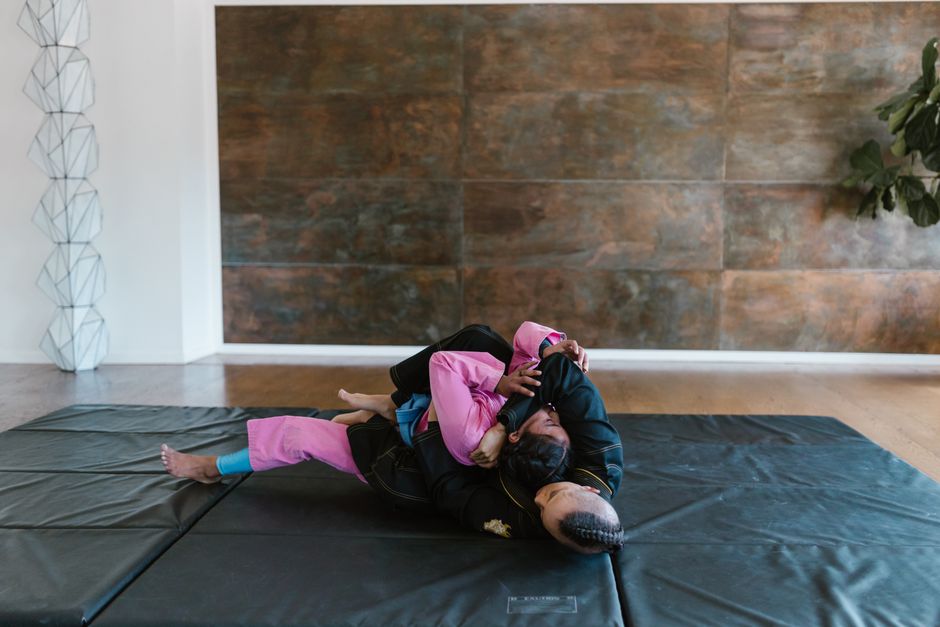
Box squats and back squats build explosiveness from a dead stop, which directly translates to shooting faster takedowns and escaping bottom positions. You need that leg drive.
Related: Brazilian Jiu Jitsu No Gi: Complete Training Guide
Related: Passing the Guard in Brazilian Jiu-Jitsu: Complete Beginner's Guide
Related: Brazilian Jiu Jitsu Training Near Me: Complete Local Guide
Deadlifts—whether conventional or sumo—strengthen your entire posterior chain: glutes, hamstrings, lower back, and upper back. This is where your power comes from when you're standing, and it's where your injury prevention starts.
Don't skip these. Isolation exercises are nice, but the big compound movements are non-negotiable for jiu-jitsu strength.
Start Every Session With Mobility Work
Before you lift anything, spend 15 minutes on joint mobility and activation. This isn't stretching—it's preparing your hips, shoulders, ankles, and spine to move correctly.
Focus especially on hip mobility. Your hips take a beating in jiu-jitsu, and tight hips lead to compensations that hurt your lifting and your technique on the mat.
A simple routine might look like: arm circles, cat-cows, hip circles, 90/90 hip stretches, glute bridges, and some light leg swings. Get your heart rate up a little, then move into your main lifts.
Avoid Overtraining and Stay Healthy
Here's where most grapplers mess up: they try to do too much. They train BJJ 6 days a week, lift heavy 4 days a week, and add conditioning on top of it all.
Your body can only handle so much stress before it breaks down. Recovery is where the gains actually happen. If you're constantly tired, sore, or achy, you're not training hard—you're just hurting yourself.
Stick to 2 strength sessions per week. Let the BJJ training be your primary stimulus. The strength work is there to fill gaps, prevent injuries, and make your technique more explosive. It's a support system, not the main event.
If you want personalized guidance on building a strength program specifically for your BJJ game, the coaches at Gonzales JJ in Rio Rancho can help you dial in what works for your body and your training schedule.
Start your BJJ journey off (Free Class)
Get Started Today →
Programming for Competition
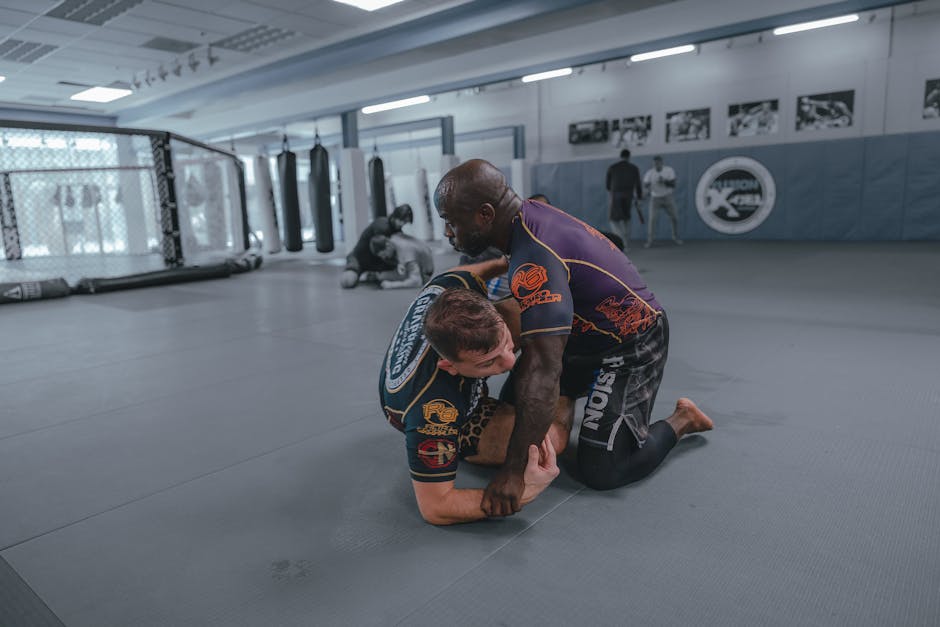
If you're competing in BJJ, your strength programming should shift based on where you are in your competition cycle.
In the off-season, go heavier. Build raw strength with lower reps (3-6 per set) and longer rest periods. This is your time to add muscle and power.
As you get closer to a competition, lighten the weight slightly and increase reps (8-12 range). Reduce volume a little too. You want to stay strong but not come in beat up and tired.
In the week before a big match, dial back strength training to just one session of lighter, technical work. Your nervous system needs to be fresh, not fried from heavy lifting.
Key Takeaways
- 2 strength sessions per week is enough when combined with 4-6 BJJ classes
- Focus on hinges, squats, pulls, and pushes—the six core patterns
- Use a simple two-day split to keep it manageable
- Always start with mobility work
- Don't overtrain; recovery is where the magic happens
- Adjust volume and intensity based on your competition timeline
People Also Ask
Should I lift on the same day as BJJ training?
It depends on your energy and recovery. If you can do both in one day—strength in the morning, BJJ at night, with food and rest between—go for it. If you're exhausted, separate them by 24 hours instead. Quality in both sessions matters more than squeezing them on the same day.
What rep range is best for jiu-jitsu strength?
Main lifts should be in the 3-6 rep range for pure strength. Secondary exercises can go 6-12 reps. Finishers and conditioning work can be higher reps (12-20). Vary it throughout your training cycle to build different types of strength.
Can I get stronger without lifting weights?
Bodyweight exercises, resistance bands, and functional movements can build strength, but they plateau faster than weighted training. Adding even 2-3 days of basic barbell or dumbbell work will accelerate your progress significantly compared to bodyweight alone.
How do I know if I'm doing too much strength training?
Signs of overtraining include persistent fatigue, decreased performance on the mat, joint pain, trouble sleeping, and getting sick more often. If you're experiencing any of these, cut back to 1 strength session per week for 2-3 weeks and let your body recover.
Start your BJJ journey off (Free Class)
Get Started Today →