
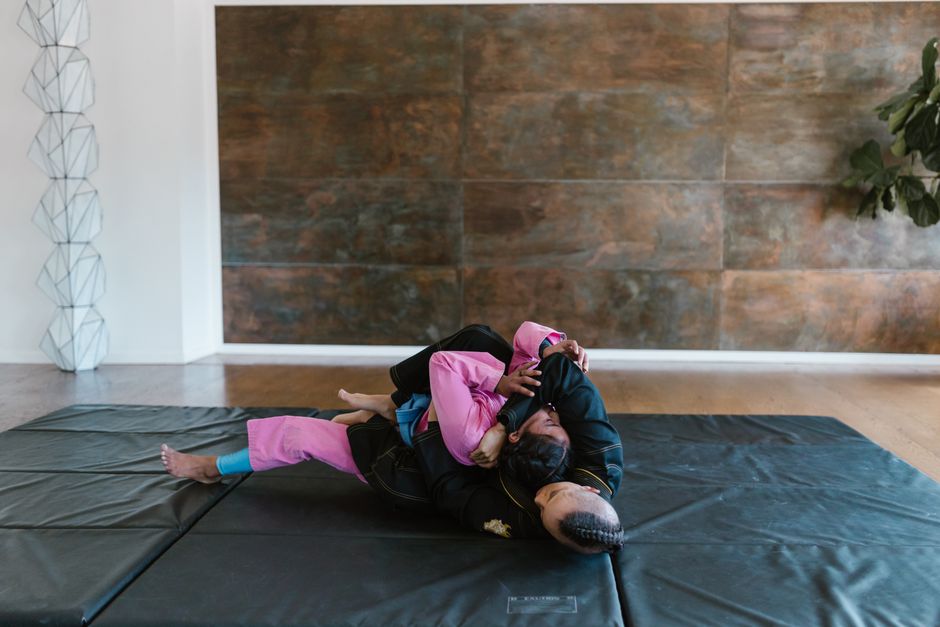
Being mounted is one of the toughest spots in jiu jitsu. Your opponent is on top of you with good control, and the pressure feels heavy. But here's the good news: escaping mount position is totally learnable, and it's one of the foundational skills every jiu jitsu student needs to master.
The secret isn't about brute strength. It's about understanding how to use frames, shift weight, and create space. Once you know the mechanics, you'll feel way more confident rolling—and you'll actually start escaping consistently.
Related: Jiu Jitsu Class: What to Expect & How to Get Started
Related: Best Brazilian Jiu Jitsu Gi: What to Know Before You Buy
Related: Best Jiu Jitsu Gi: What to Look For When Choosing
Why Mount Escapes Matter So Much
Mount is one of the most dominant positions in jiu jitsu. Your opponent controls your hips, chest, and head, making it hard to move or defend submissions. That's exactly why learning to escape is non-negotiable.
When you can't escape mount, you're stuck absorbing pressure and waiting for a mistake. But when you know the techniques, you turn defense into offense. You regain control of your hips, create space, and often transition to a better position like guard or half-guard.
This is something Gonzales JJ emphasizes from day one of training: mount escapes aren't optional. They're part of your foundation, just like learning to bridge or shrimp.

The Frame-Based Escape Approach
The first rule of mount escapes is this: don't push. Frame instead.
When you push directly against your opponent's chest or arms, they feel the pressure and adjust. But when you frame, you create a post that forces them to support their own weight rather than dump it on you.
Here's how to set it up:
- Place your hands on your opponent's hips or low ribs—not their chest or shoulders.
- Create a frame by extending your arms and locking your elbows.
- Keep your hands close to your body so your opponent can't isolate or break your grip easily.
- Use this frame to generate space and control where their weight goes.
The frame isn't about pushing them off. It's about creating a barrier that shifts their weight distribution and opens up your escape window.
Mastering Hip Control and Weight Distribution
Once your frame is set, your next move is controlling the opponent's hips. This is critical because the hips drive everything in jiu jitsu.
When they're on top of you, their hips are the anchor point for their control. If you can move their hips, you move them.
Use your frame to push their hips to one side. This is where weight distribution comes in. You want to shift their weight so they're mostly supported by one leg instead of being centered on both. When they're heavy on one side, they can't stop you from escaping to the other side.
Think of it like this: if their weight is evenly split 50-50, they're balanced. But if you shift them to 70-30 or 80-20, they lose stability. That's your opening.
The Bridge Escape Technique
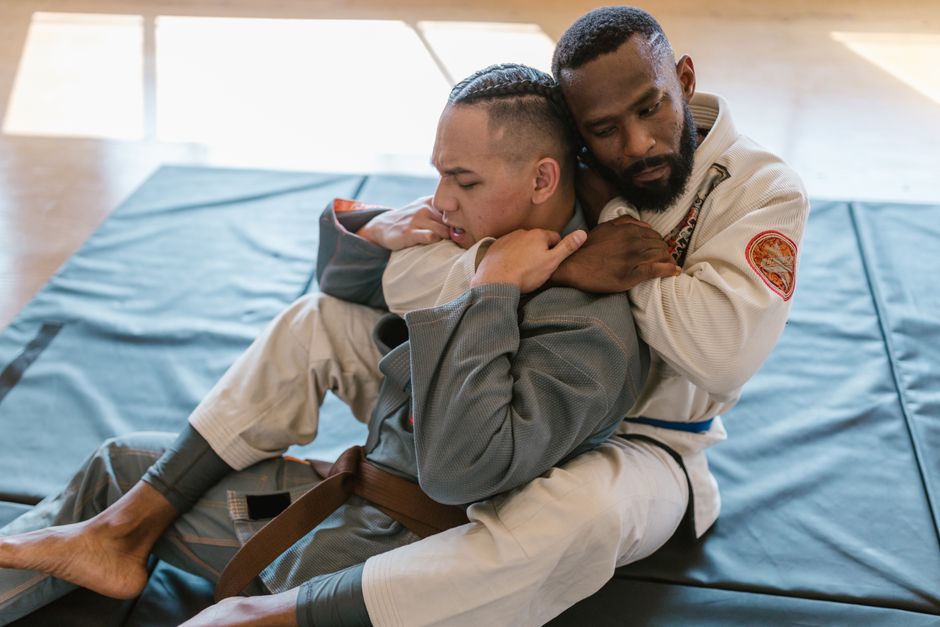
The bridge is one of the most effective and reliable mount escapes. It uses your whole body—legs, hips, and core—not just your arms.
Here's the step-by-step:
- Plant your feet flat on the mat, close to your butt. Your knees should bend at roughly 90 degrees.
- Keep your frame in place on their hips.
- Drive through your feet and explosively lift your hips up as high as you can.
- As you bridge, shift their weight to one side (use that frame you built).
- They'll scramble to stay on top or adjust their weight. That split second is when you move.
- Shrimp your hips to the side (that's the technical term for the hip escape movement) and recover to guard or half-guard.
The bridge isn't a gentle lift. It's explosive and purposeful. You're not trying to knock them off—you're lifting your hips to create space and force them to react.
Controlling the Internal Elbow
One detail that separates good escapes from sloppy ones is controlling the internal elbow.
When your opponent is in mount, they're usually posting their elbows inside (near their body) for balance. If you can control one of those elbows, you limit their ability to base and adjust.
Grab their elbow on one side and pin it to the mat or pull it across their body. This removes one of their supports, making them heavier on the other side. Combined with your frame and bridge, this makes escaping much easier.
This sounds technical, but it's just one more tool to shift weight and create imbalance. That's the entire game of escaping mount: imbalance plus space equals freedom.
Beginner Mistakes to Avoid
Here's what most people get wrong when they're learning mount escapes:
- Pushing instead of framing: Direct pushes don't work. Your opponent is too heavy and too positioned. Frame and control instead.
- Waiting instead of acting: Don't just bridge and hope they fall off. You have to move your hips and transition while they're adjusting.
- Losing your frame: The moment you relax your arms or let your elbows bend, you lose control. Keep that frame tight.
- Bridging straight up: Bridge explosively but also shift their weight. A straight vertical bridge won't work without the weight shift.
- Panicking: Mount pressure can feel scary at first. Take a breath, focus on one technique, and stay calm. Calm thinking beats raw effort every time.
Practice Progressions for Mount Escapes
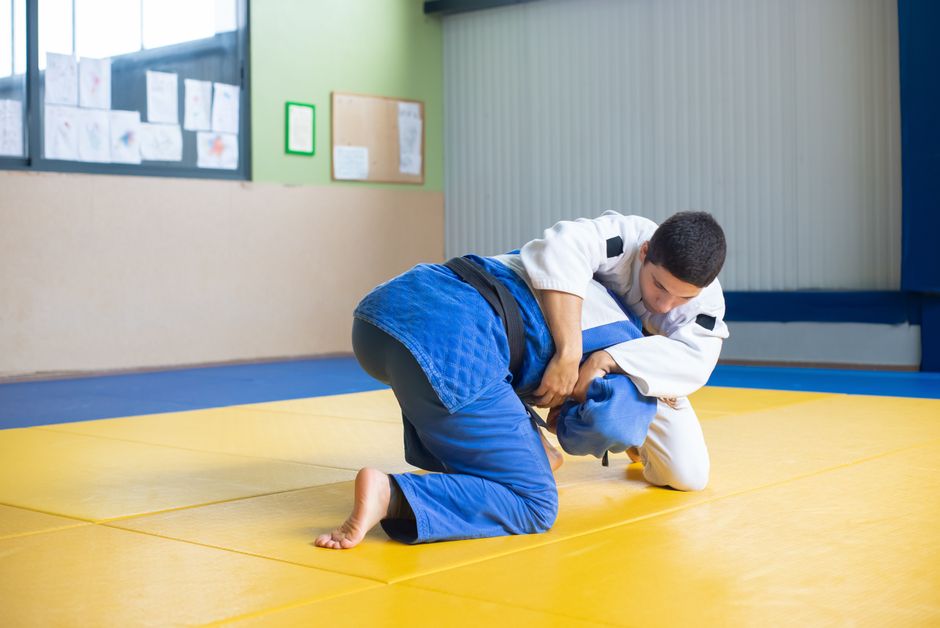
You don't learn mount escapes by rolling hard from day one. You learn them systematically.
Start with your partner letting you work the escape without much resistance. Practice the framing, the bridge, the hip shift—get the movements smooth. Then add some light resistance. Finally, practice against someone who's actively defending.
This progression matters. Your nervous system needs to learn the pattern first, then learn to execute it under pressure.
If you're serious about building solid fundamentals, training at Gonzales JJ means you'll get personalized feedback on these details. Having an instructor watch and correct your frame, your timing, and your weight distribution makes a huge difference.
Start your BJJ journey off (Free Class)
Get Started Today →Common Mount Escape Variations
There's not just one way to escape mount. Different approaches work for different body types and situations.
Some escapes emphasize the bridge more heavily. Others focus on immediate hip movement and shrimping. Some use arm drags or underhooks to change the dynamic. The core principles stay the same—frame, control weight, create space, move—but the details change based on your style and what works for your body.
As you train more, you'll discover which variations feel natural to you. That's part of jiu jitsu: learning the fundamentals deeply so you can adapt them to yourself.
Why Repetition Matters More Than Knowing Every Variation
Here's something important: knowing ten mount escape techniques is less valuable than being really good at two.
Related: Children's Jiu Jitsu Gi: What to Buy and Why It Matters
Pick one or two that feel solid, and drill them over and over until they're automatic. Your body learns better through repetition than through learning a bunch of different options that you never really master.
Once the basic escape is wired into your muscle memory, you can start exploring variations and adjusting based on what your opponent does. But that foundation of repetition has to come first.
What if I keep getting stuck in mount?
That's normal. Mount is a tough position, especially when you're new. The most common reason you're stuck is that your frame isn't solid, or you're trying to escape straight up instead of shifting weight to one side first. Focus on weight distribution before you focus on the bridge. Also, don't be afraid to ask your instructors for help—they can spot what you're missing.
Should I tap if I'm stuck in mount?
No. Tapping is for submissions or when you're in real danger of injury. Being mounted is uncomfortable, but it's not a submission. Use it as a chance to drill your escape. This is how you learn.
How long does it take to get good at mount escapes?
You can start escaping reliably after a few weeks of consistent training if you focus on the fundamentals. Getting really sharp at it—escaping against tough opponents—takes a few months. But the basics click pretty fast once you understand the weight distribution piece.
Can I escape mount without using my legs?
Technically, yes. You can use arm drags, underhooks, or frame-based escapes that don't rely on bridging. But bridging and leg drive are the most reliable path, especially when you're learning. Once you're comfortable, you can explore arm-heavy variations.
Start your BJJ journey off (Free Class)
Get Started Today →