

A jiu jitsu guard pass is how you break through your opponent's leg defense and move from a bottom position into a dominant one. It's one of the most fundamental skills you need to develop, whether you're training for competition or self-defense.
The good news? You don't need to learn hundreds of variations. You need to focus on the techniques that actually work—the ones that show up in matches over and over because they're reliable and efficient.
Related: Leg Lock Jiu Jitsu: Complete Guide to Techniques & Defense
Related: Jiu Jitsu Moves: Essential Techniques for Beginners
Related: Basic Jiu Jitsu Moves: Essential Techniques for Beginners
Here's what separates people who improve fast from those who plateau: they learn a handful of high-percentage passes and drill them until they become second nature. That's the approach we recommend at Gonzales JJ, and it works whether you've been training for three months or three years.
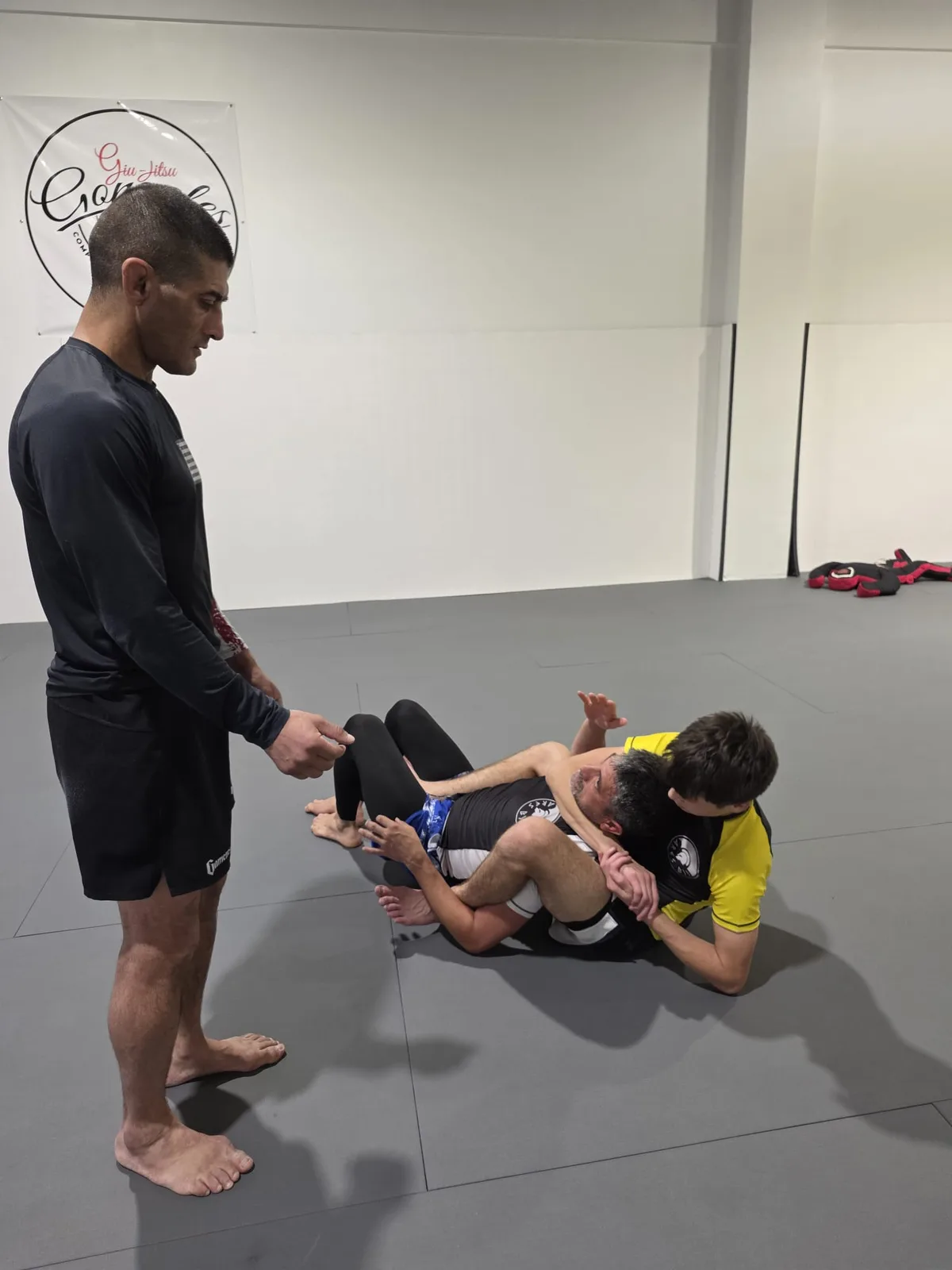
The Knee Smash Pass: Your Foundation
The knee smash is one of the most consistent guard passes in modern jiu jitsu. Here's why it works: you're not fighting your opponent's leg strength head-on. Instead, you're using angles and pressure to make their defense uncomfortable.
How to execute it:
- Start in a combat base (feet wide, weight forward) in your opponent's guard.
- Identify which side of their body has tighter knee control.
- Post your hands on their chest or hips for balance.
- Drive your knee to one side, smashing their knees together as you drive.
- As soon as their knees collapse to that side, step your hips through and flatten them into side control.
The key detail: consistency beats speed. You want steady, controlled pressure—not a sudden explosive move. When you apply the knee smash properly, even opponents with strong leg defense will have trouble maintaining their guard.
Chest-to-Chest Half Guard Passing
When your opponent has you in a half guard (one leg in, one leg out), the chest-to-chest approach is one of the highest-percentage passes in the sport. Research and real competition footage confirm this works at every level.
The setup:
- Posture up and get your chest heavy against their chest.
- Underhook their top arm or wrap both arms around them for control.
- Keep your weight low and centered.
- Use your hips to drive forward and slightly rotate into side control.
This pass is so effective because you're controlling their upper body while using your weight advantage. Their legs can't stop you if you're not fighting them—you're controlling the whole person.
The Toreando Pass for Standing and Dynamic Opponents
When your opponent is flailing their legs and spinning, reactive movements will waste your energy. The Toreando (or bullfighter) pass gives you structure instead of chaos.
The concept:
- Stay in a high, mobile stance.
- Grab both of their knees or thighs with a tight grip.
- Use your grip to push their legs to one side.
- Step around their hips to side control.
Think of it like controlling a steering wheel. You're guiding their legs in a direction, not fighting against their motion. This pass shines against active, athletic opponents who are used to escaping passes.
The Knee Cut Pass
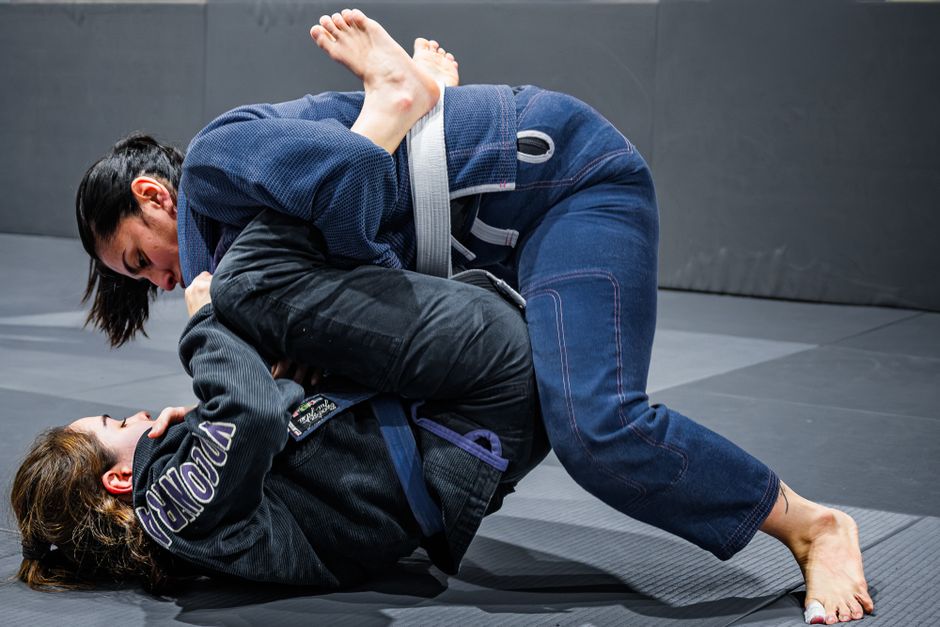
The knee cut is a sharper, more aggressive pass that targets the center line. It's perfect when your opponent's legs are open or their hips are flat.
Execution:
- Start in a combat base with your hands posted.
- Step one knee to the inside of their thigh (on the same side you're passing to).
- Drive your knee forward and across their hips while stepping your other foot through.
- Finish in side control with pressure through your cross-face.
This pass feels aggressive, but it's actually technical. You're using your knee as a wedge to split their guard cleanly. When you do it right, there's no scramble—just a smooth transition to top position.
Understanding Guard Retention Helps You Pass Better
Here's something most people miss: to get better at passing guard, study guard defense. When you understand how people defend against these passes, you'll pass guard more effectively.
The techniques your opponents use most often to stop passes are the ones you should counter first. If everyone defends the knee cut with a specific movement, that's the defense you train against repeatedly.
This back-and-forth between passing and defense is where real improvement happens. Training partners who force you to adapt make you sharper than drilling solo ever will.
After the Pass: Solidifying Side Control
Passing guard is only half the battle. Once you're past their legs, you need to understand side control fundamentals or they'll escape immediately.
Key principles:
- Keep your chest pressed against theirs.
- Post your head down for stability.
- Use your hip pressure, not just your arm strength.
- Stay tight—no space between your body and theirs.
A bad pass into a worse side control gets reversed. A solid pass into strong positional control wins rounds. The techniques flow together.
Build Your Guard Pass Arsenal Systematically
Start with one pass. Master it against resisting opponents for at least four to six weeks before adding another. Then pick a second pass—ideally one that works from a different angle or against a different starting position.
This approach sounds slow, but it's faster than learning ten passes at 50% competency. You want passes you can execute under pressure, against opponents of all sizes, when you're tired.
If you want structured guidance on building these skills in the right order, Gonzales JJ focuses on teaching high-percentage fundamentals first, then layering complexity as you improve. That progression matters more than knowing every variation.
Start your BJJ journey off (Free Class)
Get Started Today →Common Guard Pass Mistakes to Avoid
Relying only on speed: A fast, sloppy pass leaves you vulnerable. Controlled pressure works on everyone.
Neglecting footwork: Your feet matter as much as your hands. Bad footwork kills the entire pass.
Losing chest-to-chest contact: The moment you let your chest come off theirs, they have space to move. Stay heavy.
Stacking without follow-through: You can pin their legs, but if you don't move your hips through, they'll trap you in a scramble.
Forgetting to grip: Hands are everything. Control their limbs, control their escape.
Training Guard Passes Against Different Opponents
A pass that works beautifully against a smaller, flexible partner might fall apart against someone heavier or stronger. That's not a flaw in the technique—it's a sign you need to adjust.
Drill against partners who have different body types and styles. When your pass works across all of them, you've actually learned it. Until then, you're just getting lucky sometimes.
This is where focused, intelligent training makes the difference. You learn faster when someone's coaching you through the adjustments.
The Mental Side of Passing Guard
Guard passing isn't just physical—it's a mindset. You're entering someone's comfort zone intentionally. They've chosen guard because they feel safe there. Your job is to make that space uncomfortable and execute your technique before they can react.
That takes confidence. And confidence comes from drilling passes until they become automatic. When your body knows what to do, your mind can focus on reading your opponent.
That's how everyone grows and competes together at a real jiu jitsu gym—by building skill, not ego.
Frequently Asked Questions
What's the easiest guard pass for beginners?
The knee smash is usually the easiest entry point because it doesn't require a lot of coordination. You're using basic concepts (pressure + angles) without complex footwork. Once you get good at the knee smash, the other passes feel more natural.
How long does it take to learn a good guard pass?
If you drill three to four times per week and actively work on one pass, you'll be competent in about six to eight weeks. True proficiency—being able to hit it under pressure against tough opponents—takes three to six months of consistent training.
Can I use the same pass against everyone?
Not entirely. You'll need 2-3 passes because every opponent's body type and flexibility is different. What works on a short, stocky person might fail against someone tall and flexible. The fundamentals stay the same; the adjustments change.
What should I do if my guard pass keeps getting stuffed?
Your opponent is probably defending the same way repeatedly. Spend a training session studying their defense and adding a counter specifically for it. Ask your instructor or a training partner to defend the same way while you adjust. You'll find an angle that bypasses their defense—every pass has weaknesses, and every weakness has a counter.
Start your BJJ journey off (Free Class)
Get Started Today →