
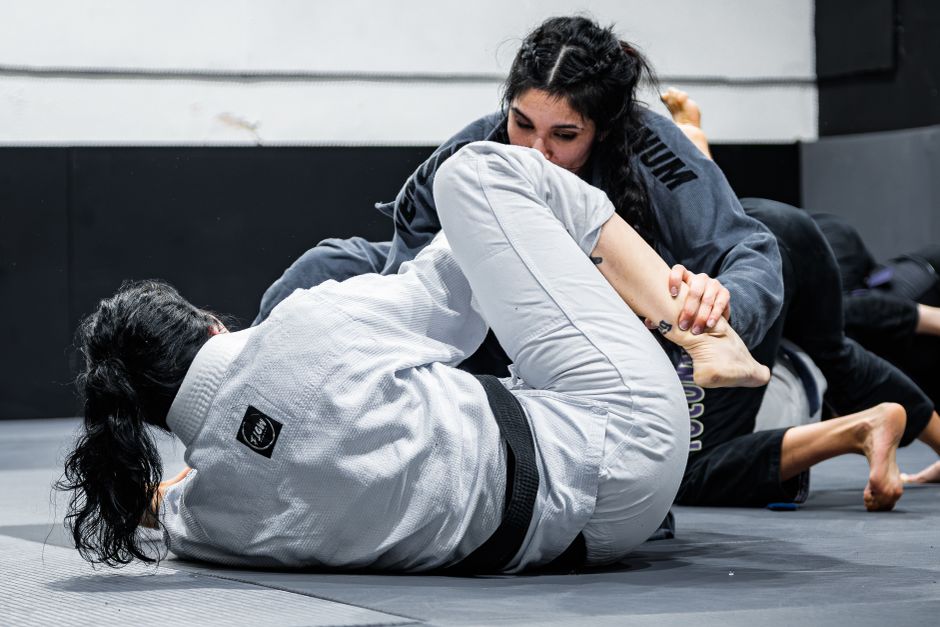
Weight training for jiu jitsu isn't complicated, but it does need to be intentional. If you're rolling on the mat 4-6 times a week, adding strength work without a plan is a recipe for overtraining and injury. The good news: you don't need to live in the gym. Two focused lifting sessions per week, built around the right movements, will give you the explosiveness and durability you need to dominate on the mat.
Why Weight Training Matters for Your BJJ Game
Jiu jitsu demands power you can't build on the mat alone. When you're driving through a takedown, controlling a heavy opponent from top position, or exploding out of a bad spot, you're relying on raw strength. Mat training builds technique and conditioning. Weight training builds the foundation that makes technique work.
The best part? Strength training actually protects you. Stronger muscles and connective tissue mean fewer injuries. Your joints stay healthier. Your body can handle the grinding pace of competition without falling apart.
If you're serious about becoming a better jiu jitsu athlete, Gonzales JJ recommends combining mat training with smart strength work. The combination of technique-focused rolling and targeted lifting creates athletes who are both skilled and powerful.

The Essential Movements for BJJ Strength
You don't need to do every exercise ever invented. Focus on the big compound lifts that translate directly to what you do on the mat.
Squats (Box Squats and Back Squats)
These are non-negotiable. Squats build explosive leg power and strengthen your posterior chain. That means stronger hips, glutes, and lower back. These muscles are everything in BJJ. They power your takedowns, keep you stable in bottom positions, and let you escape heavy pressure.
Deadlifts and Romanian Deadlifts
Deadlifts teach your body to generate force from the ground up. They strengthen your entire posterior chain and build the hip hinge pattern you need for dynamic movements. Romanian deadlifts (RDLs) are gentler on the spine and focus heavily on hamstring and glute strength, which is perfect for injury prevention.
Hinges and Explosive Movements
Any movement that involves hinging at the hips translates to jiu jitsu. Your hips are your power source. The more control and strength you build there, the more force you can generate in every position.
That's it. These three movement patterns form the foundation. You don't need a dozen different exercises. Master these, lift heavy, and watch your game transform.
The Right Rep Range and Intensity
Here's where a lot of people mess up: they either go too light or chase the wrong type of strength.
For maximum strength gains in jiu jitsu, train primarily in the 4-8 rep range. This means using weights heavy enough that your last 1-2 reps are genuinely difficult. This rep range builds power and pure strength without excessive muscle size that slows you down.
Heavy compound movements at lower reps create neurological adaptations. Your body learns to recruit more muscle fibers, move with more power, and generate force faster. That's exactly what you need on the mat.
Don't obsess over going to absolute failure. Leave 1-2 reps in the tank most sets. Train hard, but smart. You still have to recover from mat training.
How to Structure Your Lifting Around BJJ Training
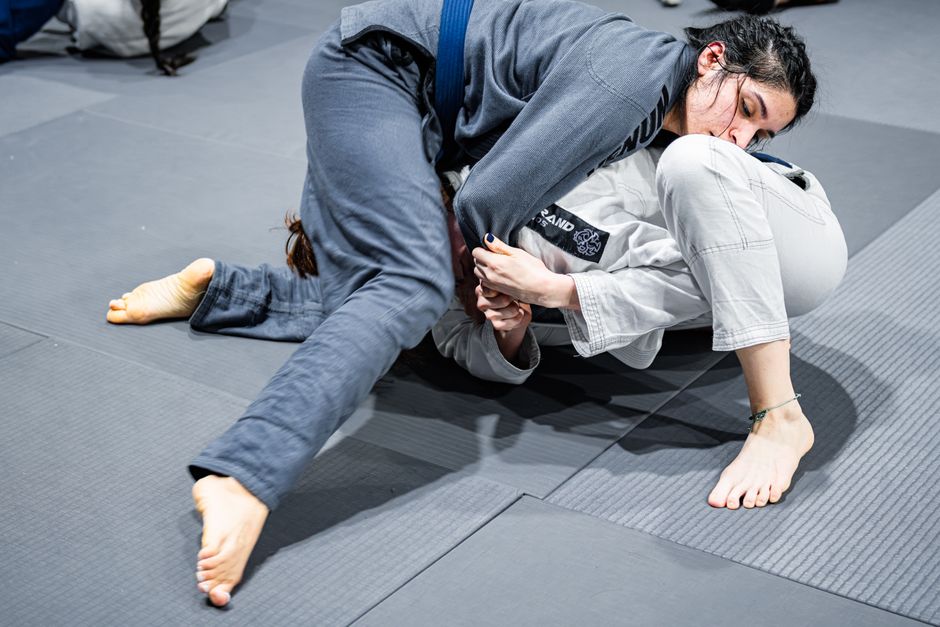
The biggest mistake is treating weight training and jiu jitsu as separate things that don't affect each other. They do.
Your body has a limited capacity to recover from hard training. If you're hitting the mat hard and lifting hard on the same day, you're asking too much. Your strength gains suffer. Your mat performance suffers. You get hurt.
Separate your lifting sessions from your hardest mat training days.
Here's a simple framework: if you're doing intense rolling on Monday, Wednesday, and Friday, lift on Tuesday and Thursday. On those lifting days, you might do a lighter technique-focused mat session, but nothing intense. This separation gives your nervous system time to recover and lets each type of training do its job.
Elite BJJ athletes train 4-6 times per week on the mat and 2 times per week in the weight room. That's a proven combination. You get the technical volume you need and the strength stimulus you need, without burning out.
Sample weekly structure:
- Monday: Heavy mat training (rolling)
- Tuesday: Strength training + light technique work
- Wednesday: Heavy mat training (rolling)
- Thursday: Strength training + light technique work
- Friday: Heavy mat training (rolling)
- Saturday & Sunday: Rest or light activity
Your exact schedule depends on your goals and competition timeline. If you're training at a gym that understands the overlap, your coach can help you customize this based on where you are in your competition prep.
Programming Strategy: Build a Real Plan
Don't just walk into the gym and do whatever feels heavy that day. Programming matters.
Your lifting plan should be built around your competition goals and your current weaknesses. Are you getting taken down too much? Build leg strength. Struggling to maintain top position? Work on back and core strength. Getting fatigued in the third round? Focus on explosive power that lets you finish matches faster.
There's no universal "one-size-fits-all" program. Every athlete is different. What works for a 170-pound lightweight won't work for a heavyweight. A person training for submission-heavy competition has different needs than someone training for points-based competition.
Start your BJJ journey off (Free Class)
Get Started Today →The baseline: focus on heavy compound movements 2 times per week, train in the 4-8 rep range for strength, and separate your lifting from your hardest mat sessions. Beyond that, get specific based on your needs.
Recovery Is Where the Magic Happens
Lifting breaks your muscles down. Sleep, nutrition, and rest build them back up stronger.
You need 7-9 hours of quality sleep every night. That's not optional. That's when your body releases growth hormone and repairs the damage from training. Skimp on sleep and all your lifting is wasted.
Eat enough protein. Aim for 0.8-1 gram per pound of body weight daily. That protein fuels muscle growth and repair. You're breaking down muscle fibers in both the gym and on the mat. You need raw materials to rebuild them stronger.
Take at least one full rest day per week where you do nothing intense. Your nervous system needs it. According to research on athletic recovery, complete rest days reduce injury risk and improve performance in the long term.
This is where most people fail. They think the work happens in the gym or on the mat. The real work happens when you're resting.
Getting Started: Your First 4 Weeks
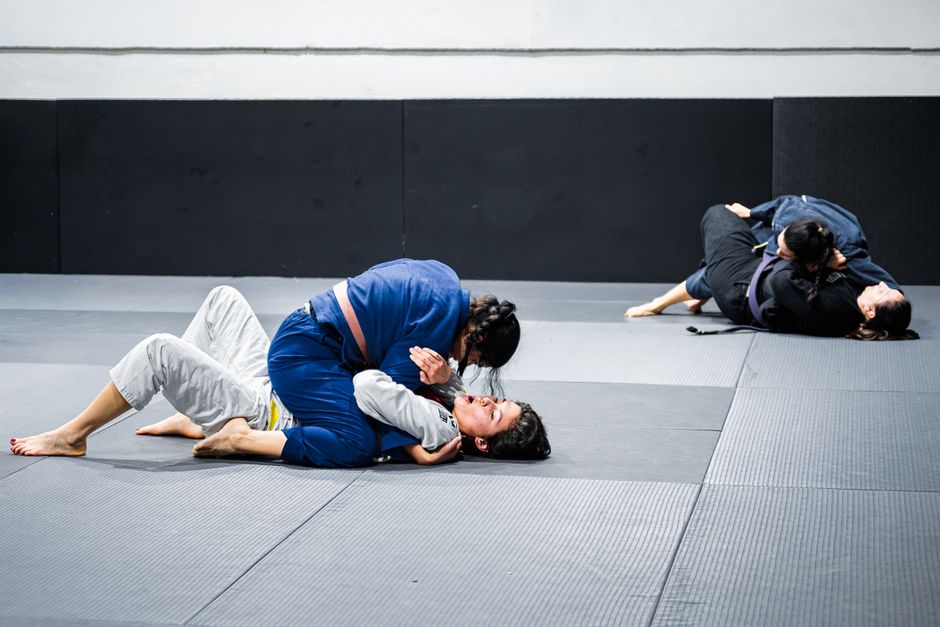
Start conservative. If you're new to weight training, your first month should focus on learning movement patterns, not moving heavy weight.
Pick 3-4 of the compound movements listed above. Do them twice per week on non-consecutive days. Lift at a moderate intensity. You should finish each set feeling like you could do 3-4 more reps.
Spend these first four weeks perfecting your form. Film yourself. Watch the videos. Get coaching if you can. Poor form now leads to injuries later.
After four weeks, start progressively increasing the weight. Add 5-10 pounds per week if you can complete all your reps with good form. This gradual progression prevents injury and builds sustainable strength.
Common Mistakes to Avoid
Training too hard in both places on the same day. You'll burn out fast and get hurt. Separate your hard training.
Related: No Gi Jiu Jitsu: Complete Beginner's Guide to Training
Related: Brazilian Jiu Jitsu No Gi: Complete Training Guide
Chasing muscle size instead of strength. You don't want to gain 20 pounds of muscle for jiu jitsu. You want to be strong and lean. That means lower reps, heavier weight, and controlled volume.
Neglecting the posterior chain. Most people want to do bench press and bicep curls. Your jiu jitsu needs a strong back, hips, and glutes. These are non-negotiable.
Skipping warm-ups and mobility work. Your joints take a beating on the mat. Prep them for lifting. Spend 10 minutes warming up your shoulders, hips, and lower back before you lift. Your future self will thank you.
Not tracking your progress. Write down what you lift. How many reps. How many sets. Come back next week and try to do more. Progressive overload is how you get stronger.
When to Adjust Your Program
Every 4-6 weeks, reassess. Are you getting stronger? Are you recovering well from mat training? Are you staying injury-free?
If you're feeling beat up, pull back. Take a deload week where you lift 50-60% of your normal weight. Your body needs it.
If you're not getting stronger after 4 weeks, something's wrong. You're either not eating enough, not sleeping enough, or not pushing hard enough in the gym. Figure out which one and fix it.
If your program isn't helping your jiu jitsu, change it. Maybe you need more hip work. Maybe you need more core strength. Adjust based on what's actually happening on the mat. That's the whole point.
The Long View
You're building strength for years of jiu jitsu, not just the next tournament. This means consistency beats intensity.
Show up twice a week for weight training. Lift heavy compound movements. Separate your hard training days. Sleep and eat well. Do that for six months and you'll be shocked at how much stronger you are.
Do that for a year and you'll be stronger than 95% of the people you roll with. Your takedowns will be explosive. Your positional control will be suffocating. Your escapes will be powerful.
Strength training for jiu jitsu is simple. It's not fancy. It's just consistent, intelligent work over time.
What if I only have time to lift once a week?
One session is better than none, but two is the minimum for real results. If you're truly limited to one session, make it count. Do two heavy compound lifts and nothing else. Keep it under 30 minutes. Something is better than nothing, but you're leaving gains on the table.
Should I lift the same day as rolling?
Not for your heavy training days. Light technical rolling + lifting is fine. But if you're doing intense sparring, do your lifting on a different day. Your body can't fully recover from both on the same day.
How long before I see strength gains?
You'll feel stronger in 2-3 weeks. That's your nervous system adapting. Real muscle and strength gains take 4-6 weeks to become obvious. Stick with it for at least 8 weeks before deciding if a program is working.
Can I get too strong for jiu jitsu?
Not from lifting. You could get too heavy if you're eating in a huge surplus and prioritizing size over everything else. But raw strength never hurts your jiu jitsu. The strongest competitors are always the strongest. Train smart, stay lean, and strength is pure advantage.
Start your BJJ journey off (Free Class)
Get Started Today →