

Ecological jiu-jitsu is a training approach that uses variable, game-based practice instead of isolated technique drilling to build adaptive decision-making and real-world movement patterns.
Instead of repeating the same armbar setup a hundred times in a row, you train by solving problems within constrained scenarios. Your instructor designs the training environment with specific rules or limitations, and you learn by figuring out how to move and respond within those constraints. It sounds simple, but it's grounded in how your brain actually learns motor skills and tactical thinking.
If you're curious about training methods that go deeper than surface-level technique, this guide breaks down what ecological jiu-jitsu is, why it works, and how it's changing the way people learn on the mat.
Related: Weight Training for Jiu Jitsu: The Complete Guide
Related: Cardio Training for Jiu Jitsu: Build Your BJJ Conditioning
Related: Jiu Jitsu Gis for Men: Choose the Right Fit for Your Training
The Core Idea Behind Ecological Jiu-Jitsu
At its heart, ecological jiu-jitsu flips the traditional drilling model on its head.
Traditional jiu-jitsu training often looks like this: your instructor shows a technique, you drill it with a partner in a controlled, repetitive way, and you practice the same sequence over and over until your body memorizes it. This works for building basic muscle memory, but it doesn't always prepare you for the unpredictable flow of live rolling.
Ecological jiu-jitsu says the learning happens best when you're in a real context. Instead of drilling an armbar in isolation, you might roll within constraints like "you can only use arm attacks" or "you start from this specific position." Your partner is moving, reacting, and presenting different problems each time. Your brain has to figure out when the armbar is actually there, how to set it up against live resistance, and what to do when it's not available.
The learning mechanism is active problem-solving, not passive repetition. You're developing pattern recognition and decision-making skills alongside physical technique.
Why Environment Design Matters
The instructor's job in ecological jiu-jitsu isn't just to show techniques and watch drilling. It's to design the training environment strategically.
Let's say you want your students to get better at guard retention. A traditional approach: drill your guard escape for 10 minutes. An ecological approach: "Roll from guard, but your opponent can only pass by going over your leg, not around it." This constraint forces you to solve guard problems in a specific way, and the learning sticks because you discovered it under pressure.
Constraints can be positional (start from side control), rule-based (points only for sweeps), or goal-oriented (defend without going to your back). When your instructor designs these environments thoughtfully, they guide your learning without controlling exactly how you move. You find your own solutions.
Related: What Age Can Kids Start Jiu-Jitsu? A Parent's Guide
This is why Gonzales JJ and other technique-focused academies emphasize personalized instruction. Every student learns at a different pace and finds different solutions within the same game. That's not a bug; it's the whole point.
Start your BJJ journey off (Free Class)
Get Started Today →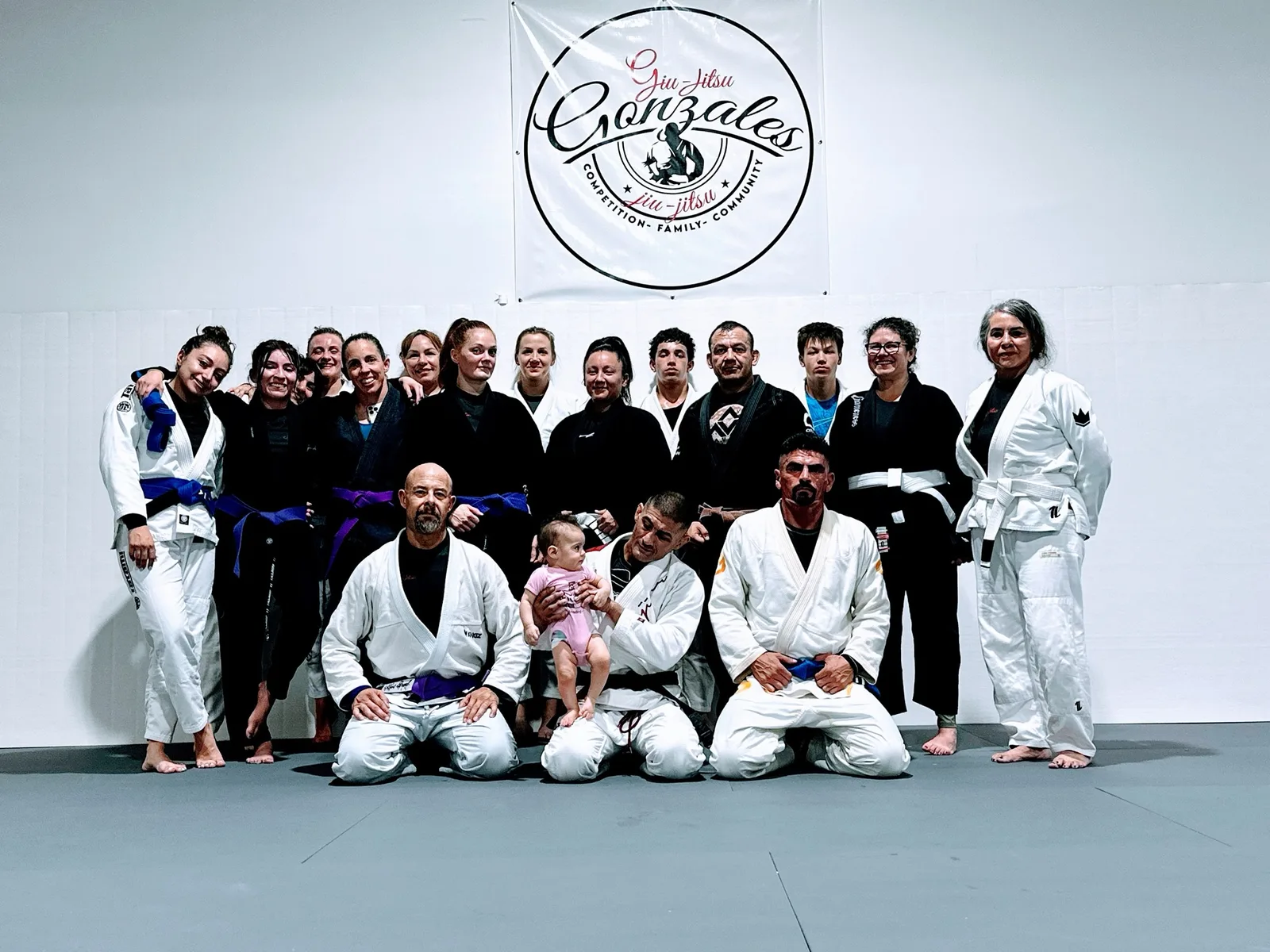
Context-Rich Practice vs. Rote Drilling
The difference between ecological jiu-jitsu and traditional drilling comes down to context.
Rote drilling is decontextualized. You practice the movement in a vacuum, with a compliant partner, outside the pressure and chaos of actual rolling. Your nervous system learns the sequence, but not the decision-making that comes with applying it in real time.
Context-rich practice puts you in a situation that resembles actual rolling. Your partner is resisting and moving. You have to recognize when the opportunity is there, set it up against live pressure, and handle what happens next. This is closer to what your brain actually needs to learn.
The science behind this is straightforward: your brain learns best when the training conditions match the demands of actual performance. If you always practice in a controlled, static way, you'll be great at controlled, static scenarios. If you practice within variable, game-based constraints, you'll develop adaptive skills that carry over to live rolling.
How Constrained Games Drive Learning
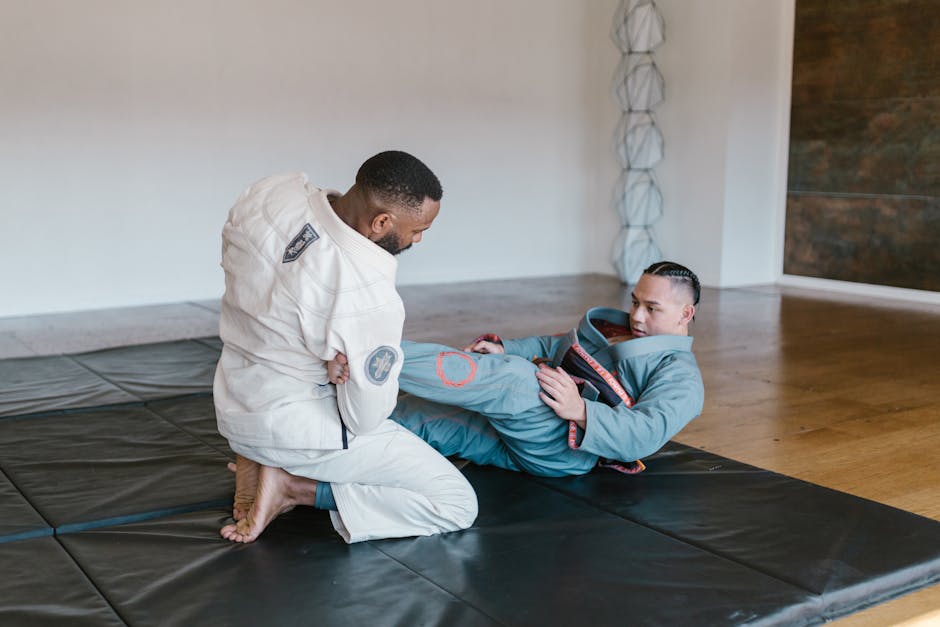
Constrained two-person games are the heart of ecological jiu-jitsu training.
A constrained game looks like rolling, but with specific rules that narrow the scope of what's allowed. For beginners, this might be "roll from your knees, passing only" or "work footlock entries from open guard." For advanced practitioners, constraints might be "no arm drags" or "sweep attempts only for five minutes, then we switch goals."
These games force you to develop solutions within a smaller space. Your brain isn't overloaded with infinite options. You're solving one puzzle at a time, which accelerates learning and builds confidence faster than chaotic open rolling.
You're also building tactical thinking. You start recognizing patterns: when your opponent bases here, the sweep is there. When they're heavy, the escape works better than the reversal. Over time, this pattern recognition becomes intuition.
The Cognitive Benefits You'll Actually Feel
Training this way changes how you think on the mat.
Because you're solving problems instead of memorizing sequences, your brain is more engaged. You develop better positioning awareness. You learn to read your opponent's weight and intention more quickly. You stop relying on rote technique and start trusting your own judgment.
This translates to harder, smarter rolling. You make faster decisions. You recover better when things don't go as planned. You're less mechanical and more fluid because you've trained in variable conditions instead of a single, perfect scenario.
It also builds resilience. When something fails in rolling, you're not scrambling to find a pre-memorized response. You've spent months solving problems in chaos. Adapting is already part of your skill set.
How This Differs from Traditional Jiu-Jitsu Training
Most jiu-jitsu gyms still use a mix of drilling and rolling, and that's not wrong. But ecological jiu-jitsu emphasizes constrained games as the primary learning vehicle, not drilling as the foundation with rolling as the reward.
The instructor's focus shifts too. Instead of demonstrating and watching students drill the same move over and over, they're designing training environments and guiding learning through constraint changes. They might start with a tight constraint, then gradually open it up as you develop competence. This keeps you challenged without overwhelming you.
The role of technical demonstration doesn't disappear, but it becomes secondary. You might get a brief overview of the concept, then jump into a constrained game where you discover the details yourself. This is slower for some students at first, but the learning lasts longer because it's grounded in your own experience.
When you're ready to explore how ecological training fits into a personalized learning program, reach out to Gonzales JJ about their approach to technique-focused instruction in Rio Rancho.
Why This Approach is Gaining Momentum in BJJ

Ecological jiu-jitsu isn't a niche trend anymore. It's becoming recognized as a major contemporary methodology in how people train effectively.
The reason is simple: it works. Practitioners trained with ecological methods develop faster, more adaptable skills. They understand the principles behind movements instead of just copying sequences. They roll with better decision-making and less rigid technique.
It also keeps training interesting. Instead of drilling the same techniques for years, you're constantly solving new problems. Your brain stays engaged. Training stays fresh.
For competitive athletes, this approach builds the kind of adaptability that wins matches. For self-defense seekers, it develops the quick thinking you need in unpredictable situations. For families and beginners, it makes learning feel like solving puzzles instead of memorizing choreography.
Bringing It Back to Your Training
If you've been drilling the same techniques for months and not seeing the progress you'd hoped for, ecological jiu-jitsu might explain why. Context matters. Your brain learns better when the training conditions match reality.
This doesn't mean traditional drilling is useless. It means the balance should shift toward game-based, variable practice for most of your training time. Drilling has a place for building foundational awareness, but it shouldn't be your primary learning method.
Look for training environments where your instructor designs constrained scenarios, guides your learning through problem-solving, and gradually opens up the complexity as your skill grows. That's where real adaptation happens.
What's the difference between ecological jiu-jitsu and traditional BJJ training?
Traditional training emphasizes drilling isolated techniques with a compliant partner, then rolling. Ecological jiu-jitsu uses constrained, game-based scenarios as the main learning method. You develop skills by solving problems within specific constraints rather than repeating the same sequence. Both approaches build jiu-jitsu skills, but ecological training tends to develop faster decision-making and adaptability because it trains in more realistic contexts.
Is ecological jiu-jitsu good for beginners?
Yes, absolutely. Beginners actually benefit significantly because constrained games reduce information overload. Instead of facing infinite options in open rolling, you're solving one puzzle at a time. This builds confidence faster and creates a clearer learning path. As you progress, constraints gradually loosen to challenge your growing skills.
Does ecological jiu-jitsu replace technical instruction?
No. Instructors still teach concepts and movements, but the emphasis shifts. Instead of drilling the exact sequence the instructor showed, you get a brief overview and then apply it within a constrained game where you discover the details yourself. Technical knowledge informs the game design, but learning happens through problem-solving, not repetition.
Can you use ecological training alongside regular rolling?
Absolutely. Many training sessions mix constrained games with open rolling. Constrained games build specific skills and patterns. Open rolling lets you test those skills in total freedom. Together, they create a complete learning experience that develops both technical knowledge and adaptability.
Start your BJJ journey off (Free Class)
Get Started Today →