
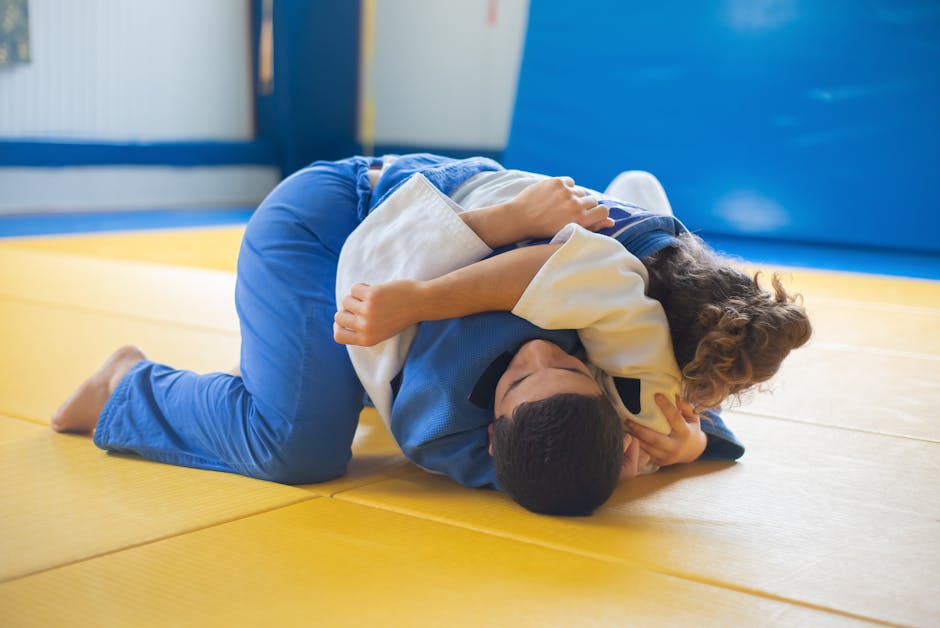
Jiu jitsu moves are the foundation of everything you'll do on the mat. Whether you're learning to escape from side control or setting up your first takedown, these techniques form the building blocks of your entire game. The good news? You don't need to master everything at once. You need a smart training structure and the right guidance to progress.
The Core Jiu Jitsu Moves Every Beginner Should Know
When you're starting out, focus on positional escapes first. These are your safety net. If you end up in a bad spot during training, knowing how to escape keeps you safe and builds your confidence.
Related: Brazilian Jiu-Jitsu Moves: Essential Techniques Every Beginner Should Learn
Related: How to Pass the Guard in Jiu Jitsu: Essential Techniques
Related: Jiu Jitsu Moves Names: Complete Guide to Essential Techniques
Related: Basic Jiu Jitsu Moves: Essential Techniques for Beginners
Related: Best Jiu Jitsu in Albuquerque NM 2026: Top 5 Gyms Ranked
Related: Best Ladies Jiu Jitsu Gi 2026: Top 5 Ranked for Fit & Performance
Related: Best Private Jiu Jitsu Lessons 2026: Top 5 Ranked
Related: Best Jiu Jitsu Summer Camps 2026: Top 5 Ranked
Related: Best Jiu Jitsu Gyms Near Me 2026: Top 6 Ranked
Related: Best Jiu Jitsu Gym 2026: Top 6 Ranked & Compared
Related: Best Brazilian Jiu Jitsu Gi 2026: Top 6 Ranked
Related: Best Brazilian Jiu Jitsu Gi Brands 2026: Top 6 Ranked
Related: Best Jiu Jitsu Academy Near Rio Rancho, NM
Related: Best Jiu Jitsu Gi for Beginners in Rio Rancho, NM
Related: Best Jiu Jitsu Leg Submissions in Rio Rancho, NM
Side Control Escape is one of the most practical moves you'll use. Your opponent has you pinned on your side with their weight on you. The escape involves bridging your hips up, creating space, and sliding your knee in to rebuild your guard. This move teaches you the fundamental principle of jiu jitsu: using your legs and hips instead of arm strength.
Mount Escape is equally important. When someone is sitting on your chest in the mounted position, you're in a vulnerable spot. The key is to bridge explosively, trap one arm, and roll them over. This requires timing and hip power more than brute strength.
Back Escape gets you out of trouble when someone has you from behind. You'll work on controlling their hooks, turning into them, and regaining your guard position. This one saves you constantly in real training.
Knee on Belly Escape teaches you how to deal with that uncomfortable middle ground between side control and mount. You frame on their leg and hip, bridge, and shrimp (move your hips sideways) to get space.
These four escapes form the foundation. Master them, and you'll feel comfortable on the mat from day one.
Takedown Fundamentals for Jiu Jitsu Moves
Getting your opponent to the ground is half the battle. Before you even think about fancy takedowns, you need to understand hand fighting and grip control. This is where real grappling starts.
Hand Fighting is basically the wrestling game before the takedown. You're controlling your opponent's wrists, elbows, and collar to prevent them from controlling you. It sounds simple, but this skill separates confident grapplers from nervous ones.
Collar Tie is your workhorse grip. You grab behind their neck and pull their head down. This immediately controls their posture and sets up throws and takedowns. Once you have a collar tie, your opponent is reacting to you, not the other way around.
Inside Tie and Underhook work together. The inside tie is a grip on their arm and neck, while the underhook goes under their arm from the side. Both are brutal for controlling someone's upper body.
The 2-on-1 (Russian Tie) is when you control one of their arms with both of your hands. This sounds unfair because it kind of is. You trap their arm and control it completely, which lets you set up throws and takedowns without them being able to use both arms to defend.
These grips don't require strength. They require understanding angles and leverage. That's what Gonzales JJ teaches from day one: technique beats strength every single time.
Start your BJJ journey off (Free Class)
Get Started Today →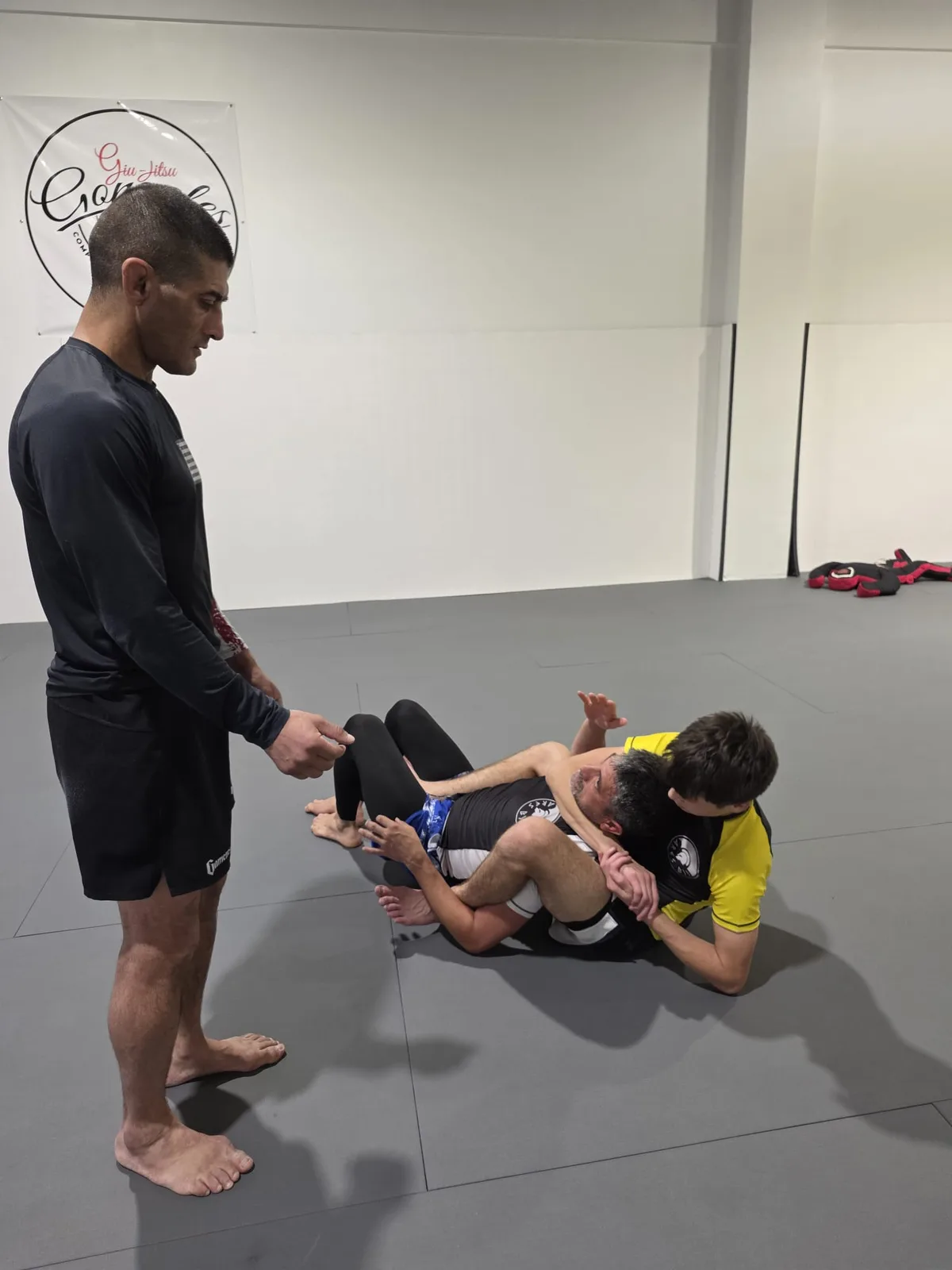
Advanced Jiu Jitsu Moves to Work Toward
Once you've got the basics down, you can start exploring more advanced techniques. These moves build on what you've already learned.
Related: Best Jiu-Jitsu Techniques Step by Step PDF for Beginners
Leg Drag Guard Pass is a guard pass that's becoming increasingly popular in modern jiu jitsu. Instead of trying to pass straight through the legs, you drag one of their legs to the side and step around. It's efficient and hard to defend once you understand the mechanics.
Cross Choke is one of the most effective submissions in jiu jitsu. You control their collar from two different angles and squeeze. It's technical, not forceful, and shows why leverage matters more than strength.
Heel Hook is an advanced leg lock. These moves can be dangerous if done wrong, so make sure you're training with experienced instruction. Heel hooks target the ankle and require specific positioning and control.
Tarikoplata and Crab Ride are positional techniques that sound exotic but are incredibly practical once you understand them. They're great examples of how jiu jitsu constantly evolves, and why continuous learning keeps the sport fresh.
Related: Jiu Jitsu Instructional Videos: Best Learning Strategy
Why Training Structure Beats Motivation for Jiu Jitsu Moves

Here's something that catches people off guard: jiu jitsu rewards systematic training way more than it rewards motivation. You can be super motivated and still make zero progress if you're not training smart.
Random drilling doesn't build real skill. Neither does just rolling without a plan. What works is consistent, structured practice where you focus on a few core moves and drill them until they become automatic. Then you add new techniques on top of that foundation.
This is why showing up regularly matters more than crushing it once a week. Your body needs time to absorb techniques, and your nervous system needs repetition to develop muscle memory. One intense training session every 10 days does way less for you than three solid sessions spread throughout the week.
If you're looking for a gym that builds this kind of structure into their program, check out Gonzales JJ. They're focused on teaching you the right fundamentals in the right order so you actually progress instead of just going through the motions.
Safety and Hygiene When Practicing Jiu Jitsu Moves
Jiu jitsu involves a lot of close contact, which means skin infections are a real concern. This isn't something to ignore or feel embarrassed about. It's just part of the sport, and you can prevent it.
The two most common infections you'll hear about are ringworm and impetigo. Ringworm is a fungal infection that shows up as round, itchy patches on your skin. Impetigo is a staph infection that starts as red sores, ruptures, oozes, and then forms yellowish-brown crusts. Both are contagious and both require treatment.
Prevention is simple: shower immediately after training, wear clean gear, wash your gi regularly, and keep your skin clean and dry. If you notice any suspicious rashes or sores, see a doctor right away. The CDC has solid information on fungal infections if you want to understand prevention better.
Most gyms have strict hygiene protocols for exactly this reason. It protects everyone on the mat.
Building Strength Through Jiu Jitsu Moves, Not Machines
One of the coolest side effects of training jiu jitsu is the strength you develop. But it's not the kind of strength from lifting weights. It's functional, balanced strength that comes from actual movement patterns.
Your core gets incredibly strong because you're using it constantly to control your hips and generate power. Your joints become more stable because you're moving through full ranges of motion under load. Your muscles develop in balanced ways because you're working from multiple angles and positions.
This kind of strength actually prevents injuries better than typical gym training. When your body moves through real patterns instead of isolated exercises, everything works together. That's the 2026 approach to fitness: technique and functional movement first, machines second.
How to Start Learning Jiu Jitsu Moves

The best way to learn jiu jitsu moves is in a structured class with an experienced instructor. Videos and articles like this one help you understand concepts, but having someone watch you, correct your positioning, and give you real feedback is the difference between learning and just copying.
When you're choosing a gym, look for instructors who focus on fundamentals and progression. You want teachers who explain why techniques work, not just show you how to do them. You also want a community where people of all levels train together safely.
If you're in the Rio Rancho or Albuquerque area and looking for a place that takes technique seriously, Gonzales JJ has a schedule that works for most people. They're built on the foundation of teaching the right moves in the right order, with instructors who actually competed at a high level.
Start with the fundamentals. Show up consistently. Be patient with yourself. That's how you go from totally lost on day one to confident and competent in a few months.
People Also Ask About Jiu Jitsu Moves
What jiu jitsu moves should I learn first?
Start with the four main escapes: side control escape, mount escape, back escape, and knee on belly escape. These teach you fundamental principles and keep you safe while you're learning. Then move to basic guard positions and simple submissions like the cross choke. Escapes first, offense second.
How long does it take to learn basic jiu jitsu moves?
Most people feel comfortable with foundational moves after 2 to 3 months of consistent training (3+ times per week). You'll start understanding positioning and principles pretty quickly, but true competence takes longer. The timeline depends on how often you train and how much you drill outside of class.
Can you learn jiu jitsu moves from videos?
Videos are great for understanding concepts, but they're not enough on their own. Jiu jitsu requires real-time feedback and correction. Your instructor needs to see your positioning, adjust your grip, and help you feel the right timing. Think of videos as a supplement to in-person training, not a replacement.
Which jiu jitsu moves work best for self-defense?
Escapes, positional control, and basic submissions like the rear naked choke and cross choke are most practical for self-defense. The goal in self-defense is to get away safely, not to win the match. That's why escapes and control matter more than fancy techniques.
Start your BJJ journey off (Free Class)
Get Started Today →