

Leg lock jiu jitsu is one of the most powerful—and most misunderstood—parts of Brazilian Jiu-Jitsu. If you've been training for a while, you've probably seen someone tap fast to a leg lock. That moment sticks with you. The good news? Leg locks aren't some advanced secret. Beginners can learn them. They just need solid instruction and the right progression. Let's break down exactly what leg locks are, how to execute them, and how to defend against them so you can build real confidence with these techniques.
What Are Leg Locks in Jiu Jitsu?
A leg lock is a submission that targets your opponent's legs or knees by hyperextending, twisting, or compressing the joint. Think of it like an armbar, but instead of locking an arm, you're controlling a leg. Your goal is to apply pressure until your opponent taps out or risk serious injury.
The beauty of leg locks is that they work from almost anywhere on the mat. You don't need perfect positioning like you do with some upper body submissions. If you can grab a leg, you can start setting up a leg lock.
The Two Main Types of Leg Locks
Leg locks come in two primary categories, and understanding the difference will change how you approach your training.
Related: No Gi Jiu Jitsu: Complete Beginner's Guide to Training
Related: Jiu Jitsu Moves Names: Complete Guide to Essential Techniques
Related: BJJ Jiu Jitsu: A Beginner's Guide to Getting Started
Related: Brazilian Jiu Jitsu No Gi: Complete Training Guide
Related: Brazilian Jiu-Jitsu Weight Classes: Complete Guide
Related: Jiu Jitsu Half Guard: Complete Beginner Guide
Related: Full Guard Jiu Jitsu: Complete Beginner's Guide
Ankle Locks
An ankle lock (also called a straight ankle lock or heel hook in certain variations) involves wrapping your forearm around your opponent's leg and sliding the blade of your arm down toward the ankle joint. You create pressure by circling your forearm and tightening your grip, which hyperextends the ankle or applies torque to the foot.
Ankle locks are usually the first leg lock beginners learn because the mechanics are straightforward and the feedback from your partner is clear. When it's tight, they feel it immediately.
Kneebars (Kneelocks)
A kneebar (also called a kneelock or hiza-juji-gatame) works similarly to an armbar but targets the knee instead. You position your leg or arm across your opponent's knee joint and hyperextend it by pulling their foot toward you. The mechanics mirror an armbar so closely that if you're already good at armbars, kneebars will feel natural.
Kneebars are devastating because the knee is a fragile joint. Proper technique and communication with your training partner are non-negotiable here.
How to Execute a Basic Straight Ankle Lock
Let's walk through the foundational straight ankle lock step by step. This is the submission you'll drill most often as you're learning.
Step 1: Control the Leg
You need to isolate one of your opponent's legs first. This might happen during a takedown, from top position, or when you're defending a pass. Get both hands on the leg and make sure your opponent can't simply pull it away or turn toward you.
Step 2: Position Your Body
Sit to the side of the leg you're attacking. Your hips should be close to their hip. This positioning prevents them from escaping by turning into you or creating space.
Step 3: Thread Your Forearm
Wrap your forearm around their ankle so the blade of your arm (the meaty part between your forearm bones) sits directly on the top of their foot or the ankle joint. Your thumb should point down toward their sole.
Step 4: Lock Your Hands
Clasp your hands together and squeeze. As you tighten, curl your wrists slightly to add pressure to the ankle joint. Your opponent will feel the squeeze immediately.
Step 5: Apply Pressure Slowly
Increase pressure gradually and watch your partner's face. The moment they tap, release completely. No ego. No proving a point. Just clean technique.
This basic version works at any skill level when executed with control. If you want personalized feedback on your form and progression, Gonzales JJ offers technique-focused instruction that builds your leg lock game the right way.
Start your BJJ journey off (Free Class)
Get Started Today →
Defense Against Leg Locks
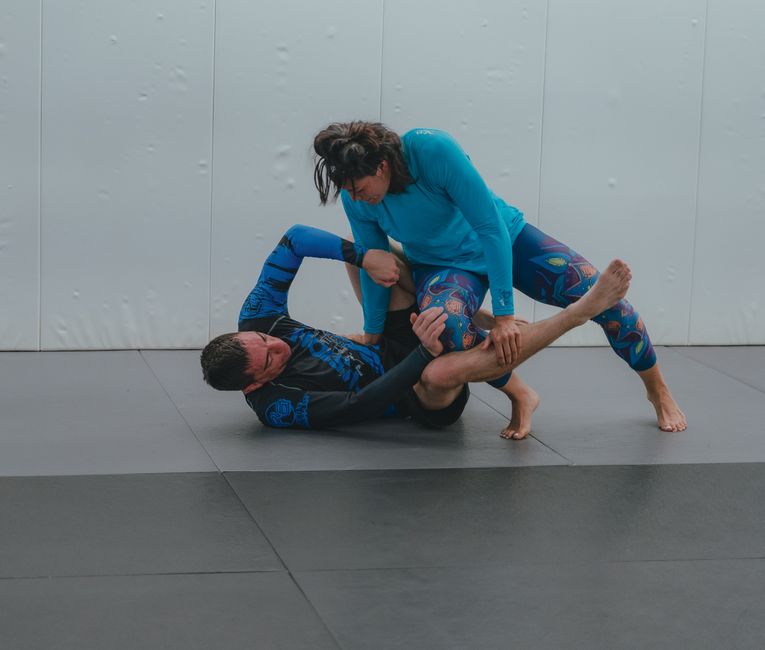
Learning to defend leg locks is just as important as learning to apply them. A well-rounded BJJ game means you can both attack and escape.
Recognize the Setup Early
The best defense starts before the submission is locked. Watch for your opponent's grips and positioning. If they're circling their arms around your foot or positioning their leg across your knee, they're setting up a submission. The earlier you spot it, the easier it is to escape.
Create Space Immediately
The moment you feel a leg lock starting to tighten, your first instinct should be to create space and turn toward your opponent. Move your hips away from the pressure. Don't be passive and hope it doesn't get worse.
Know Your Tap Point
This is critical. Leg locks can damage your joints fast. Your tap point should be earlier than you think, not later. It's way better to tap early and train another day than to push through and end up injured. Gonzales JJ emphasizes safe, sustainable training because we want you competing and training for years, not sitting out with injuries.
Practice Escapes Regularly
Dedicate time during your training sessions to leg lock escape drills. Have a partner slowly apply submissions while you work on positioning and movement. Repetition builds muscle memory so your body knows what to do when it matters.
Why Leg Locks Are Game-Changing in Modern BJJ
Leg locks have become increasingly important in Brazilian Jiu-Jitsu over the last decade. Coaches like Gordon Ryan have revolutionized how athletes approach leg lock technique in no-gi grappling, showing that leg locks aren't just a backup plan—they're a primary attacking system.
Why? Because leg locks work from positions where upper body submissions don't. You can threaten a leg lock from bottom position. You can threaten leg locks when someone's arms are defended. This versatility makes you unpredictable and forces your opponents to respect your entire game.
Building real credibility with leg locks requires dedicated practice, not just occasional drilling. You need to develop the sensitivity to know when a leg lock is tight, how much pressure to apply, and when to give your partner the chance to escape before it gets dangerous.
Training Leg Locks Safely and Effectively
Here's the honest truth: leg locks come with risk. The knee and ankle joints don't forgive sloppy technique. That's why safety-first instruction matters so much.
Start with Fundamentals
Don't jump straight to fancy heel hooks and flying leg locks. Master the straight ankle lock and basic kneebar first. These techniques teach you the principles you'll apply to every other leg lock variation.
Train with Patient Partners
When you're learning, train with people who will give you feedback and let you feel submissions develop slowly. Avoid rolling with people who tap late or get defensive about leg locks. That's not training. That's just asking to get hurt.
Drill Before Rolling
Spend time drilling leg lock setups and finishes before your live rolling sessions. This builds muscle memory in a controlled environment where you can focus on technique rather than scrambling for position.
Listen to Your Body
If something feels wrong—not just tight, but genuinely wrong—tap immediately. Your joints are irreplaceable. One bad decision in rolling can affect you for years. The athletes who stay healthy and keep training are the ones who respect their own physical limits.
If you're serious about building a complete BJJ game with leg locks, finding the right training environment makes all the difference. Gonzales JJ specializes in technique-focused instruction that keeps you safe while developing real, applicable skills you can use in competition and self-defense.
Leg Locks in No-Gi vs. Gi Jiu Jitsu
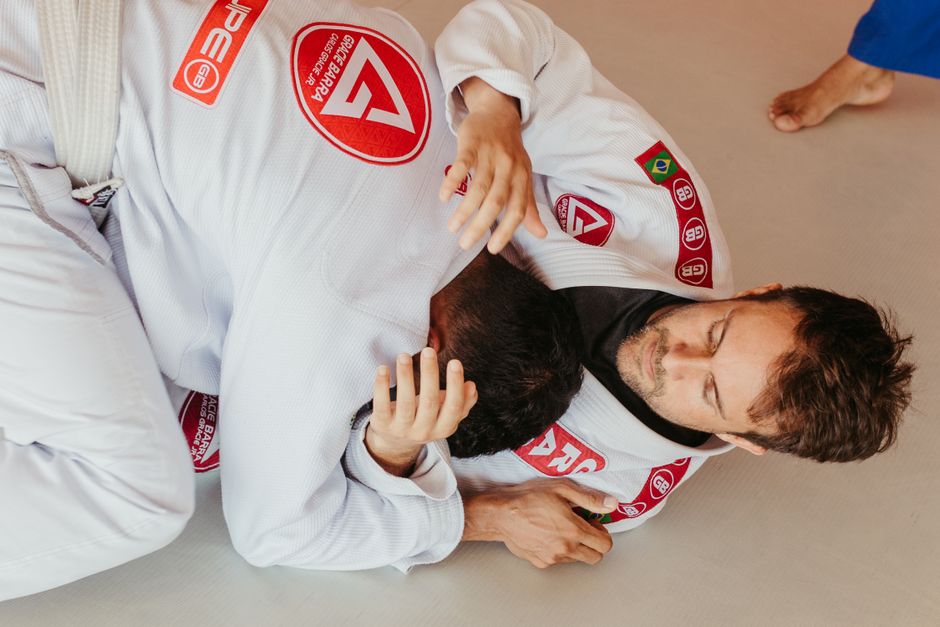
The context matters. No-gi grappling (wrestling-style training without a gi jacket) emphasizes different leg lock setups than traditional gi jiu jitsu.
In no-gi, you have less fabric to grip, so leg locks become even more valuable. Your opponent can't grip your collar or sleeve to defend. This means leg locks are a primary attack from positions where they might be secondary in gi training.
In gi training, the fabric creates friction and gripping opportunities that change leg lock mechanics slightly. Heel hooks and some reap positions are also often restricted at lower belt levels in gi training to reduce injury risk.
Whichever format you're training, the foundational principles stay the same: control the leg, position your body, lock the joint, and apply pressure gradually.
Building Your Leg Lock Game: A Practical Progression
Here's a realistic timeline for developing leg lock competency:
- Month 1: Learn the basic straight ankle lock. Drill it 10 times every session. Get comfortable with the position and how it feels when it's tight.
- Month 2: Learn the basic kneebar. Drill both submissions regularly. Start recognizing setups during rolling.
- Month 3: Begin using leg locks in live rolling with controlled partners. Focus on smooth transitions, not speed.
- Month 4-6: Explore variations and setups. Drill leg lock escapes. Develop your threat level.
- Month 6+: Integrate leg locks naturally into your overall game. You're now thinking in systems, not individual techniques.
Progress at your own pace. Some people click with leg locks immediately. Others need more time. Both are fine. The people who build the best leg lock games are the ones who show up consistently and focus on control over flashiness.
Why Technical Instruction Changes Everything
The difference between learning leg locks from random YouTube videos and learning from a qualified instructor is massive. A good coach catches small positioning errors that make the difference between a submission working and an escape. They'll also make sure you're training with the right intensity for your skill level.
Research on martial arts training methodology shows that structured instruction reduces injury rates while improving technical proficiency. That's not opinion. That's data.
When you're training leg locks, instruction quality matters because the margin for error is smaller than with other submissions. Your instructor should be someone who understands modern leg lock application and prioritizes your long-term health over winning matches.
Frequently Asked Questions
Are leg locks safe for beginners?
Yes, but only with proper instruction and controlled partners. Straight ankle locks and basic kneebars are accessible to beginners. The risk comes from poor technique, excessive pressure, or training with partners who don't respect your development. Always tap early when you're learning. Always train with people who will stop immediately when you tap.
What's the difference between a heel hook and an ankle lock?
A heel hook applies torque by controlling the heel and twisting the foot, while a straight ankle lock hyperextends the ankle joint by squeezing with your forearm. Heel hooks are more advanced and are often restricted at lower belt levels in gi training because they're higher risk. Start with straight ankle locks and basic kneebars before exploring heel hooks.
Can you use leg locks in self-defense?
Absolutely. Leg locks are extremely effective in real self-defense situations because most people have zero leg lock defense. They're also lower-commitment than upper body submissions—you can control a leg without being pulled off balance. That said, true self-defense is about escape and creating distance, not submission competitions. Train leg locks as part of a comprehensive self-defense game.
How often should I drill leg locks?
Aim for at least 2-3 times per week, ideally with dedicated drilling time separate from rolling. If you're new to leg locks, spend more time drilling and less time rolling them. As you develop competency, you can roll them more frequently. The sweet spot for most people is mixing structured drilling with controlled rolling to build safety and technique together.
Start your BJJ journey off (Free Class)
Get Started Today →