
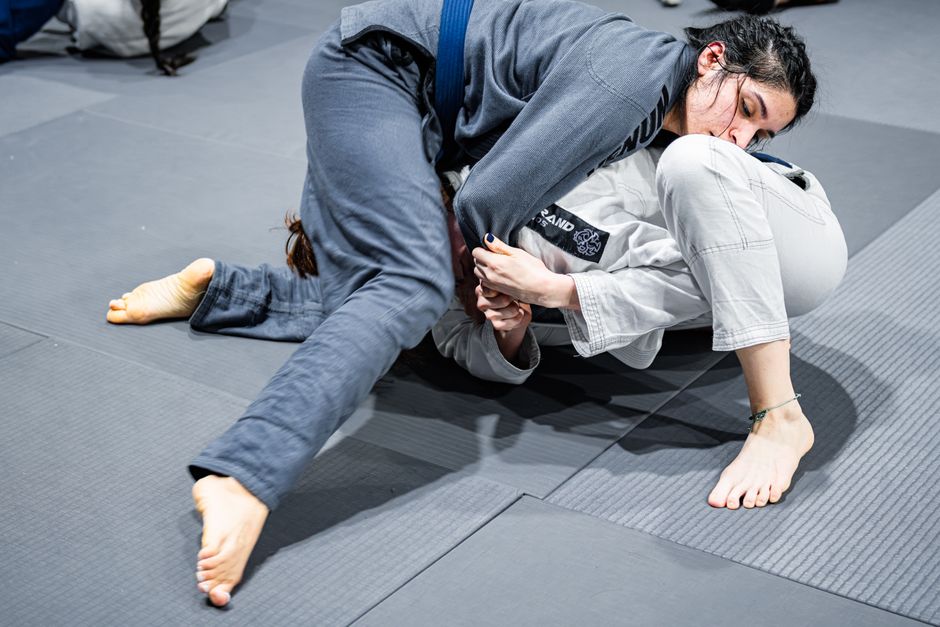
If you've just started training jiu jitsu, you've probably heard instructors throw around a bunch of move names that sound like a foreign language. Triangle choke. Armbar. Kimura. Hip bump sweep. It all blends together at first, right?
Here's the good news: jiu jitsu moves have specific names for a reason. Learning them helps you communicate with your training partners, follow instructions better, and build a solid foundation of technique. Gonzales JJ focuses on teaching these fundamentals in a way that makes sense, so you're not just copying movements—you're actually understanding what you're doing and why.
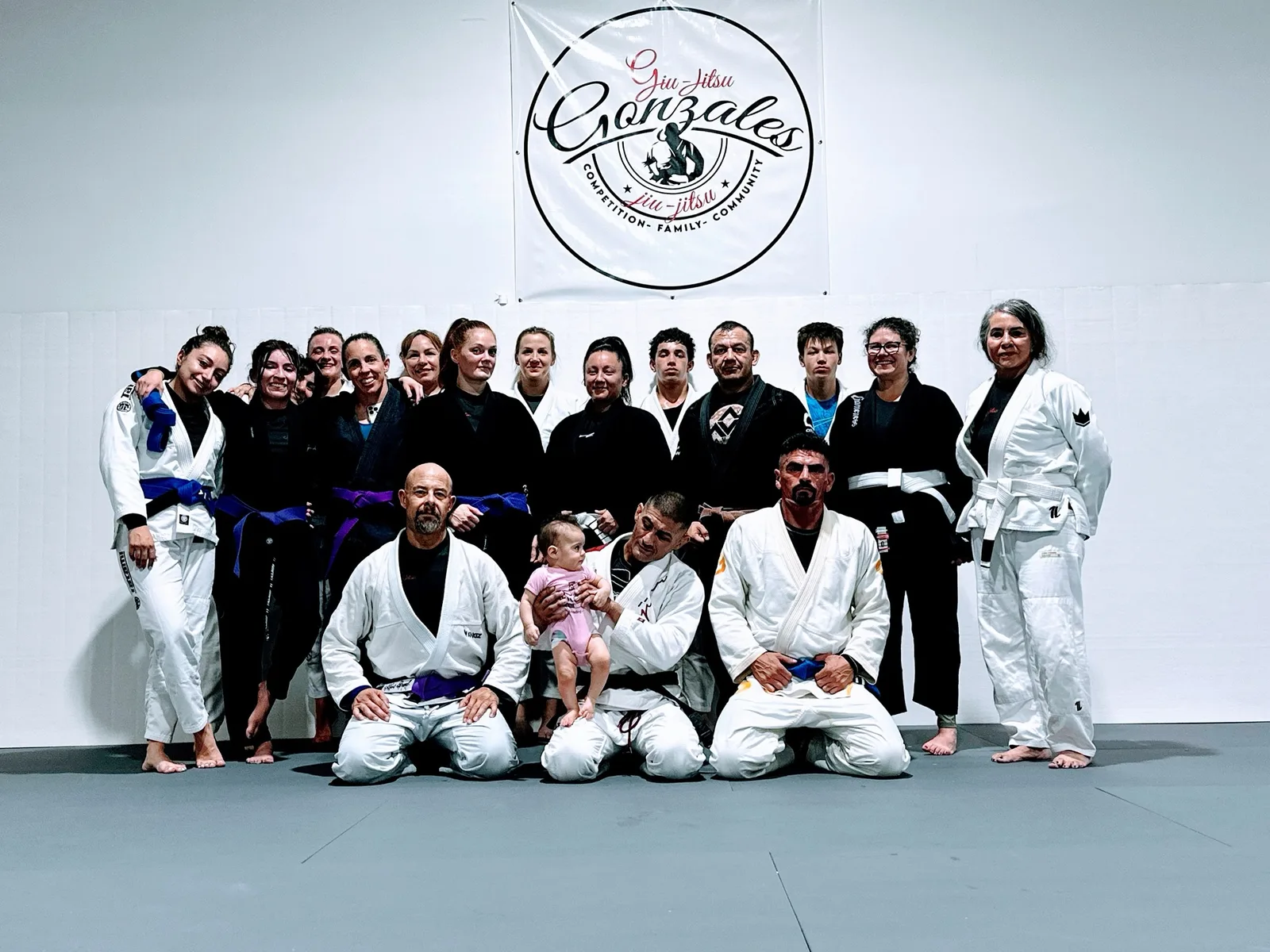
The Most Important Jiu Jitsu Moves Names to Know
Let's start with the moves that show up in almost every beginner class. These are the bread-and-butter techniques that form the foundation of your jiu jitsu game.
Related: Basic Jiu Jitsu Moves: Essential Techniques for Beginners
Fundamental Submissions
Submissions are the moves that end a match or force your opponent to tap out. Here are the ones you'll see constantly:
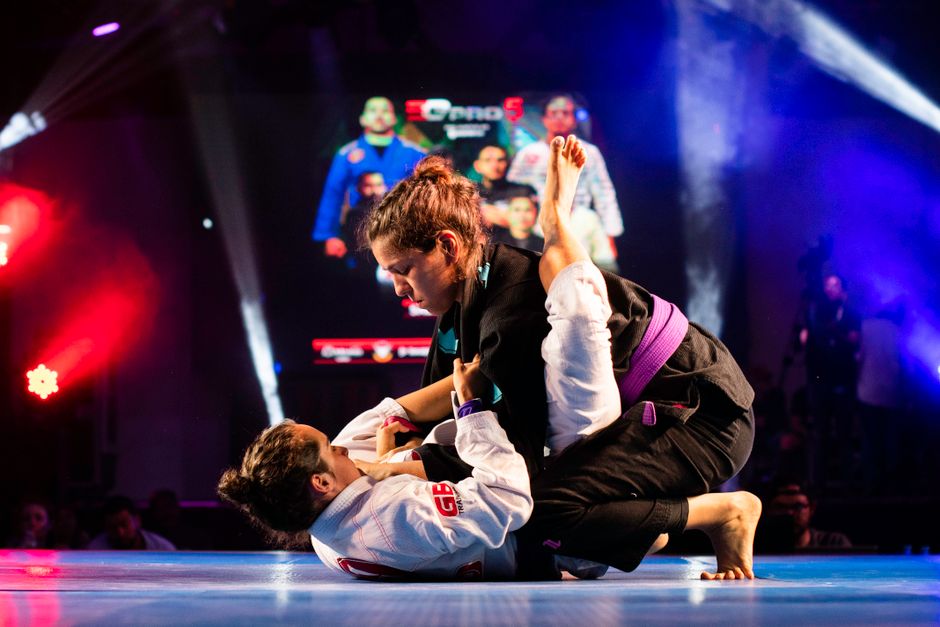
Triangle Choke: You trap your opponent's arm and head between your legs while lying on your back in guard position. It's called a "triangle" because your legs form that shape. This is one of the first submissions you'll learn and it works from multiple positions.
Armbar: This is a joint lock that hyperextends your opponent's elbow. You can hit it from guard, mount, or side control. It's literally one of the most universal moves in jiu jitsu—everyone uses it because it actually works.
Kimura: A shoulder lock where you control both of your opponent's arms and apply pressure to their shoulder joint. Named after Masahiko Kimura, a legendary judoka. You can use this as a submission or as a sweep depending on the position.
Americana: Similar to the Kimura but applied from a different angle—usually when you're in side control. Also called a "figure-four armlock." It's beginner-friendly once you understand the grip.
Guard Sweeps You Need to Know
Sweeps are moves where you flip your opponent over or reverse positions. They're essential when someone is trying to pass your guard.
Hip Bump Sweep: One of the first sweeps you'll learn. While defending from your back, you use your hips to knock your opponent forward and flip them over. Simple, effective, and the foundation for almost every other sweep.
Scissor Sweep: You use your legs to "scissor" your opponent—one leg hooks their arm or body while the other traps their leg. When you squeeze and roll, they flip right over you.
Flower Sweep: An intermediate technique where you control your opponent's posture and use your hips and legs to sweep them to the side. It looks fancy but it's just good hip control and timing.
Lumberjack Sweep: You trap one of their arms over your shoulder (like you're holding wood) and sweep them over that side. It's a great option when someone is trying to stand up in your guard.
Control Positions and How They're Named
Understanding position names is just as important as knowing submission names. Positions tell you where your opponent is and what moves you should work toward.
Guard: When you're on your back with your legs wrapped around your opponent. Your guard is your strongest position defensively and it's where a lot of submissions come from.
Mount: When you're on top of your opponent, straddling their chest. This is one of the most dominant positions in jiu jitsu.
Side Control: When you're perpendicular to your opponent, controlling them from the side. It's a strong position for pressure and submissions like the Americana.
Cross Collar Choke: While you're in mount or side control, you grab both sides of your opponent's collar and apply pressure to their neck. It's called "cross collar" because your hands cross over each other. This is a beginner-appropriate move that teaches you how to use grips effectively.
Advanced Moves and Leg Lock Names
Once you've mastered the fundamentals, you'll start learning more complex techniques. Some require careful instruction and practice before you use them in live rolling.
Heel Hook: An advanced leg lock that targets the heel and applies pressure to the knee and ankle. This one requires proper instruction because it can cause serious injury if applied incorrectly. Most beginner programs introduce it carefully or save it for more experienced students.
Leg Drag Guard Pass: A guard pass where you drag your opponent's leg across your body to open up their guard and move into a dominant position. It's one of the most effective ways to neutralize a strong guard player.
Crab Ride: A positional control technique from side control where you bridge and control your opponent's arm and leg. It's less about the name and more about understanding how to maintain pressure and prevent escapes.
How Jiu Jitsu Moves Build Real Strength and Control
Here's something important: jiu jitsu moves work through leverage, pressure, and technique—not just raw strength. That's why the same armbar works whether you weigh 150 pounds or 250 pounds. Understanding the proper names and mechanics of each move helps you apply them correctly, which means you can execute them efficiently without exhausting yourself.
This is a huge reason why jiu jitsu is accessible to so many different body types and ages. When you learn moves the right way, your body type becomes less important than your understanding of positioning and leverage. Gonzales JJ emphasizes this technical foundation because it's what separates effective jiu jitsu from just flailing around on the mat.
Start your BJJ journey off (Free Class)
Get Started Today →Progressive Learning: Start Here and Build From There
If you're brand new to jiu jitsu, here's a realistic progression of moves to focus on:
First, master your escapes. Learn the hip escape and basic guard replacement so you can get comfortable defending from your back.
Then focus on submissions from guard. The triangle choke is your best friend here because it teaches you distance management and control.
Next, add sweeps into your game. The hip bump sweep is the gateway drug—once you understand that one, every other sweep clicks faster.
Finally, work on cross collar chokes and basic control positions so you can string techniques together in a real sequence.
The whole point is that jiu jitsu moves aren't random. They're connected. Each technique teaches you something that makes the next move easier to understand. When you train at a gym that focuses on proper progressions and technique, like Gonzales JJ does, you skip a lot of the frustration and confusion that comes with just trying stuff.
Why Learning Move Names Actually Matters
You might think it's just vocabulary, but knowing the actual names of jiu jitsu moves changes everything about how you learn and train.
First, it helps you communicate. When your instructor says "set up a triangle," you know exactly what they're talking about instead of scrambling to remember.
Second, it helps your brain catalog techniques. Instead of remembering "that leg lock thing," you're building a mental library of specific moves with specific applications.
Third, it connects you to the community. Jiu jitsu has been around for decades. Learning the real names of moves connects you to that history and tradition. You're not just learning technique—you're joining a culture that values precision and respect.
According to research from the National Institute of Health's PubMed database, structured learning with clear terminology helps athletes retain technique better and progress faster than unstructured practice. That's why programs that emphasize proper names and progressions tend to produce more confident, competent practitioners.
Where to Actually Learn These Moves Properly
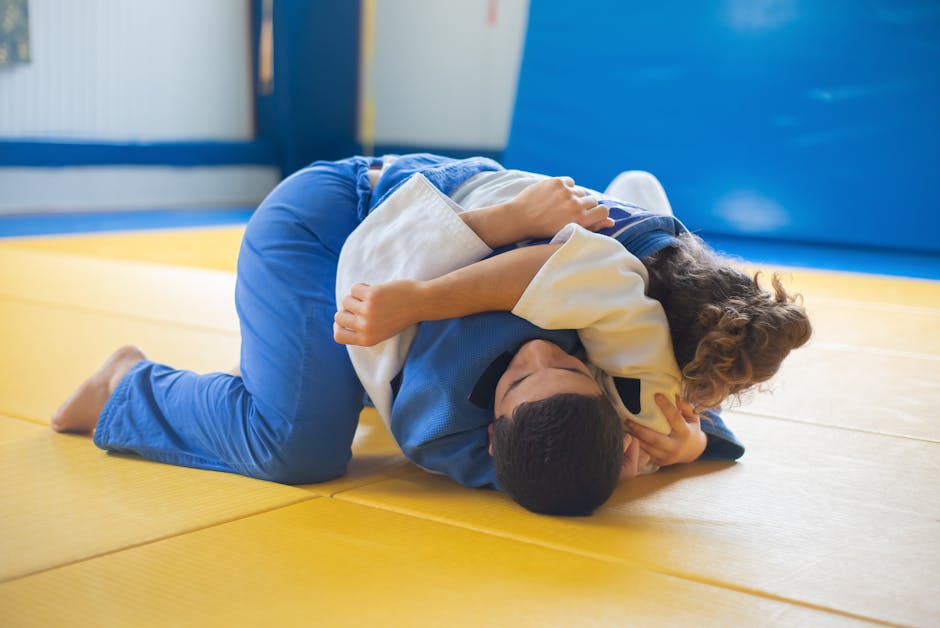
Reading about move names is one thing. Actually learning them from an experienced instructor is completely different.
The best place to learn jiu jitsu moves is at a gym where instructors break down technique clearly, correct your form, and make sure you understand not just what a move is called but why it works. You need someone watching you execute the triangle choke, the armbar, and the sweeps so you're not building bad habits from day one.
That's where gyms like Gonzales JJ come in. Founded by world-champion competitors who actually know these moves at an elite level, they teach fundamentals in a way that sets you up for real progress. Whether you're interested in competition, self-defense, or just personal growth through martial arts, having instructors who know what they're doing and can teach it clearly makes all the difference.
Start with the moves mentioned in this guide. Practice them consistently. Ask your instructor for corrections. Build your foundation. That's how everyone who's good at jiu jitsu got there—they learned the names, they practiced the progressions, and they showed up consistently.
Related: Brazilian Jiu Jitsu No Gi: Complete Training Guide
Related: Brazilian Jiu Jitsu for Adults: A Complete Getting Started Guide
Related: Youth Jiu Jitsu Gi: Complete Guide for Young Athletes
Related: Leg Lock Jiu Jitsu: Complete Guide to Techniques & Defense
Common Questions About Jiu Jitsu Move Names
What's the difference between a Kimura and an Americana?
Both are shoulder locks, but they're applied differently. A Kimura is usually set up when you're standing or in top control—you cross your opponent's arms and apply pressure from the side. An Americana is typically applied from side control or mount and uses a figure-four grip on the arm. They target the same joint but the mechanics and entry angles are different. Your instructor will teach you when to use each one based on the position you're in.
Can beginners learn leg locks and heel hooks?
Heel hooks and other advanced leg locks are typically taught to more experienced students because they carry higher injury risk if done incorrectly. Most beginner programs focus on upper body submissions and basic sweeps first. Once you have solid fundamentals and understand pressure control, your gym will introduce leg lock progressions. Always ask your instructor before trying advanced moves on training partners.
Why do some moves have multiple names?
Jiu jitsu has influences from Japanese judo, Brazilian tradition, and techniques developed by different lineages over decades. Sometimes a move has a Japanese name, a Portuguese name, and a common English name. The Americana is also called a figure-four armlock. A cross collar choke might be called a "collar choke" or "cross choke." Context and your gym's terminology will clarify which name to use, but they're usually referring to the same technique.
How long does it take to learn all these move names and execute them well?
Most beginners get comfortable with basic move names and executions within 3-6 months of consistent training. But jiu jitsu is deep—there are hundreds of variations and subtleties. The goal isn't to memorize every move name; it's to build competency with fundamentals so you can learn new techniques faster and understand how they connect. You'll be learning and discovering new things for years, which is part of what makes jiu jitsu so rewarding.
Start your BJJ journey off (Free Class)
Get Started Today →