

You've probably been caught in a triangle choke, or you've tried finishing one and felt your opponent slip out. The Brazilian Jiu-Jitsu triangle choke is one of those techniques that looks deceptively simple but requires precision, positioning, and timing to execute properly. The good news? Once you understand the mechanics and practice the setup, you'll dramatically improve your submission rate and add a devastating weapon to your arsenal.
Whether you're training for competition, building self-defense skills, or just wanting to understand one of BJJ's most celebrated submissions, this guide breaks down exactly what works and why. If you're in the Rio Rancho area looking for expert instruction, Gonzales JJ offers personalized coaching that focuses on technical mastery and real-world application.
What Is the Triangle Choke and Why It Matters
The triangle choke is a figure-four chokehold that uses your legs to encircle your opponent's neck and one arm. It's called a triangle because your legs and your opponent's arm form a geometric triangle around their neck. What makes this submission so powerful is that it's effective from multiple positions, it's difficult to defend once properly locked, and it works at every skill level from white belt to black belt.
In Brazilian Jiu-Jitsu, the triangle is considered a foundational submission. Yet many practitioners struggle to finish it consistently. This isn't because the technique is flawed, it's because the setup and positioning require specific adjustments that aren't always obvious from casual observation.
Related: What Is Brazilian Jiu-Jitsu Good For? 7 Real Benefits
Related: How to Pick a Brazilian Jiu-Jitsu School: Reddit's Best Tips
Related: Best Brazilian Jiu-Jitsu Gyms in Albuquerque 2026: Top 5 Ranked
Related: Best Black Brazilian Jiu-Jitsu Gi 2026: Top 6 Ranked
Related: Best Women's Brazilian Jiu-Jitsu Gi 2026: Top 5 Ranked
Related: Best Brazilian Jiu-Jitsu Training Near Me 2026: Top 6 Ranked
Related: Best Private Brazilian Jiu-Jitsu Lessons 2026: Top 5 Ranked
Related: Best Brazilian Jiu-Jitsu in Albuquerque NM 2026: Top 5 Gyms Ranked
Related: Brazilian Jiu-Jitsu Ranking System: Belt Guide
Related: Brazilian Jiu-Jitsu Guards: Complete Beginner's Guide
Related: Brazilian Jiu-Jitsu Weight Classes: Complete Guide
Related: Best Brazilian Jiu Jitsu Ear Guards in Rio Rancho, NM
Related: Best Brazilian Jiu-Jitsu for Beginners in Rio Rancho, NM
Related: Best Jiu-Jitsu Gi in Rio Rancho, NM: Complete Buyer's Guide
Related: Brazilian Jiu-Jitsu Self Defense: Real-World Techniques
The beauty of mastering the triangle is that it opens doors to other submissions too. Once your opponent fears the triangle, they often react in ways that create opportunities for arm locks, neck cranks, and positional escapes that feed into your overall game.
The Triangle Choke Setup: Building Your Foundation
Before you even think about squeezing, you need to establish control. The setup is where 80% of a successful triangle choke happens.
Step 1: Establish Double Wrist Control
Your first goal is to control both of your opponent's wrists. This prevents them from posting out, defending their neck, or creating distance. Double wrist control is your foundation. Without it, your opponent has too many escape options.
Step 2: Push the Arm Through Their Body
Once you have wrist control, push one of their arms across their body toward the opposite hip. This accomplishes two things: it opens up their neck and arm for the triangle, and it prevents them from stacking you or framing effectively. Think of it like creating a barrier with their own arm.
Step 3: Secure Head Control with an Overhook
Apply an overhook on the side opposite the arm you're preparing to triangle. This gives you head control and keeps them from turning into you. Combined with the pushed arm and wrist control, you now have complete positional dominance. They can't escape because all their limbs are accounted for.
Execution: The Critical Positioning Secret Most Miss
Here's where the real magic happens, and it's the detail that separates practitioners who finish triangles from those who struggle.
Most beginners lock their triangle with their hips square on the spine. This creates gaps. Your opponent can still move slightly, relieve pressure, or bridge out. Instead, position your hips off-center and place your locking leg across the back of their neck rather than straight down the spine.
This off-center hip positioning is cited by technical experts as the critical fix for dramatically improving your finish rate. Why? Because when your locking leg crosses the back of the neck instead of the spine, you eliminate the angles they can use to escape. The pressure becomes tighter, and the choke comes faster.
Here's the practical sequence:
- Keep wrist control with one hand and head control with the overhook
- Step one leg inside their hip on the side of the pushed arm
- Rotate your hips off-center (this is key) and place your shin across the back of their neck
- Hook your other foot over your locking leg's knee to complete the triangle
- Pull their head down toward your hip while squeezing your knees together
The squeeze should come from your hip flexors and inner thighs, not from pulling. You're not trying to crush them; you're applying steady, directed pressure that cuts off blood flow. This is the difference between a technique that works and one that hurts but doesn't finish.
Why People Struggle (and How to Fix It)
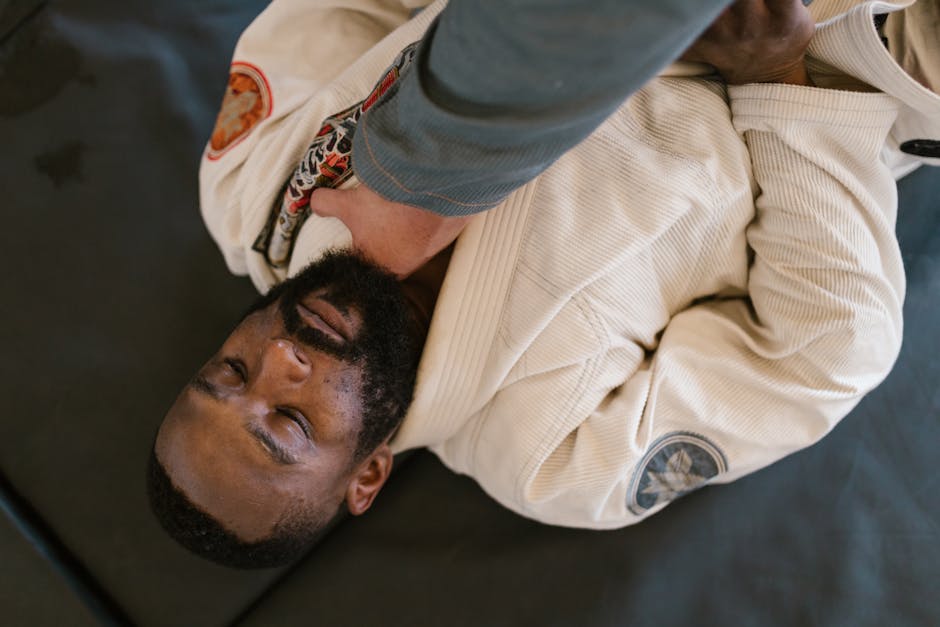
If you're one of the many practitioners who can get the triangle locked but can't finish it, the problem is almost always one of these three issues:
Problem 1: Loose Hip Position
Your hips aren't tight enough to your opponent's neck. Solution: pull them into you harder and rotate off-center so your locking leg actually crosses the back of the neck.
Problem 2: Poor Arm Positioning
You're not controlling which arm they have in the triangle. Solution: deliberately push one arm through the body before establishing the lock. Make it intentional.
Problem 3: They're Too Far Away
You're squeezing from too much distance. Solution: pull their head down toward your hip as you squeeze. Close the distance completely. Your head should be nearly touching their head.
Working with experienced instructors is invaluable here because they can spot positioning errors instantly. If you're training in or around Rio Rancho, the coaches at Gonzales JJ specialize in technical breakdown and personalized feedback that catches these subtle details before bad habits form.
Start your BJJ journey off (Free Class)
Get Started Today →Triangle Choke Training and Progression
You don't learn the triangle by reading about it. You learn by drilling and rolling.
Drilling Phase: Start with a compliant partner. Practice the setup and lock 20-30 times. Focus on hip positioning and the squeeze. Once you feel comfortable, add light resistance. Your partner shouldn't defend heavily yet; they should just gently resist so you learn to adjust pressure.
Sparring Phase: Once you can execute the triangle smoothly in drilling, start using it during live rolls. Don't expect to catch everyone immediately. Pay attention to which positions set you up best for the triangle. Notice patterns in how your opponents escape so you can adjust your setup.
Competition Phase: If you're training for tournaments, practice finishing the triangle under time pressure. Have your training partners actively defend. This builds the instincts and adjustments you need when it matters.
Many people ask about free resources, and while foundational tutorials exist online, the difference between watching a video and having someone physically correct your hip angle or arm position is enormous. That's where real coaching makes the difference. If you want structured progression with expert feedback, Gonzales JJ offers technique-focused classes for all levels, from beginners learning fundamentals to competitive athletes refining their submission game.
Triangle Choke for Self-Defense
While the triangle is a tournament staple, it's also one of the most effective self-defense submissions. Here's why: it works from the guard position, which is often where you end up if you're knocked down. It's difficult to escape once locked. And it doesn't require strength or size, only proper positioning.
In a self-defense context, the triangle gives you control and the ability to neutralize a threat without causing permanent harm. You're compressing the carotid artery on both sides of the neck, which causes unconsciousness in seconds. It's one of the most humane ways to incapacitate someone safely.
For families and individuals in the Rio Rancho and surrounding areas interested in practical self-defense, training BJJ with an emphasis on real-world application is foundational. Gonzales JJ emphasizes self-defense principles alongside competitive technique, ensuring you build skills that protect you whether you're on the mat or in an unexpected situation.
Build Your Triangle Choke Mastery Today
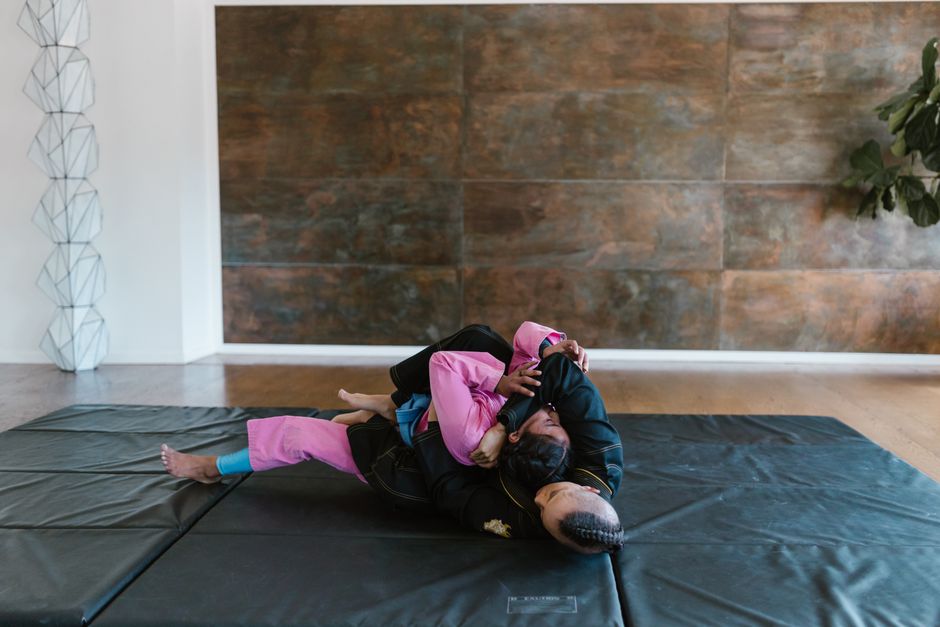
The triangle choke is more than just a submission. It's a lesson in how proper mechanics beat strength, how positioning beats athleticism, and how patience beats aggression. Once you master it, you've not just learned a technique, you've learned a principle that applies to all of Brazilian Jiu-Jitsu and life.
Whether you're a beginner wanting to understand the fundamentals or an experienced grappler looking to refine your finish rate, the path forward is the same: deliberate practice with good instruction.
If you're ready to master the triangle choke with expert coaching tailored to your skill level, Gonzales JJ in Rio Rancho offers personalized instruction from world-champion competitors. Check the class schedule to find a training time that fits your life, or reach out to learn more about how our community-focused approach builds winners both on and off the mat.
What's the most common mistake when attempting a triangle choke?
Positioning your hips square on the spine instead of off-center. This creates gaps and angles your opponent can exploit to escape or relieve pressure. Rotating your hips off-center and placing your locking leg across the back of the neck makes the choke exponentially more effective.
How long does it take to get good at the triangle choke?
With consistent drilling and rolling, most practitioners can reliably execute a triangle within 3-6 months. However, refining your technique, improving your finish rate, and learning to set it up from multiple positions takes longer. The triangle is a technique you'll develop throughout your entire BJJ journey.
Can you escape a properly locked triangle choke?
A properly locked triangle with correct positioning is extremely difficult to escape. However, if the lock isn't tight, the positioning is loose, or there's too much distance, escapes are possible. This is why setup and positioning are so critical. A sloppy triangle can be escaped; a technical one cannot.
Is the triangle choke safe?
Yes, when executed correctly. The triangle choke works by compressing the carotid arteries, causing a lack of blood flow to the brain. Unconsciousness typically occurs within seconds. As long as you release the choke immediately when your opponent taps or shows signs of unconsciousness, there's minimal risk. Research on grappling submissions shows that properly applied chokes are far safer than impacts to the head. Always train with partners you trust and follow mat safety protocols.
Start your BJJ journey off (Free Class)
Get Started Today →