
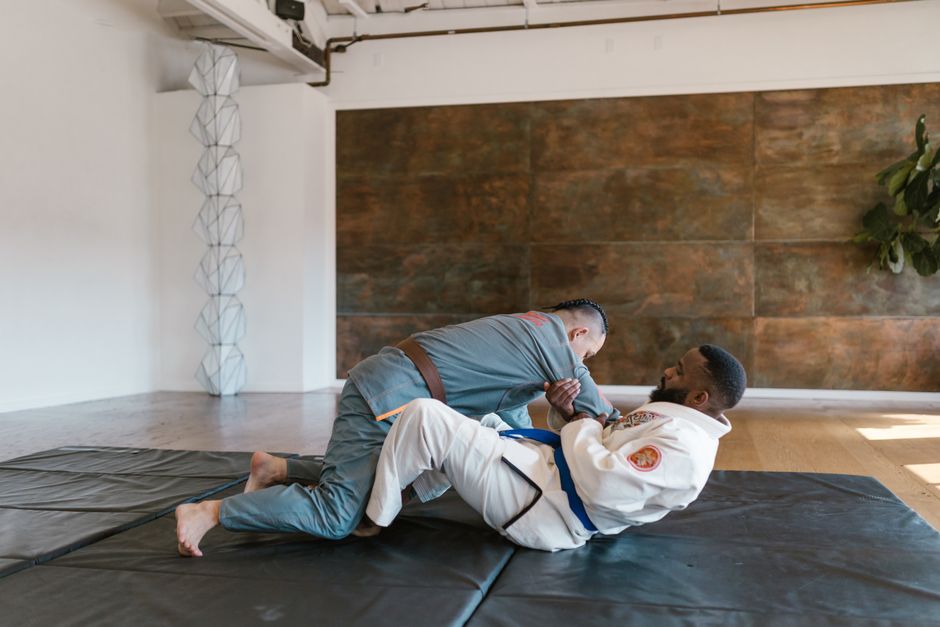
The Brazilian Jiu Jitsu ranking system is one of the most respected belt progressions in martial arts. Unlike belts you can buy online, BJJ ranks represent real skill, real time on the mat, and real commitment to the craft.
If you're thinking about starting your BJJ journey, understanding the rank structure helps you set realistic goals and appreciate what you're walking into. Let's break down how the belt system works, what each rank means, and what it actually takes to earn your next stripe.
The Five Main BJJ Belt Ranks
The core Brazilian Jiu Jitsu ranking system consists of five primary belt levels. Each belt represents a significant milestone in your technical development and understanding of the art.
Related: Jiu Jitsu Weight Classes Explained: A Complete Guide
Related: Jiu Jitsu Gis: Complete Buyer's Guide for 2026
Related: Brazilian Jiu Jitsu Leg Locks: Complete Beginner Guide
Related: Brazilian Jiu Jitsu for Adults: A Complete Getting Started Guide
Related: Brazilian Jiu Jitsu No Gi: Complete Training Guide
Related: Jiu Jitsu Half Guard: Complete Beginner Guide
Related: Brazilian Jiu-Jitsu Guards: Complete Beginner's Guide
Related: How Much Are Jiu Jitsu Classes? 2026 Pricing Guide
Related: How Much Does Jiu Jitsu Cost? 2026 Pricing Guide
Related: Jiu Jitsu Gi Sizes: Complete Sizing Guide & Chart
- White Belt: The starting point for everyone. You're learning foundational techniques, basic escapes, and how to move safely. Most white belts train for 1-2 years before advancing.
- Blue Belt: You've moved past the fundamentals. Blue belts understand positional hierarchy, can execute submissions with control, and begin developing a personal style. This rank typically takes 1-2 years of consistent training.
- Purple Belt: Now you're becoming dangerous. Purple belts have deep technical knowledge, solid fundamentals, and can teach beginners. Expect 1.5-2 years at this level before testing for brown belt.
- Brown Belt: You're in the advanced tier. Brown belts are nearly black belt level, with refined technique, competitive experience, and often teaching credentials. The time investment here is 1-2 years.
- Black Belt: The rank that takes 10+ years of dedicated training to achieve. Black belts represent mastery, teaching ability, and a lifetime commitment to the art. This isn't a destination; it's the beginning of true learning.
Each of these main belts includes stripe progressions (typically marked with tape on your belt) that show advancement within the rank. Stripes break up the journey and give you measurable progress markers along the way.
Beyond Black Belt: The Coral and Red Ranks
After black belt, the progression continues for those who dedicate decades to BJJ. These advanced ranks represent not just personal skill, but contributions to the art itself.
- Red/White Coral Belt: Awarded after 7+ years at black belt, recognizing significant contributions to the art and community.
- Red/Black Coral Belt: Given after additional years of dedication, typically to senior instructors who've shaped the sport.
- Red Belt: The highest rank in BJJ. Currently, the highest-ranked living practitioner holds a 9th degree red belt—a testament to decades of excellence and influence on the martial art.
These ranks aren't given; they're earned through years of sweat, teaching, and demonstrating mastery of both technique and character.
What the Research Says About Progression
Studies in sports science and martial arts training show that belt progression in grappling arts like BJJ demands consistent, hands-on practice. Unlike theoretical knowledge that can be learned from books or videos, Gonzales JJ and other serious gyms emphasize that advancement comes from live rolling, positional drilling, and real competition experience.
Start your BJJ journey off (Free Class)
Get Started Today →
The time investment is real. Getting from white to black belt typically takes 10-15 years of consistent training (3+ times per week). This isn't a shortcut system. BJJ ranks cannot be faked or purchased. Your belt is a reflection of what you can actually do on the mat.
Even high-profile figures understand this reality. Mark Zuckerberg famously trained to blue belt level, demonstrating that rank progression respects effort regardless of status. You earn it or you don't.
How Stripe Progressions Work

Within each main belt, stripe marks indicate progress toward the next rank. Most gyms use tape on the belt to mark stripes, typically progressing from one stripe toward four stripes before testing for the next main belt.
Stripe promotion is usually at your instructor's discretion based on:
- Technical proficiency and consistency
- Rolling ability and application of techniques
- Time invested in training
- Character and attitude toward training and teammates
- Understanding of positioning and strategy
The stripe system keeps motivation high. Instead of waiting years for the next belt, you're getting regular recognition of your progress. It's a practical psychology tool that acknowledges the long journey while celebrating smaller milestones.
Training Frequency and Realistic Timelines
How fast you progress depends heavily on how often you train. Someone training twice a week will advance much slower than someone training 5-6 times per week. Intensity matters too. Casual rolling is different from focused drilling and competition preparation.
Here are realistic progression timelines for consistent training (4+ times per week):
- White to Blue: 18-24 months
- Blue to Purple: 18-30 months
- Purple to Brown: 18-24 months
- Brown to Black: 12-24 months (this can be longer)
If you're training 2-3 times per week, add 30-50% more time to each progression. Training is not linear—some belts you'll progress quickly; others require patience and deeper understanding before advancement.
Why Belt Rank Matters Beyond Ego
Your belt isn't just a symbol. It communicates your capability, your teaching level, and your understanding of the art. In a self-defense context, it demonstrates both technical skill and the discipline required to learn control.
For families starting BJJ, especially kids concerned about bullying, the belt rank system creates a clear sense of progress and achievement. Each stripe and belt promotion builds confidence and shows that hard work produces measurable results.
If you're exploring BJJ as an adult, a competitive athlete, or a first responder seeking practical self-defense skills, understanding the rank system helps you respect the journey you're about to undertake. When you walk into a gym like Gonzales JJ in Rio Rancho, you'll understand why your instructor emphasizes technical precision over ego-driven competition—because rank progression is built on demonstrable, repeatable skill.
Common Misconceptions About BJJ Ranks

Let's clear up some confusion about how belts actually work in Brazilian Jiu Jitsu.
"I can get a black belt in 5 years if I train hard enough." Not likely. The martial arts community has standards. Black belt typically requires a minimum of 10 years from white belt, and most serious instructors won't promote you faster than that regardless of natural talent. The rank protects the credibility of everyone else who earned theirs the right way.
"Online belt ranks are legitimate." No. You cannot earn a legitimate BJJ rank through online training alone. BJJ is a contact sport. You need live rolling, real feedback, and hands-on instruction from a credentialed instructor. Anyone claiming to promote you online isn't following the standards respected by the broader BJJ community.
"A higher belt always wins." Usually, yes, but not always. A well-trained blue belt with focused preparation can absolutely catch a sloppy purple belt. Technique beats size and athleticism, but consistent training and rank accumulation typically win over time.
"Women progress at a different rate than men." Not in a legitimate program. Women and men follow the same advancement standards and timelines at gyms focused on technical excellence. Skill development isn't gendered; commitment and training frequency are what matter.
Choosing a Gym with Proper Ranking Standards
Not all BJJ programs follow the same ranking standards. When you're looking for a gym, ask about their promotion criteria:
- What's the minimum time between promotions?
- Who decides when you're ready to test?
- Is testing formal (with other instructors observing) or informal?
- What technical requirements must you demonstrate?
- Does the gym emphasize technique or just competition results?
Quality gyms take ranking seriously because your belt reflects on them too. A gym that promotes too quickly dilutes the value of everyone's rank in that lineage. Look for programs that balance encouragement with honest assessment—places where instructors tell you what you need to work on, not just what you're doing well.
This is where training environment matters. Gonzales JJ was founded by world-champion competitors who understand what legitimate progression looks like. Founded by Abie and Laura Gonzales, the gym emphasizes technique-focused training and personalized instruction, meaning your advancement is based on real skill development, not arbitrary timelines or belt-sales quotas.
Your First Steps in BJJ
If you're starting your BJJ journey, here's what to expect: Your first few months as a white belt will feel humbling. Everyone taps you. Everyone seems to know something you don't. This is normal and universal.
By month three or four, suddenly some of the basics click. You start anticipating movements. You catch someone in a submission you've been drilling. It's addictive.
By six months, you're thinking about BJJ outside the gym. You're watching instructional videos, analyzing your rolls, seeing the art in everyday movements. By one year, you're coaching newer white belts and feeling the weight of being slightly more experienced.
This progression—from confused beginner to confident intermediate—is where most people fall in love with BJJ. The rank system simply codifies what you already know: you're improving.
Whether you're looking for a gym that treats ranking seriously, or you're already training and curious about your next promotion, understanding the belt system keeps you focused on what matters: consistent training, technical precision, and the discipline that comes with genuine progression.
FAQs About Brazilian Jiu Jitsu Ranks
How long does it take to get a black belt in Brazilian Jiu Jitsu?
The average timeline is 10-15 years of consistent training (3-6 times per week). Some exceptional athletes progress faster, while others take 18-20 years. The International Brazilian Jiu-Jitsu Federation (IBJJF) and the Gracie family set standards that most serious gyms follow, preventing the artificial acceleration of ranks.
Can you skip belts in BJJ?
Not legitimately. The belt system is progressive for a reason. Each rank builds on the previous one. Skipping belts isn't something reputable instructors do because it undermines the integrity of the ranking system. That said, stripe progressions within a belt can sometimes be skipped if you demonstrate exceptional proficiency, but jumping entire belt levels doesn't happen in legitimate programs.
What's the difference between a stripe and a belt in BJJ?
Belts represent major ranks (white, blue, purple, brown, black). Stripes are progress markers within each belt—usually indicated by tape. Stripes keep you motivated by providing smaller achievement milestones between major belt promotions. Some gyms use 2 stripes per belt, others use 4. There's no universal standard, so ask your gym how they structure progression.
Do women progress at a different rate than men in BJJ?
No. Legitimate gyms apply the same promotion standards regardless of gender. Women advance based on the same technical and time requirements as men. Any gym suggesting otherwise isn't following industry standards and isn't worth training at.
Start your BJJ journey off (Free Class)
Get Started Today →