
You're thinking about trying jiu-jitsu. Maybe you've heard it builds confidence, teaches real self-defense, or just sounds like a fun new challenge. But there's that voice in your head asking: "What am I actually walking into?"
Here's the truth: stepping into a jiu-jitsu dojo for the first time is one of the best decisions you can make for your mind and body. And once you know what to expect, the nerves fade fast.
Related: Best Brazilian Jiu-Jitsu Gyms in Albuquerque 2026: Top 5 Ranked
Related: What Is Brazilian Jiu-Jitsu Good For? 7 Real Benefits
Related: Best Black Brazilian Jiu-Jitsu Gi 2026: Top 6 Ranked
Related: Best Kids Jiu-Jitsu Near Me 2026: Top 5 Programs Ranked
Related: Women's Jiu-Jitsu Near Me: How to Find the Right Program
Related: Best Women's Brazilian Jiu-Jitsu Gi 2026: Top 5 Ranked
Related: How to Pick a Brazilian Jiu-Jitsu School: Reddit's Best Tips
Related: Best Jiu-Jitsu for Adults Near Me 2026: Top 5 Ranked
Related: Best Jiu-Jitsu Classes 2026: Top 5 Ranked for Beginners & Families
Related: Best Brazilian Jiu-Jitsu Training Near Me 2026: Top 6 Ranked
Related: Best Private Brazilian Jiu-Jitsu Lessons 2026: Top 5 Ranked
Related: Best Brazilian Jiu-Jitsu in Albuquerque NM 2026: Top 5 Gyms Ranked
Related: Master the Brazilian Jiu-Jitsu Triangle Choke in Rio Rancho, NM
Related: Best Brazilian Jiu-Jitsu for Beginners in Rio Rancho, NM
Related: Jiu-Jitsu vs. Judo: Which Is Right for Rio Rancho Families?
Related: Is Jiu Jitsu Good for Self Defense? Rio Rancho Guide
Related: Brazilian Jiu-Jitsu Self Defense: Real-World Techniques
Related: Brazilian Jiu-Jitsu Ranking System: Belt Guide
Related: Brazilian Jiu-Jitsu Guards: Complete Beginner's Guide
Related: Brazilian Jiu-Jitsu Weight Classes: Complete Guide
Related: Best Jiu-Jitsu Gi in Rio Rancho, NM: Complete Buyer's Guide
Related: What to Expect When You Walk Into a Jiu-Jitsu Dojo in Rio Rancho
This guide breaks down exactly what happens when you walk through the door at a real BJJ gym like Gonzalesjj in Rio Rancho. We'll cover the class structure, what your body will feel, how to prepare, and why first-timers become lifelong practitioners.
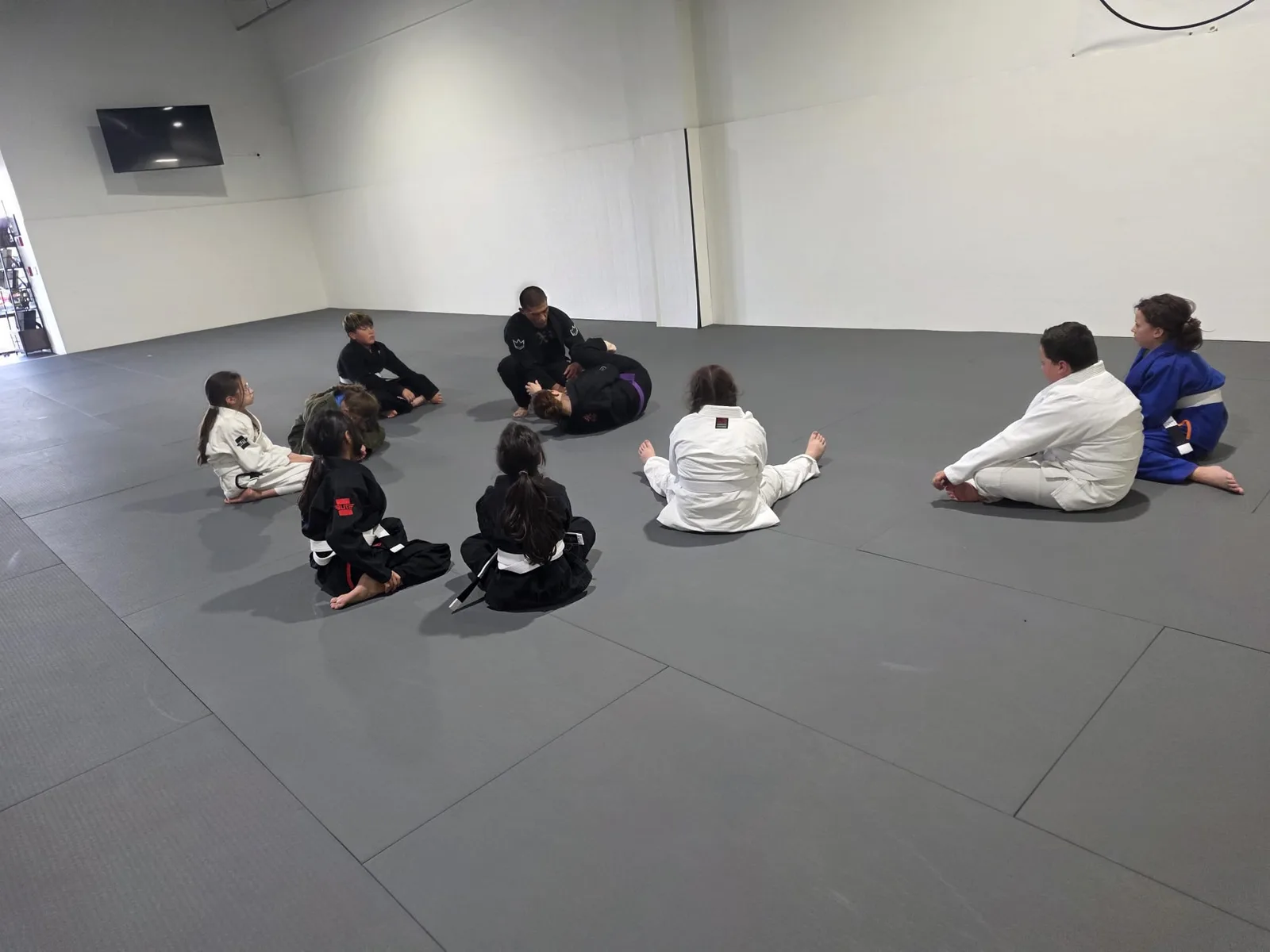
The Real Class Structure: Three Phases That Make Sense
Most jiu-jitsu classes follow the same blueprint. Understanding this structure removes a lot of the mystery.
Phase 1: The Warmup (5-10 minutes)
You'll start with light cardio and dynamic stretching. Think shoulder circles, hip mobility flows, and light jogging or jumping jacks. Nothing extreme. This preps your joints and gets your heart rate up, which is critical because BJJ demands explosive movement and controlled intensity.
Start your BJJ journey off (Free Class)
Get Started Today →Phase 2: Technique Instruction (15-25 minutes)
This is where the instructor breaks down specific techniques. They'll demonstrate a fundamental move, then have you drill it step-by-step with a partner. Early on, you might learn basic positions like how to escape mount, how to establish side control, or a simple arm drag. The instructor will walk around, correct your form, and answer questions. You're not going hard here. You're learning the mechanics.
Phase 3: Drilling and Sparring (15-25 minutes)
After drilling the technique slowly, you'll move to partner drills at a higher pace, then finish with positional or open sparring (called "rolling" in BJJ). Rolling is controlled practice against a training partner, not a fight. You're testing what you learned in a live scenario.
The whole class usually runs 45-60 minutes. It's structured, progressive, and designed so everyone learns and improves regardless of experience level.
What Your Body Will Actually Feel Like
Let's be real: your cardio will be tested. Even if you're fit, jiu-jitsu is different from running or lifting.
When you're grappling with a partner, your muscles are working against resistance in multiple directions simultaneously. Your legs are driving, your core is bracing, your arms are either defending or attacking. It all happens at once. Most people gas out faster than they expect, and that's completely normal.
Here's what's important: you control the intensity. You set the pace. If you're tired, you can tap and take a breath. If you're struggling with a technique, you can ask the instructor to slow it down. The environment at a real BJJ gym encourages you to push your limits while respecting your recovery.
By week two or three, your conditioning adapts. Your body learns to move efficiently. You stop gassing out on simple drills.
The mental feeling is different too. There's an initial anxiety that flips into focus once you start moving. Your mind quiets down. You're present. That's one of the biggest reasons people fall in love with BJJ beyond the physical benefits.
How to Actually Prepare Yourself
You don't need to be in peak shape to start. But a little prep goes a long way.
Build Your Base Fitness
Spend 2-3 weeks doing light cardio before your first class. Walking, jogging, cycling, or swimming. This prevents you from completely gassing during your first week and makes those first sessions more enjoyable. You want to feel challenged, not destroyed.
Work on Mobility
Jiu-jitsu requires hip, shoulder, and ankle mobility. Spend 10 minutes daily on hip openers, shoulder rotations, and ankle circles. It reduces injury risk and helps you move more fluidly once you start learning positions.
Hydrate and Fuel
Eat a light meal 2-3 hours before class. Don't train on a full stomach. Bring water and drink throughout the warm-up and between drills. Dehydration kills performance and increases injury risk.
Show Up With Openness
Mentally prepare to look awkward. Everyone does at first. The instructors at Gonzalesjj's classes in Rio Rancho are trained to break down techniques for complete beginners. You're not expected to know anything. That beginner mindset is actually an advantage because you're not fighting against bad habits.
Related: Best Jiu-Jitsu Techniques Step by Step PDF for Beginners
The Etiquette and Safety You Need to Know
Jiu-jitsu gyms have culture and etiquette for good reasons.
Tap Early, Tap Often
A tap is a signal that you want to stop. You tap the mat, your partner, or yourself when you're caught in a submission or feel pain. This is non-negotiable. Tapping is not weakness. It's how you stay injury-free and build trust with your training partners. No one advances without tapping.
Keep Your Nails Short and Your Gi Clean
Long nails scratch your partners. A dirty gi spreads skin infections like ringworm and staph. Shower immediately after class. This isn't optional in a contact sport. It's basic respect and hygiene.
Follow the Instructor's Lead
During technique, you drill exactly what's shown. You don't improvise or try other techniques. During rolling, you apply what you've learned at an appropriate intensity for your partner's level.
Be a Good Partner
Help newer students understand drills. Don't muscle through positions. Control your movements. If you're stronger or more experienced, use it as an opportunity to refine technique, not dominate.
What Makes the First Month Transformative
Here's what happens if you stick with it. By week four, you'll notice:
- Your cardio and strength improve noticeably.
- You understand fundamental positions and can execute basic techniques.
- You've built friendships with your training partners.
- Your confidence shifts. You feel more capable physically and mentally.
- You sleep better and handle stress more effectively.
This isn't luck. Research shows martial arts training improves both physical fitness and mental resilience, especially when taught in supportive, community-driven environments.
At Gonzalesjj, founded by world-champion competitors Abie and Laura Gonzales in 2024, the focus is exactly that: technical excellence combined with building winners both on and off the mat. Whether you're in Rio Rancho, Albuquerque, Bernalillo, or anywhere in the surrounding 15-mile radius, you're joining a family-focused gym that treats beginners, families, and competitive athletes with equal respect.
Taking Your Next Step
The hardest part is showing up the first time. Once you're in the door, the structure makes sense. The community supports you. The instructors guide every movement.
If you're in Rio Rancho or the surrounding area and ready to experience what a real jiu-jitsu dojo feels like, check out Gonzalesjj's class schedule and special offers for new students. Most gyms offer a free trial class or an introductory class package so you can test it before committing.
Walk in with an open mind, embrace the beginner stage, and trust the process. You'll be surprised how quickly BJJ becomes part of your identity and your life.
Do I need prior martial arts experience to start jiu-jitsu?
No. In fact, sometimes prior experience in other martial arts can create bad habits. BJJ is taught from the ground up for beginners. The instructors expect you to know nothing and structure every class accordingly.
What if I'm not very strong or flexible?
Jiu-jitsu rewards leverage and technique over strength. Flexibility improves quickly with consistent training. Start where you are and focus on proper mechanics. You'll improve faster than you expect.
Will I get injured?
Injury risk is low when you tap early, follow proper technique, and train with controlled intensity. Beginners are paired with experienced partners who regulate pace. Listen to your body and communicate with instructors about any concerns.
How often should I train as a beginner?
Most beginners benefit from 2-3 classes per week. This gives you enough exposure to learn and retain techniques while allowing proper recovery. Consistency matters more than frequency. Showing up twice a week for a year beats sporadic intense training.
Start your BJJ journey off (Free Class)
Get Started Today →